In Focus delivers deeper coverage of the political, cultural, and ideological issues shaping America. Published daily by senior writers and experts, these in-depth pieces go beyond the headlines to give readers the full picture. You can find our full list of In Focus pieces here.
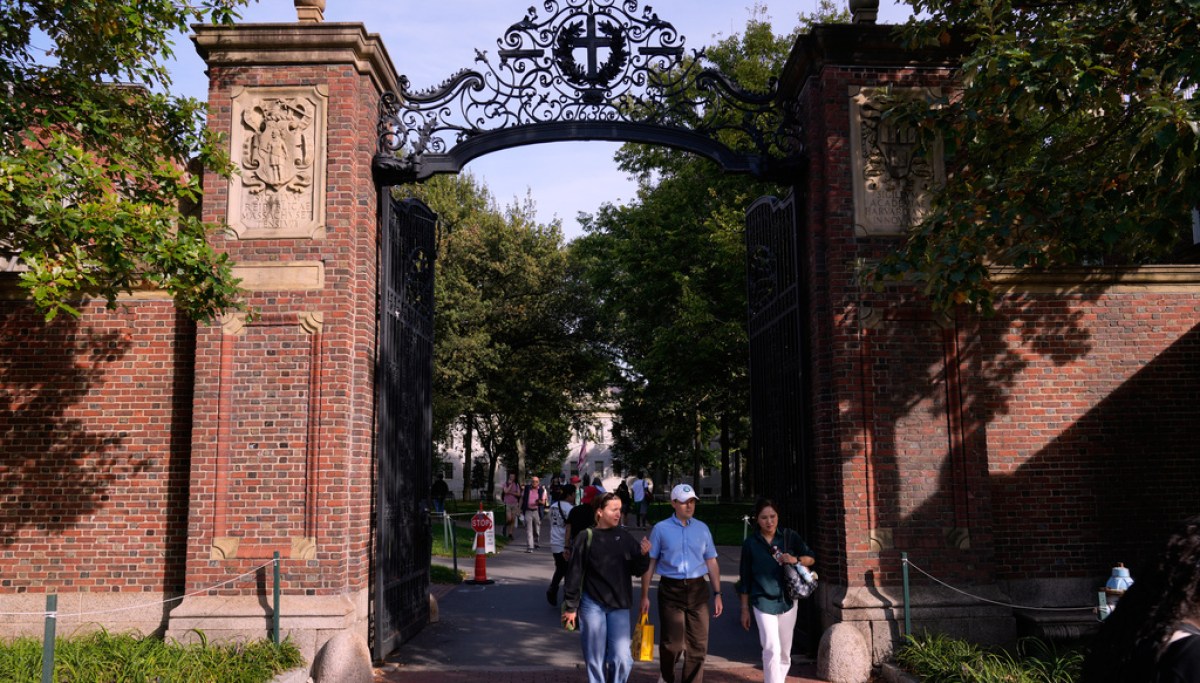
Last week, Harvard University President Alan Garber finally broke with years of institutional evasion and said it. In a candid interview on the Shalom Hartman Institute’s Identity/Crisis podcast, Garber acknowledged that the university “went wrong” by allowing professors to inject their personal views into the classroom, arguing that faculty activism has chilled free speech and debate at Harvard.
“How many students would actually be willing to go toe-to-toe against a professor who’s expressed a firm view about a controversial issue?” he asked.
That wasn’t boilerplate. It wasn’t hedged. It was an admission of responsibility, and it was of enormous consequence.
To be clear, this does not absolve student-facing administrators. I have written for years about the role of sprawling bureaucracies devoted to “belonging,” “safety,” and “dialogue” in narrowing acceptable speech, enforcing ideological conformity, and treating disagreement as harm. Those structures remain deeply implicated, and Garber’s remarks do not erase that record. But what his admission finally does is break a long-standing taboo: it acknowledges that faculty are not innocent bystanders. They are not merely victims of administrative excess or student hypersensitivity. They are powerful actors, and they have used that power.
This is not a call for faculty silence. Professors are entitled to their views and to express them as citizens and scholars. But classroom neutrality is a professional norm, not a restriction on speech. When professors use the grading relationship and their authority over students to signal which views are morally acceptable and which are suspect, they do not need censorship to silence dissent. Students read the room. They self-edit. They learn quickly that disagreement carries a cost. The professional norm of the professoriate has never been advocacy; it has been inquiry conducted under conditions of trust, power imbalance, and restraint.
Tenured professors grade students, design curricula, control classrooms, and shape professional norms. Students experiment with ideas; faculty set the rules of the experiment and the tone of inquiry, which is why their activism carries far greater consequences than that of their students.
The data confirm what Garber described. According to the Foundation for Individual Rights and Expression’s 2026 College Free Speech Rankings, roughly a quarter of college students say they self-censor “fairly often” or “very often” during classroom discussions, and a majority report discomfort expressing their views on controversial political topics. The source of that discomfort is not punishment, but fear of negative reactions from peers and professors — a climate created and sustained by those with institutional authority.
Students did not invent this culture on their own. They absorbed it from the environment around them and from the adults who model behavior and enforce boundaries. When faculty activism is rewarded, tolerated, or excused as “engagement,” students internalize the lesson that silence is safer than dissent.
This is why workshops and dialogue initiatives fail. They focus on tone while ignoring power. You cannot workshop your way out of a culture in which professors use institutional authority to advance political causes. You cannot train students to speak freely when they know the person grading them has already taken sides.
The consequences of this culture extend beyond the classroom. At Harvard, faculty activists did not merely express opinions. They disrupted Widener Library, staging protests in what should be the most sacred and neutral space on campus — a place devoted to study, inquiry, and intellectual refuge.
This matters beyond the specific controversy that prompted it. Libraries exist precisely so ideas can be encountered without intimidation or mobilization. They are not protest sites. They are sanctuaries for concentration, reflection, and the slow, patient work of learning. When faculty turn them into stages for political theater, whether framed as protest or pedagogy, they collapse the distinction between scholarship and advocacy. Universities cannot function if every space becomes ideological territory. When professors model disruption rather than restraint, students learn that activism outranks inquiry and that neutrality itself is suspect.
What makes Garber’s admission so consequential is that it collapses a convenient fiction in higher education: that faculty radicalism is somehow external to institutional responsibility. Tenure, prestige, and moral authority are not incidental features of the modern university; they are its governing architecture. When that authority is used to advance political causes rather than disciplined inquiry, it reshapes norms, incentives, and silence itself. Universities cannot defend free expression while tolerating, let alone celebrating, those distortions.
Garber deserves credit for finally saying the quiet part out loud. He acknowledged what students have long known and what administrators have long avoided: faculty activism has distorted the academic environment and chilled debate. But honesty creates obligation. If faculty are indeed part of the problem, as Garber now admits, then universities must be willing to reassert professional norms: the classroom is not an organizing space, the library is not a protest site, and authority is not a license to enforce ideological conformity.
GLENN YOUNGKIN: THE GREAT VIRGINIA RENAISSANCE
Other university administrations should follow Garber’s lead. A university cannot operate as a political actor and a neutral intellectual commons at the same time. Acknowledging that tension and choosing inquiry over activism is the first step toward restoring what higher education claims to value.
Student-facing administrators built the machinery of speech control. Faculty gave it moral authority. Garber finally admitted it. Now, higher education must act on that admission or own its complicity and the consequences in the silence that follows.