As the Church marks the anniversary of Archbishop Marcel Lefebvre’s death, Pope Leo XIV is calling for “unity” over the Traditional Latin Mass—but his appeal comes at a moment of rising tension. With the SSPX preparing new bishop consecrations and many Catholics turning to the TLM as a refuge from liturgical and doctrinal confusion, the question remains: can unity be restored without compromising the Faith itself?
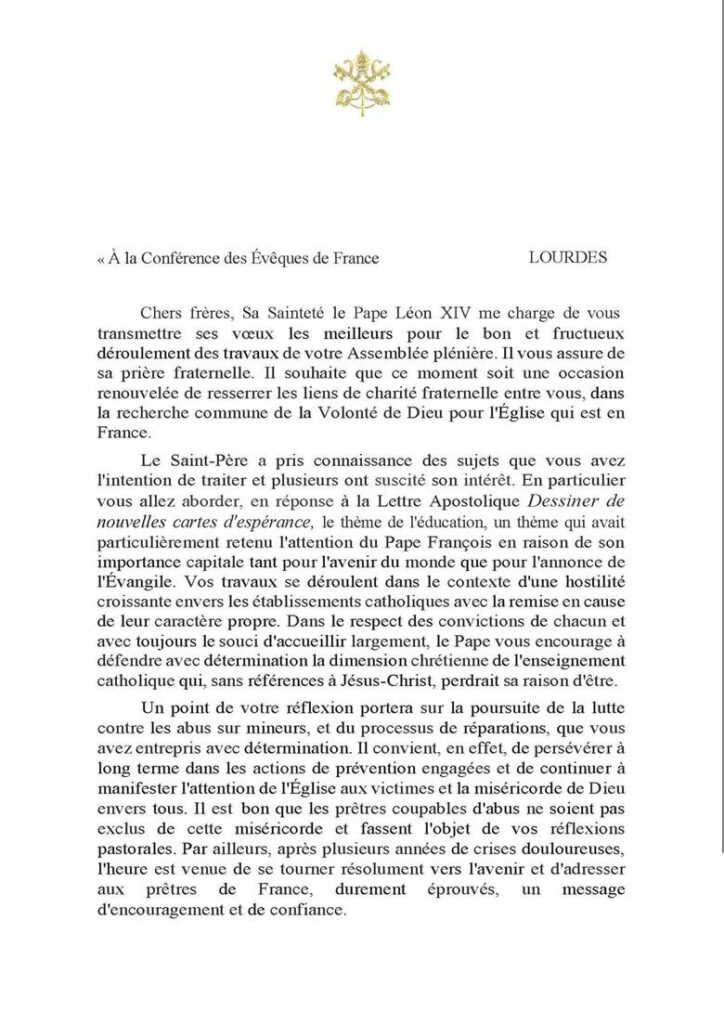
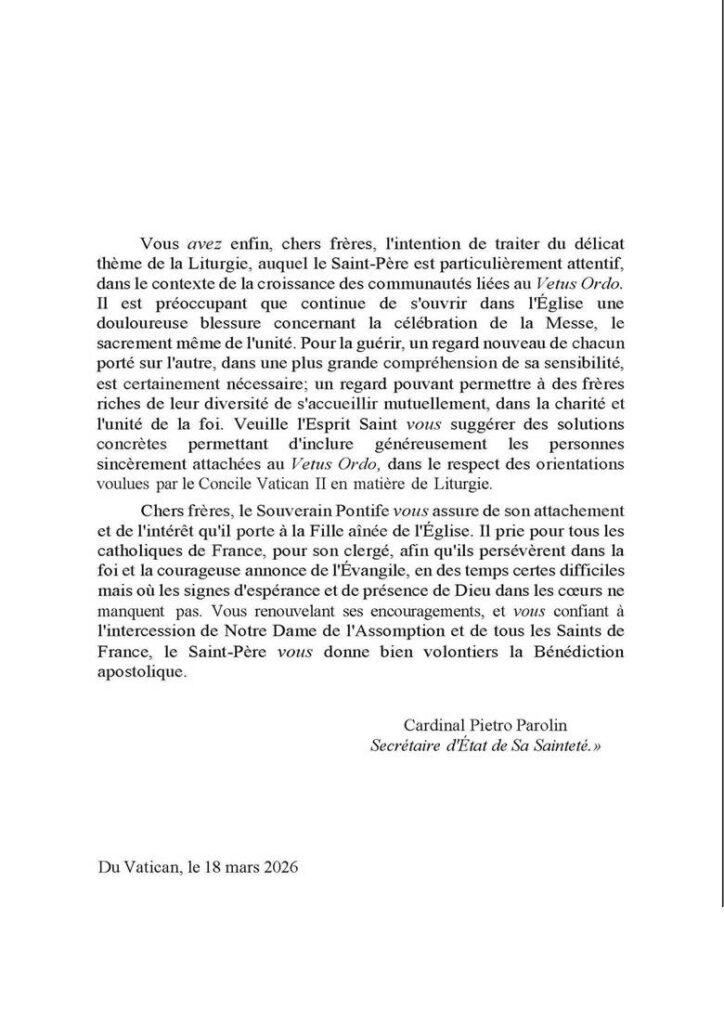
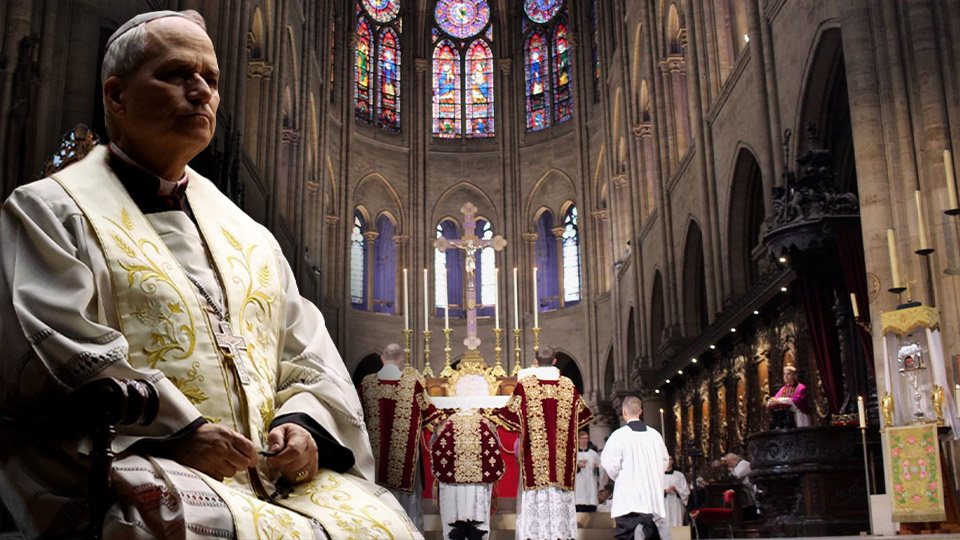
On March 25, the feast of the Annunciation of the Blessed Virgin Mary the 35th death anniversary of Archbishop Marcel Lefebvre (1905–1991) — founder of the Society of Saint Pius X (SSPX) and courageous champion of the Traditional Latin Mass (TLM), Pope Leo XIV urged for “renewed unity in the Church’s liturgical life”, calling on French bishops to seek “concrete solutions” to integrate Catholics devoted to the TLM while maintaining ecclesial communion, EWTN reported.
Notably, the pope stated he was “particularly attentive” to the issue of the liturgy, acknowledging his concerns by Cardinal Pietro Parolin, the Vatican Secretary of State, to the French bishops gathered for their spring plenary assembly in Lourdes (March 24–26) by lamenting present liturgical divisions as “a painful wound” within the Church, Gaudium Press stated.
Pope Leo XIV’s request for “concrete solutions” to address the needs of French Catholics who love the TLM may seem to indicate that these concerns are not to be glossed over by their bishops, but dealt with in a meaningful way.
“It is troubling that a painful wound continues to open in the Church concerning the celebration of the Mass, the very sacrament of unity,” the pontiff declared, in comments cited by EWTN.
“A new outlook of each toward the other, with greater understanding of their sensitivities, is certainly necessary, an outlook that would allow brothers and sisters, enriched by their diversity, to welcome one another in charity and in the unity of the faith.”
“May the Holy Spirit inspire you with concrete solutions that allow for the generous inclusion of those sincerely attached to the ‘Vetus Ordo,’ in respect for the directions desired by the Second Vatican Council in matters of liturgy,” Pope Leo XIV added, requesting bishops to exercise pastoral creativity and charity with regard to these Catholics.
However, the liturgical crisis of the past sixty odd years is not just about mere “attachment” to the TLM, as the pontiff’s missive indicated.
At first glance, Pope Leo XIV’s request for “concrete solutions” to address the needs of French Catholics who love the TLM may seem to indicate that these concerns are not to be glossed over by their bishops, but dealt with in a meaningful way.
For many traditional Catholics, however, the pope’s comments cannot be interpreted merely in administrative terms. After all, the liturgical crisis of the past sixty odd years is not just about mere “attachment” to the TLM, as the pontiff’s missive indicated. Rather, the crisis is part of a wider spiritual battle within and without the Church, such as the collapse of reverence, the decline of Latin as a sacred language, and doctrinal problems like the widespread decrease in belief in the Real Presence of Our Lord Jesus Christ in the Eucharist among Catholics worldwide.
Moreover, the timing of the pontiff’s remarks is not coincidental, as they were made in light of the SSPX’s plans to consecrate new bishops on July 1 this year. When faithful Catholics are deprived of their liturgical heritage (through persecutions from their diocesan bishops in removing the TLM from their dioceses, etc.), many of them would turn to the SSPX for spiritual refuge (despite its irregular canonical status).
Will these prelates embrace the pontiff’s call to adopt a conciliatory tone towards TLM-going Catholics, or would previous trends of crackdowns and hostilities persist?
Hence in view of these realities, the TLM represents more than a preferred liturgical form for many Catholics. Rather, it is also a bulwark of continuity from centuries past, a visible connection to the Church’s perennial faith, and an immense source of grace and spiritual renewal due to its explicitly propitiatory nature. For faithful Catholics who are not merely just “attached” to the TLM, but willing to die for it, the defense of the ancient and venerable Roman Rite is inextricably intertwined from the defense of the one and only true Catholic Faith itself.
Therefore, the Vatican has to understand that “church unity” cannot be premised on doctrinal ambiguity, a dilution of Church teaching, or compromises with error. Instead, true “church unity” must be based on the fullness of the Catholic Faith handed down through the centuries from Our Lord Jesus Christ Himself, through the apostles.
In this light, the Pope’s call for unity and for the “generous inclusion of those sincerely attached to the Vetus Ordo” should be welcomed in that beyond France, his plea is likely to resonate across the world in many countries, such as the United States, where similar tensions between liberal-leaning bishops and TLM-going Catholics.
The reaction of the French bishops to the Pope’s requests will now be closely monitored. Will these prelates embrace the pontiff’s call to adopt a conciliatory tone towards TLM-going Catholics, or would previous trends of crackdowns and hostilities persist? Much will depend on the bishops’ intellectual honesty, humility, and willingness to regard TLM communities not as a problem to be tackled, but as a vital part of the Church’s life and mission.
Meanwhile, TLM Catholics have to pray and remember that the battle for the TLM and, by extension, for the integrity of the Catholic faith—goes on. The Masonic and Christophobic revolution that sought to recalibrate and undermine the Catholic Church in the last century has not simply disappeared into oblivion, for its consequences effects are still palpable in empty pews, diluted doctrine, and a lack of a sense of the sacred.
Maria, Mater Ecclesiae, ora pro nobis.