Order Michael Finch’s new book, A Time to Stand: HERE. Prof. Jason Hill calls it “an aesthetic and political tour de force.”
Somali fraud in Minneapolis began long before the cases that have been making nationwide headlines. And one of the first cases involved the abuse of Minnesota’s Child Care Assistance Program (CCAP) by day cares with fraud amounting to an estimated $100 million in 2015.
Minnesota Child Care Services which got its license in 2012 and a year later was already the single largest recipient of (CCAP) funds for the next two years during which time it also accumulated ‘corrections’ for not keeping proper staff records, staff qualifications, cleanliness and crib violations, was one of a number of organizations targeted in the fraud investigations.
Investigators also discovered that during just one two week period the Somali day care center billed “for 950 children who did not actually attend the center”, that it billed for children on days when no children attended, and the center was also accused of providing kickbacks to parents.
As part of an agreement, the day care center pled guilty to one charge of theft by swindle and
Abdirizak Ahmed Gayre, its director, and Ibrahim Awgab Osman, its assistant director, were barred from “working or having an ownership interest in any licensed child care provider in Minnesota” for only two years.
But the story was just beginning.
Gayre engaged in prolonged litigation with Minnesota’s Department of Human Services over his ban. Meanwhile in 2019, an accident report reported a crash by a Freightliner truck by a 57-year-old driver named Ibrahim Awgab Osman. While there is no direct confirmation that this was the same Osman, the day care Osman had been described as 53 years old in 2015.
An Awgab delivery company in Minnesota was set up shortly after the day care fraud case and was registered under a name and at an address and phone number that was also used to set up a home health aid organization in Minneapolis that faced several violations and corrections.
And still appears to be operating today.
A woman with the last name of Awgab was listed as its manager, as well as the former manager of yet another Somali health care company, who had worked previously as an election canvasser. Public records appear to also place Ibrahim Awgab Osman at that same address.
The number also matches yet another health care company, this one in Nashville, TN, set up back in 2011, whose director was named as Ibrahim Osman. It is not clear if any of these people are actually related or the same person, but the overlaps do raise significant questions.
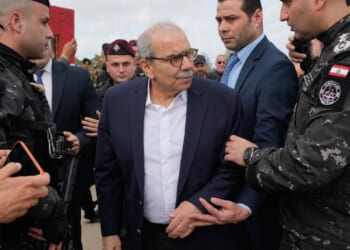
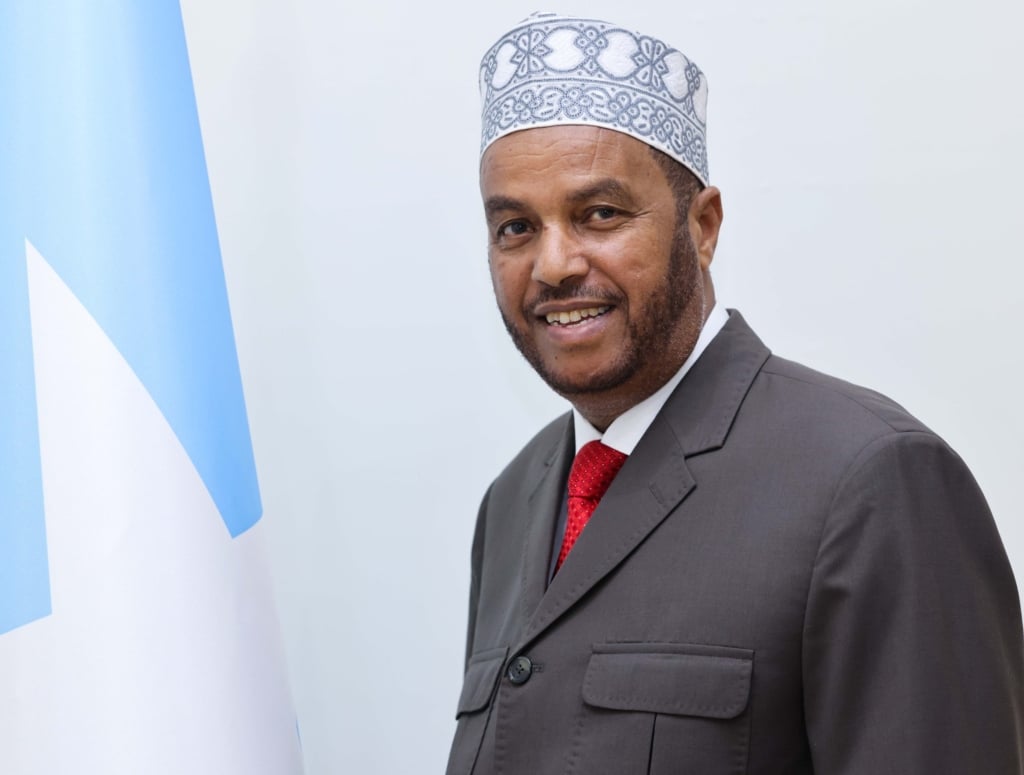
And what is far more extraordinary is that in 2021, a Senator Ibrahim Awgab Osman (pictured above) was elected to Somalia’s legislature. The Somali senator’s Facebook page however described him as living in Minnesota. In 2023, the Somali senator put a Freightliner truck up for sale. The email used for the sale offer appears to be linked to the Awgab trucking company.
In 2021, while serving as a Somali legislator, Sen. Osman’s Facebook page displayed photos of him and his family voting in what appears to be a Minnesota election. The red ‘I Voted’ stickers in the photos match those used in Minnesota elections. Not only did a foreign official appear to be voting in American elections, but he was bragging about doing it on social media.
Emerging evidence does suggest that a number of Somali government officials were residing and running health care companies in Minnesota, Ohio and other parts of America.
Allegations by Somaliland diplomats claim that Somalia’s UN Ambassador Abukar Dahir Osman ran ran a company called Progressive Health Care Services Inc in Cincinnati, Ohio, and his LinkedIn profile appears to suggest that while he began serving as Somalia’s ambassador to the UN beginning in 2017, he was running the Ohio health care company through 2019. He’s also described as having worked as a supervisor at a Medicaid unit in an Ohio county’s Department of Family Services and then worked as the Minister of National Security for Somalia while also running his health care company.
Deputy Health and Human Services Secretary Jim O’Neill confirmed that Somalia’s UN ambassador was tied to the health care company against whom the government had taken action against “in response to a conviction for Medicaid fraud.”
Somaliland also alleged that Somalia’s Foreign Minister Abdisalam Abdi Ali was a founder of Ritechoice Health Services and before that as the CEO of a medical transport company in Toledo, Ohio. There is no direct confirmation that it’s the same person, but his official profile states that “before entering public sector, His Excellency Hon. Abdisalam Ali established a successful career in the private sector. He founded a successful healthcare enterprise, overseeing a multimillion-dollar annual budget.”
Sen. Jim Banks introduced a bill to ban agents of foreign governments from accessing government grants and cited Ali as having “founded multiple companies in Ohio, including a health center that received COVID-era small business loans.”
Also listed was Somalia’s Deputy Speaker Sadiya Yasin Haji Samatar, elsewhere described as “a single mother from Minnesota with no formal education” who was a “former healthcare administrator in Minnesota.”
There is no direct confirmation that Minnesota day care administrator Ibrahim Awgab Osman and Senator Ibrahim Awgab Osman are the same man, but the confluence of Somali government officials who ran health care companies in America suggests that political careers in Somalia were funded by welfare in America.
And any linkage to fraud in America creates complicity by the Somali government.
The United States provided $9.3 billion in aid to Somalia over the last decade. Under Biden, aid to Somalia passed $1 billion a year, but even beyond that direct aid, Somali ‘refugees’ appeared to be combining welfare companies in America with Somali government positions.
If Ibrahim Awgab Osman were to turn out to be the same man who was accused of day care fraud in Minneapolis, crashed a truck and then became a Somali senator, it wouldn’t stand out all that much, but it would tell a larger story about Somalia’s relationship with America.