In Focus delivers deeper coverage of the political, cultural, and ideological issues shaping America. Published daily by senior writers and experts, these in-depth pieces go beyond the headlines to give readers the full picture. You can find our full list of In Focus pieces here.
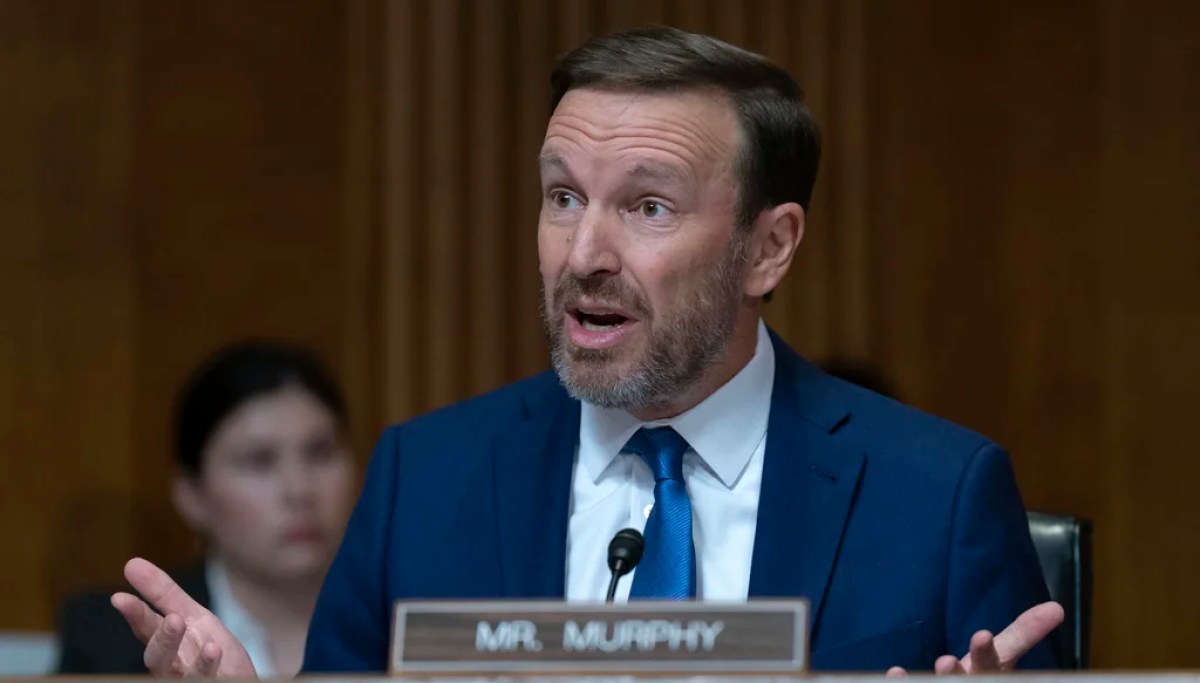
Even while law enforcement officers hunted for the gunman who murdered two students and wounded nine others at Brown University in Rhode Island last week, gun restrictionists unleashed their typical unhinged rhetoric. Take the reliably partisan Sen. Chris Murphy (D-CT): He blamed President Donald Trump for engaging in a “dizzying campaign to increase violence in this country.”
The anger is performative and cynical.
After all, Rhode Island already features every gun regulation Democrats propose we pass nationally. Like everywhere else in the country, all gun purchases go through an FBI background check in Rhode Island. The state has closed the so-called “gun-show loophole.” There’s a waiting period to obtain a gun. Felons are banned from owning firearms. Rhode Islanders must take safety training to obtain “blue permits” to own handguns even in their own homes. “Assault weapons,” the concocted classification Democrats have given scary-looking semiautomatic rifles, are banned. There’s also a ban on magazine capacity above 10 rounds. Citizens have a duty to retreat for self-defense rather than a right to stand their ground. Rhode Island has one of the lowest percentages of gun owners in the country.
One of the popular rejoinders from restrictionists when you point out all these laws is to tell you that passing “safety” laws means little if neighboring states have permissive gun regulations. So, for instance, Chicago politicians are perpetually blaming Indiana for crime, even though Indiana has lower crime levels. Well, Rhode Island is surrounded by states with some of the most restrictive gun laws in the country, Connecticut and Massachusetts. All three states have passed restrictions that go well beyond any bill that could conceivably pass national or, likely, constitutional muster.
Besides all those constraints, guns are also effectively banned in all Rhode Island schools and universities. Brown University is a “gun-free zone.” Or, in other words, staff, professors, and students are expected to cower in fear and wait for police or security to arrive as the murderer walks around with impunity. Parents trust administrators and professors to house, feed, and educate their children, but not to have a concealed carry permit and possibly save students in case of tragedy.
In any event, the idea, often pushed by the Left, that people have unfettered access to guns is a myth. There are somewhere around 40,000 laws restricting guns on the books in the United States. No constitutional right is nearly as regulated. It’s exceptionally likely that the Brown shooter broke a slew of laws before he murdered anyone.
So, what is left to pass?
For years, Australia, where two Islamists allegedly murdered 16 people and hurt scores of others celebrating Hanukkah on Bondi Beach this weekend, has been held up by many Democrats as the way forward on gun regulation. After a horrifying massacre at Port Arthur in 1996, the Australian government passed new firearms laws banning ownership of almost all semiautomatic weapons, all self-loading rifles and shotguns, and put stringent restrictions on the sale of ammunition for existing weapons. Citizens can only own guns if they demonstrate to authorities a “genuine reason” for ownership — and “the right to self-defense” isn’t a valid one.
Australia proceeded to run a “buyback” program that lasted nearly a year, in which time the government ended up paying citizens for 640,000 firearms — how a Pakistani immigrant whose son was under suspicion of having ties to the Islamic State group could possess six firearms is a bit baffling. When politicians bring up Australia, they mean confiscation.
To begin with, it’s highly debatable that the two-decade decline in crime in Australia that Democrats point to is wholly, or even largely, attributable to new gun laws. Criminality precipitously dropped across most of the West, including in the U.S., over those two decades.
More pertinently, though, “it will never happen here.” For one thing, the American legal tradition makes it impossible to confiscate guns. It’s unambiguously unconstitutional. Gun restrictionists would need to overturn the Second Amendment to ban guns that are in common use.
Need it be said that even if we ignored the Constitution — it wouldn’t be the first time — and passed Australian-style laws, massive civil unrest would soon follow. There are many more guns in the country than people. Pollsters can’t even get the average American to tell them if they have a gun, much less how many. The notion that most citizens are handing over their weapons to authorities is ludicrous. Even today, whenever cities have buyback events, most participants trade in their antiquated revolvers and rifles to upgrade to better ones with the cash. Unless you’re willing to see the National Guard go house to house seizing firearms — and perhaps Murphy would be amenable to such a policy — proposing Australian-style laws is a waste of time.
Moreover, we shouldn’t be aping Australian laws, even if that country is marginally safer. As we saw during COVID-19, Australians are susceptible to being ruled by authoritarian governments. Left-wingers saw two terrorists with guns shooting innocent people on Bondi Beach. I saw two terrorists with guns shooting hundreds of innocent people who had been denied the right to defend their families by the government. Of all the natural rights codified in the Constitution, none — not freedom of speech, press, or religion, or the ability to vote or to demand due process — had a longer or deeper history in our law and tradition than the right to defend oneself.
We’re not Australia. So perpetually rehashing the same tired arguments gets us nowhere.
Mass shootings, typically defined as an incident where four or more people are murdered in a public place, will almost always attract more media attention. But building gun policy around mass shootings, as horrific as they are, is a bad idea. Mass shootings, driven chiefly by mentally disturbed or politically motivated individuals, are distinct from other criminality. Even using the most generous definition — and anti-gun groups make up all kinds of misleading statistics — mass shootings still encompass only a tiny percentage of overall gun crimes. The number is somewhere around 1% to 2%.
Most gun crimes are driven by predictable criminality. If we were really interested in mitigating gun deaths, there are avenues to pursue. Vigilantly enforcing gun laws that already exist is one. There’s no reason, for instance, that we aren’t prosecuting more adults who fail to secure guns in houses with children or people who lie on background checks. Reaching out to help those in pain in our communities is another. Most gun deaths, after all, are suicides.
THE BONDI BEACH MASSACRE AND THE RESURGENCE OF GLOBAL ANTISEMITISM
Then, of course, locking up violent criminals for longer prison terms is likely the most obvious and effective way to mitigate gun crime. The preponderance of firearm offenses is perpetrated by recidivists. Gun offenders have a higher recidivism rate than virtually anyone in any other criminal category.
You’re not going to be able to eliminate guns. But you can do more to detain the people who abuse them, a far more realistic solution that the gun restrictionist probably doesn’t want to hear.