The U.S. Court of Appeals for the 9th Circuit ruled Friday that the University of Washington is not allowed to punish a professor for making fun of the “land acknowledgments” they tried to force on their staff.
The win at the circuit level comes after the district court sided with the school.
“A public university investigated, reprimanded, and threatened to discipline a professor for contentious statements he made in a class syllabus. The statements, which mocked the university’s model syllabus statement on an issue of public concern, caused offense in the university community,” Judge Danial Bress, an appointee of President Donald Trump, wrote in the majority opinion. “Yet debate and disagreement are hallmarks of higher education. Student discomfort with a professor’s views can prompt discussion and disapproval. But this discomfort is not grounds for the university retaliating against the professor. We hold that the university’s actions toward the professor violated his First Amendment rights.”
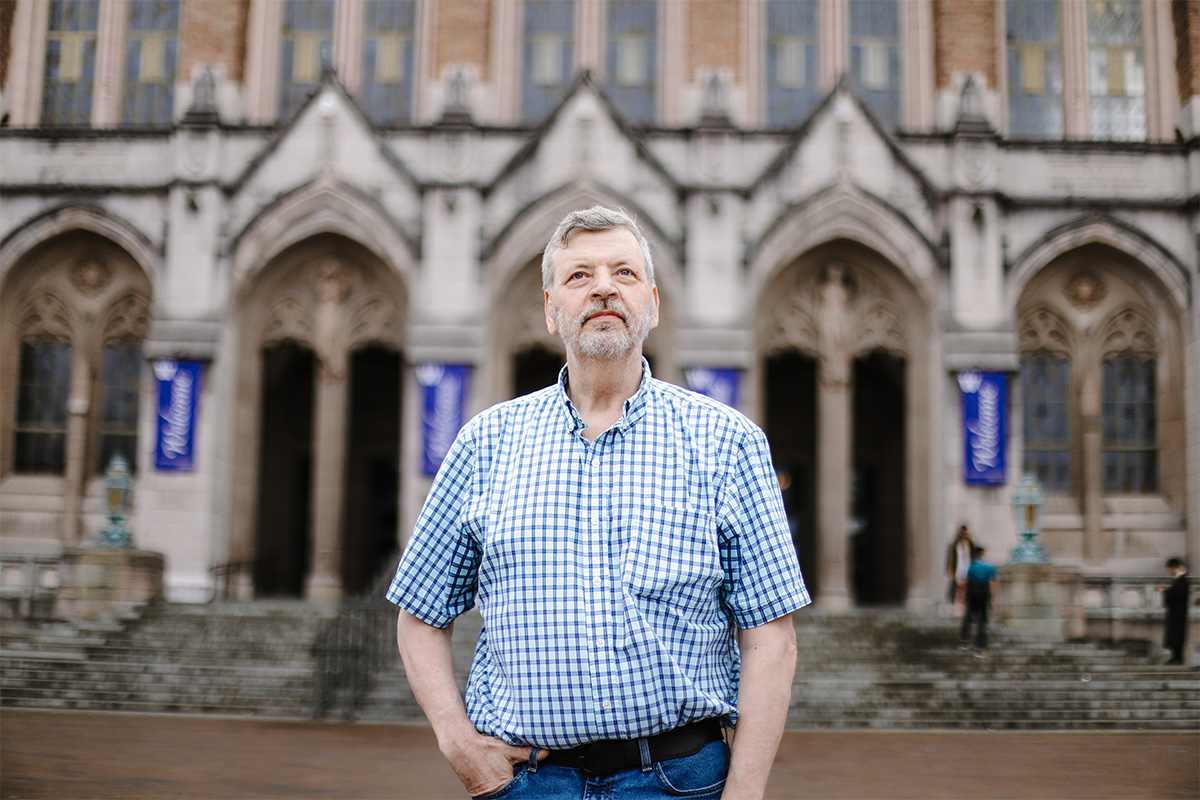
The court found that the school subjected computer science professor Stuart Reges to punitive employment actions and reprimand, based entirely on his speech disagreeing with their policy.
In 2019, when schools, corporations, politicians, and many others were partaking in their performative (and utterly embarrassing) “racial reckoning” overtures, the University of Washington adopted a policy recommending professors put a “land acknowledgment” on their course syllabi.
“Land acknowledgments” are meant to falsely state that, in actuality, Europeans did not build any of the United States of America, and that the land is still owned by the American Indian tribes that were once there.
The school even offered model language: “The University of Washington acknowledges the Coast Salish peoples of this land, the land which touches the shared waters of all tribes and bands within the Suquamish, Tulalip and Muckleshoot nations.”
Reges took the opportunity to point out how absurd that statement, while noting that none of those tribes can claim any land, because they did not build anything close to civilization on it.
“I acknowledge that by the labor theory of property, the Coast Salish people can claim historical ownership of almost none of the land currently occupied by the University of Washington,” Reges’ 2022 version of the statement in his syllabus read.
Faculty, staff, and students went into a frenzy of despair over Reges’ statement, with some administrators calling it “offensive” and others whining on social media.
According to Courthouse News Service, Judge Milan Smith, an appointee of President George W. Bush, said, “As I read these briefs. I was struck by how sensitive the students or others were. Some people would call it ‘woke,’ — they call whatever they want — but the reality is you’ve got people who were upset.”
The school asked Reges to remove the statement, then removed it without his consent, and ultimately opened a punitive “harassment” investigation into him after he refused to remove it, finding that Reges created an “immediate and significant disruption.” The school also created a competing class in order to lure students away from Reges’ class and point them toward a professor who would regurgitate the “land acknowledgment” statement.
The Foundation for Individual Rights and Expression (FIRE) represented Reges in the lawsuit, and the 9th Circuit has sent it back to the district court to determine the proper remedy for Reges.
Breccan F. Thies is the White House correspondent for The Federalist. He previously covered education and culture issues for the Washington Examiner and Breitbart News. He holds a degree from the University of Virginia and is a 2022 Claremont Institute Publius Fellow. You can follow him on X: @BreccanFThies.