Order Michael Finch’s new book, A Time to Stand: HERE. Prof. Jason Hill calls it “an aesthetic and political tour de force.”
Museum culture in the United States has been subject to progressive ideology on a grand scale.
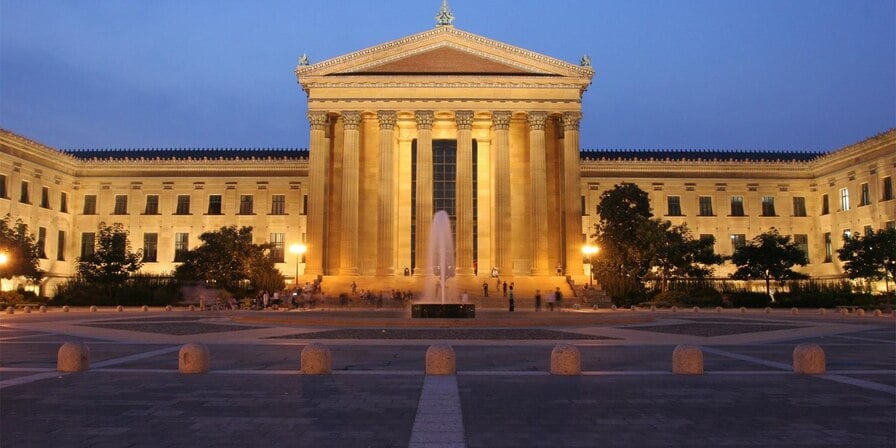
The Philadelphia Art Museum is a case study in how progressivism nearly destroyed a venerable institution known for its outstanding collections and international exhibitions.
In January 2022, then director and CEO Timothy Rub stepped down after a number of abuse allegations concerning the behavior of some museum managers. Despite this unfortunate development, the Rub administration did not attempt to tilt the museum into a Marxist cultural orbit. What accelerated that tilt, especially after Rub’s tenure, was fallout from national political events like the George Floyd riots and the #MeToo movement.
This created a progressive pandemic in the city, especially in Philadelphia’s museum culture.
With Rub gone, the museum’s board eventually decided on a new pick for its director and chief executive officer, the progressive female head of the National Gallery in Canada, Sasha Suda. The selection seemed to fit the political mood of the moment, although in retrospect the choice was blind-sighted and not very well thought out.
The board apparently never suspected they were hiring a social revolutionary even though the writing was clearly on the wall.
At the National Gallery, Suda had a reputation for firing curators and canceling exhibitions if she felt they violated woke canons. As reported in the Canadian press, she also had a strained relationship with donors and was on record as not liking rich people.
National Gallery director Marc Mayer, who held the position from 2008 to 2019, dubbed Suda’s reign as “The Russian Revolution…when ‘decolonization’ became a popular term in the museum’s vernacular.”
The National Post (Canada) reported that days after Sasha Suda abruptly resigned as director of the National Gallery, “16 prominent Canadians wrote Heritage Minister Pablo Rodriguez detailing the qualifications they felt were required of the next director. The implication was that Suda had few of them.”
Ironically, Timothy Rub was on the search committee that chose Suda. This begs the question: Why didn’t anyone on the committee detect the red flags around Suda before she was hired? This failure seems to suggest the board was initially influenced, and impressed, by Suda’s woke credentials.
Suda, after all, represented equity, diversity and inclusion. She seemed to fit blue-city Philadelphia like a glove. Unfortunately, the board wasn’t prescient enough to realize that white liberal females who tout their progressivism can be unpredictable loaded missiles.
But karma would soon kick the door in: On November 4, 2025, the board of trustees of the Philadelphia Art Museum, fired Suda following a 12-0 vote.
The Daily Mail reported that Suda had been fired “following mounting concerns from board members that her focus on inclusive exhibits was overshadowing other priorities.” The board also objected to the narrow focus of new exhibitions.
Suda, in the meantime, sued the museum, contending her dismissal was baseless. She pointed to a “corrupt and unethical faction” of the board that opposed her modernization efforts.
‘Modernization’ in Suda’s world, meant DEI-based goals such a hiring 40 percent of employees from diverse backgrounds by 2025, a so called “35 percent supplier diversity by 2025” as well as the raising of $5 million for African American art by 2025.
Suda claims the board knew of the DEI and equity changes she was about to make but offered no objections. That may very well be true, since Philly is saturated in this kind of ideology, from City Hall on down to the lowest Pep Boys operation in Kensington.
Suda then made a bold move: she changed the name of the museum from the Philadelphia Museum of Art, to the Art Museum of Philadelphia, the latter a much more colloquial sounding “street” branding in line with modernist minimalism. With the name change there was a logo change: a huge unsubtle black imprint of a dragon with its mouth open, a “hungry” metaphor maybe for what Suda, almost 3 years into her term, had “eaten up” and planned to “eat up.”
In December 2023, the museum under Suda’s direction, went into high DEI mode and hired Latasha Harling as ‘Chief People and diversity officer,’ a communist-sounding position Suda was known for creating at the National Gallery.
The board apparently had no objections to this, or if they had objections they were voiced quietly behind the scenes. I can imagine some board members mumbling, “While the name of this DEI position sounds socialist… why don’t we go ahead and let Sasha do her thing.”
DEI-hire Latasha Harling certainly did her thing when she was charged with theft.
It was reported that Harling put $58,000 in personal expenses on company cards. Harling was fired for this infraction, while Suda continued on her merry way and changed the name of the museum (at a cost of $200,000) to the consternation of a majority of Philadelphians.
Time will tell how Suda’s law suit progresses, although as The New York Times reported:
“According to the lawsuit, the investigation concluded that she [Suda] had been financially irresponsible and recommended that she be given the opportunity to resign.”
Suda’s lawyer, Luke Nikas, was quick to come to the Canadian’s rescue when he remarked that, “She is proud of her work and looks forward to presenting the truth.”
Of course she’s proud of her work. She’s an unrepentant, progressive white (woke) woman who wanted to continue the destructive mission she started at the National Gallery of Canada.