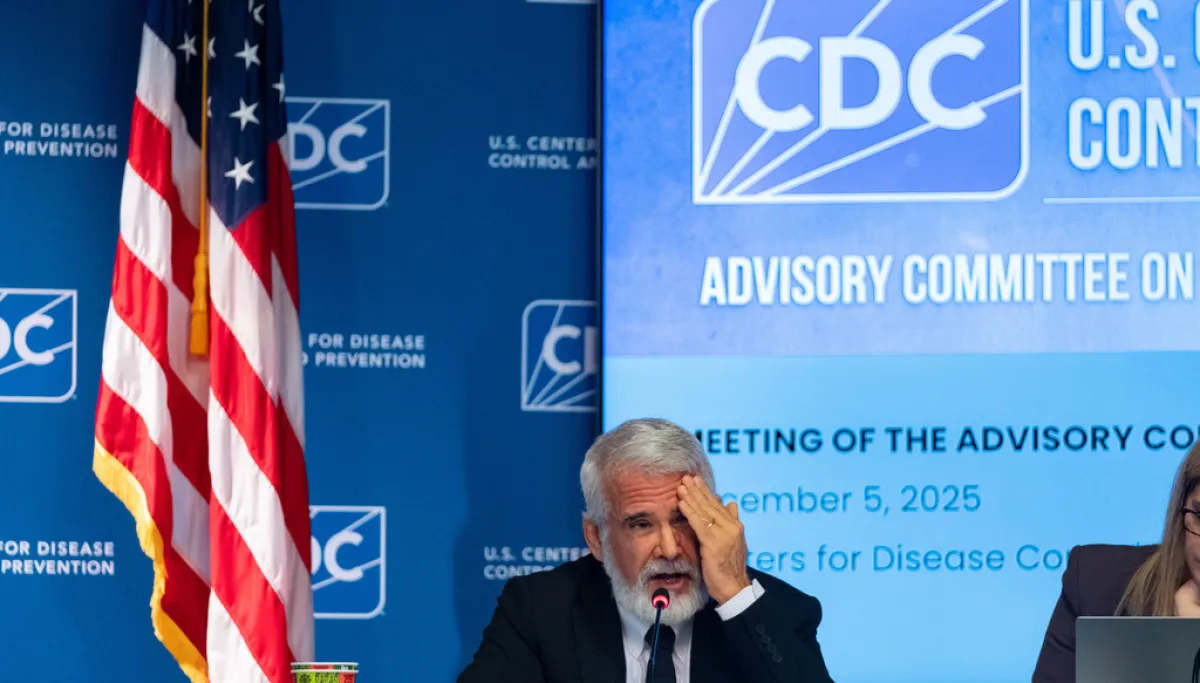
The vaccine safety panel advising the Centers for Disease Control and Prevention on Friday discussed the use of aluminum in vaccines and the connection between vaccine ingredients and autism, a controversial topic that is sure to further set the panel at odds with many medical professional groups and split Republicans.
The discussion did not result in any policy changing affecting the availability of vaccines, but it signals the direction that the committee could make changes to vaccine ingredient recommendations in 2026, which would be a significant win for the anti-vaccine wing of the Make America Healthy Again movement.
The Advisory Committee on Immunization Practices late Friday afternoon had a discussion on aluminum adjuvants, or ingredients in vaccines that are used to boost immune response in certain vaccines that do not use live viruses.
At least eight of the 18 childhood immunizations on the schedule contain aluminum adjuvants, including some for Hepatitis B, whooping cough or DTaP, HPV, and polio.
Although the CDC and Food and Drug Administration have said that there is no evidence to suggest that the cumulative amount of aluminum given to a child throughout the vaccine schedule is unsafe for children, Retsev Levi, a PhD in operations management from MIT, said that the scientific community needs more humility regarding the evidence.
“I think that unfortunately, babies cannot tell you how they feel more often than not. And I think that the biology of our body and our immune system and our central nervous system is is complex,” Levi said. “I think that there, there is evidence that stimulation of the immune system in utero or early early childhood can interact with the neurodevelopment.”
POLITICAL VIOLENCE ON THE RISE IN THE US: A TIMELINE OF KEY INCIDENTS
Dr. Joseph Hibbeln voiced that he was skeptical of spending precious time and resources on examining the effects of aluminum adjuvants but said that it might be necessary due to the public distrust in the CDC and other public health authorities as it relates to identifying the underlying relationship between vaccines and autism.
“It’s a very interesting question, and the public, now that it’s alerted to these issues, may demand us to make an evaluation of this question,” said Hibbeln.
This is a developing story.