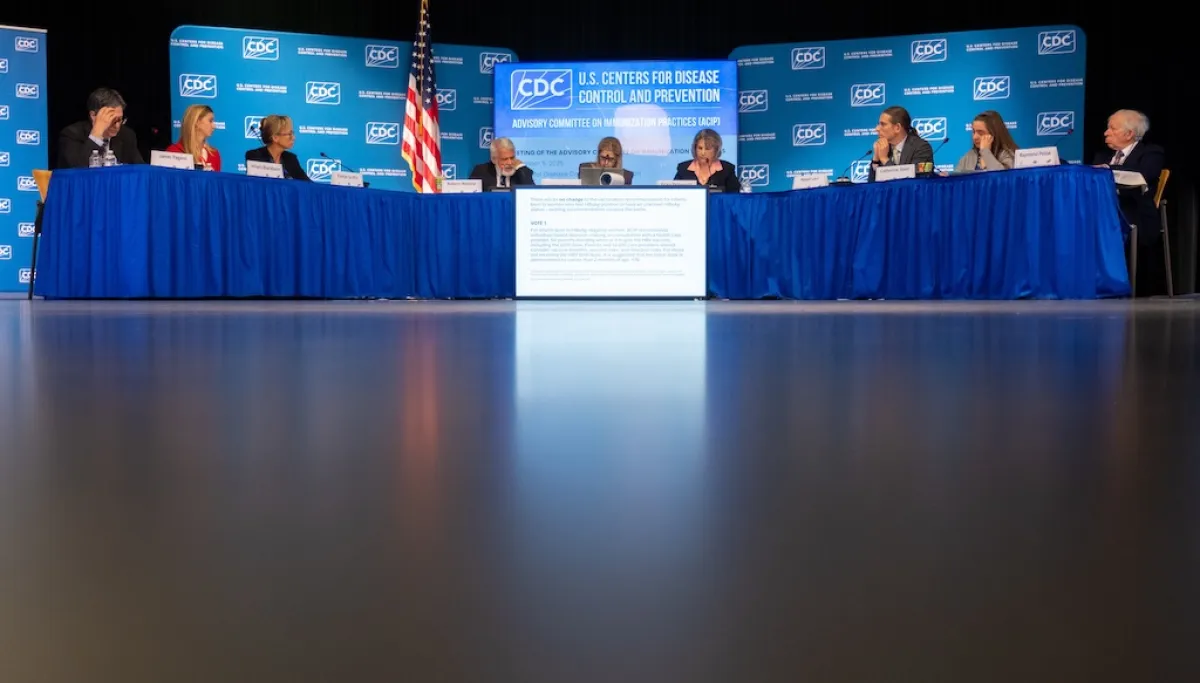
Health and Human Services Deputy Secretary and acting CDC Director Jim O’Neill announced Tuesday that the agency would fully accept the recommendation made earlier this month by the Advisory Committee on Immunization Practices to no longer recommend the vaccine for infants born to mothers confirmed negative for hepatitis B. Instead, it will promote “individual-based decision-making,” the CDC said in a press release.
Instead of vaccinating all infants within the first several hours of life, the committee recommended that infants born to mothers with a confirmed negative test not need to be vaccinated until two months of age.
O’Neill said in a press release Tuesday evening that the ACIP’s recommendation reflects “rigorous review of the available evidence.”
“We are restoring the balance of informed consent to parents whose newborns face little risk of contracting hepatitis B,” O’Neill said.
The birth dose of the hepatitis B vaccine has been a hot-button issue, as Health and Human Services Secretary Robert F. Kennedy Jr., a longtime skeptic of vaccines, has called into question the safety of the childhood vaccine schedule and raised the idea that there is a link between vaccines and autism.
Kennedy fired the original members of the ACIP, an independent advisory body, in June and replaced them with people who were more skeptical of vaccines and mandates.
Hepatitis B, a serious liver infection, can lead to chronic liver disease and liver cancer in 90% of infants born to positive mothers. Although mother-to-infant transmission is the leading cause of chronic disease for children, supporters of universal vaccination argue that there is at least some risk for infants to be exposed at home or in the case of false negatives.
The universal birth dose for the vaccine has faced opposition since it was recommended by the CDC 30 years ago, in large part because hepatitis B was closely associated with the HIV-AIDS epidemic of the 1980s.
NEWSOM DENIES CREATING ‘SHADOW CDC’ WITH ‘DREAM TEAM’ NEW HIRES WHO CLASHED WITH RFK JR.
The CDC’s guidance does not change the recommendation for vaccinating infants shortly after birth if their mothers test positive for hepatitis B or have an unknown infection status.
Some experts raised the fear that a change in guidance could lead insurers to stop covering the vaccine. However, the use of the term “individual-based decision-making” means that insurance companies will still be required to cover the vaccine for parents who choose to inoculate their infants in the hospital after birth.