Congress is moving to rein in prediction markets, with lawmakers in both chambers introducing a wave of bipartisan bills this week targeting insider trading and certain types of wagers.
The push reflects growing concern on Capitol Hill that prediction markets are rapidly evolving from a niche corner of the online betting space to a high-stakes arena where traders can profit from political events, government actions, military conflicts, and even what words President Donald Trump will mention in any given speech. These markets operate with far less federal oversight than traditional, regulated industries such as gambling and the stock market.
Lawmakers in both parties are now racing to put guardrails in place as the industry’s influence expands and questions mount over whether public officials or insiders could exploit nonpublic information for financial gain.
“The emerging nature of this whole market certainly begs a lot of questions and obviously, serving the American people is a privilege and not a pathway to profit, and it’s really a preventive measure,” Rep. Adrian Smith (R-NE), a co-sponsor of Preventing Real-time Exploitation and Deceptive Insider Congressional Trading Act told the Washington Examiner.
The PREDICT Act would bar members of Congress from trading on prediction markets tied to political events, policy decisions, and other government actions. A similar bipartisan effort is underway in the Senate.
“I think this is about generating discussions that we need to have about such evolving markets and not overly restrictive,” Smith said. “I think the narrow scope of this bill can keep the conversation going in a direction that’s productive.”
But these bills come as banning insider stock trading remains at a standstill, despite multiple bipartisan pushes, and little appetite to attach the prediction market betting to the stock trading ban.
“I feel like we gotta get the stock trading thing done,” Rep. Pramila Jayapal (D-WA) told the Washington Examiner. “I don’t want to keep expanding the pie. I think it’s good they just go on different tracks.”
Rep. Nikki Budzinski (D-IL), the Democrat lead on the PREDICT Act, told the Washington Examiner there were no plans to link the efforts.
“I think they’re likely to kind of remain two separate entities, but I think they are all under the same umbrella of anti-corruption, more transparency, more accountability, during a time when Congress has some of the most record-high disapproval ratings in the history of our government,” she said.
Lawmakers point to different triggers behind the rapid wave of legislation this week targeting prediction markets, though the timing has raised questions about how quickly concerns over the industry are coalescing on Capitol Hill.
“It was when a very small number of traders on Polymarket made bets very precisely, as it related to the timing of the United States strike in Iran, those very small group of Polymarket users cash in at well over a million dollars because of the preciseness of the bet that they made,” Budzinski said.
Smith, for his part, said the duo decided to introduce the bill because it was a “preventative” measure.
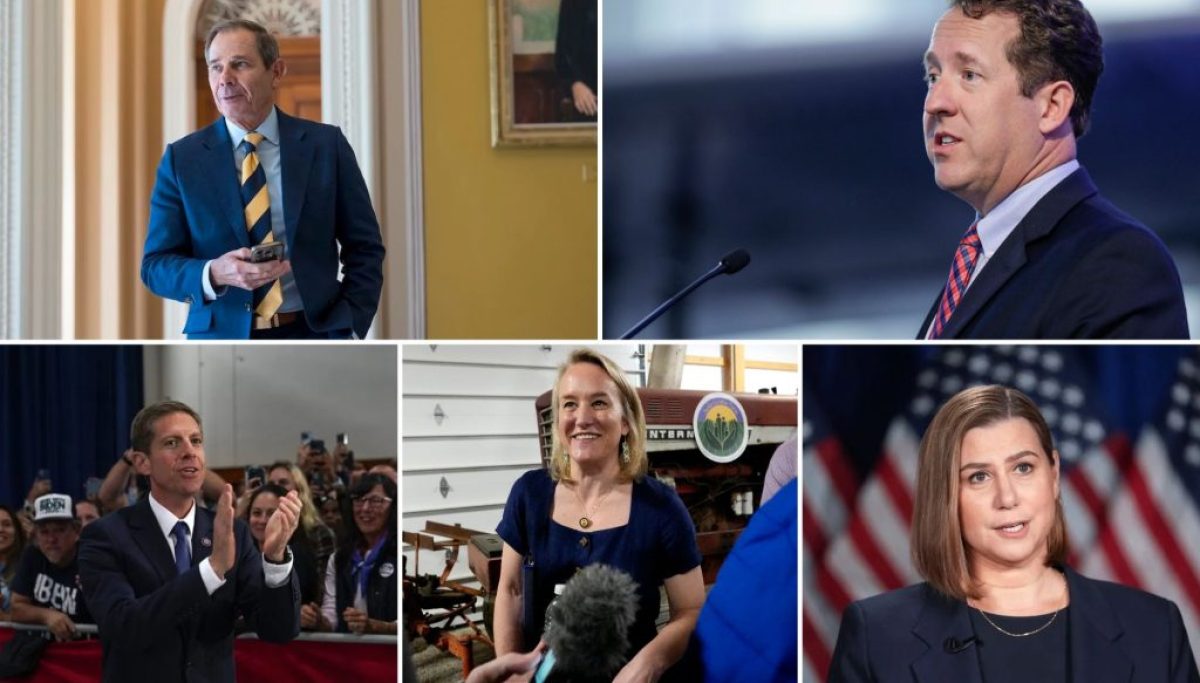
While Smith and Budzinski want to block government officials and immediate family members from profiting off the prediction markets, Rep. Mike Levin (D-CA) wants to tackle the issue from the industry side.
Levin has introduced a bill banning prediction markets from offering wagers on anything that involves terrorism, assassination, war, or an individual’s death, a companion bill to Sen. Adam Schiff’s (D-CA) bill in the Senate.
“No one should make a profit betting on war and death through prediction markets,” Levin said, announcing the bill. “While federal law prohibits prediction market contracts on terrorism, war, and assassination, there are still loopholes that allow traders to profit off them.”
Levin’s office notes that the Commodity Futures Trading Commission, which oversees prediction markets, already has the “authority to prohibit war, terrorism, and assassination contracts from being listed if they are determined by the Commission to be contrary to the public interest.” Levin’s bill would make the commission’s job more clean-cut by forcing them to ban any contracts outright on the topic, instead of just reviewing them and then making the determination.
In the Senate, lawmakers have introduced parallel measures.
Sens. John Curtis (R-UT) and Schiff introduced a bill that would ban prediction markets from offering wagers on sports. The bill was introduced on the heels of MLB naming Polymarket as its prediction market partner.
Curtis has also teamed up with Sens. Todd Young (R-IN) and Elissa Slotkin (D-MI) on a separate bill that bans federally elected officials and government employees from trading based on insider information on prediction markets.
FCC EXPLORING WAYS TO REQUIRE CALL CENTER WORKERS TO BE PROFICIENT IN ENGLISH
The bills have come even as prediction markets have taken steps to tighten their own guidelines.
This week, Polymarket released new “market integrity rules” focused on preventing individuals from profiting from stolen confidential information, illegal tips, or outcomes they have influence over. Kalshi, similarly, has added “new guardrails” to prevent sports participants and political candidates from trading on their own respective leagues and campaigns.