One of the most common themes across dystopian literature and cinema is the peril of a world where people no longer pursue meaningful work. From the Blade Runner series to Brave New World to The Giver, these imagined futures are places where technological advancements, narcotics, and mindless entertainment have rendered humanity distracted, dull, and morally depleted. So why are tech moguls so eager to create such a scary world?
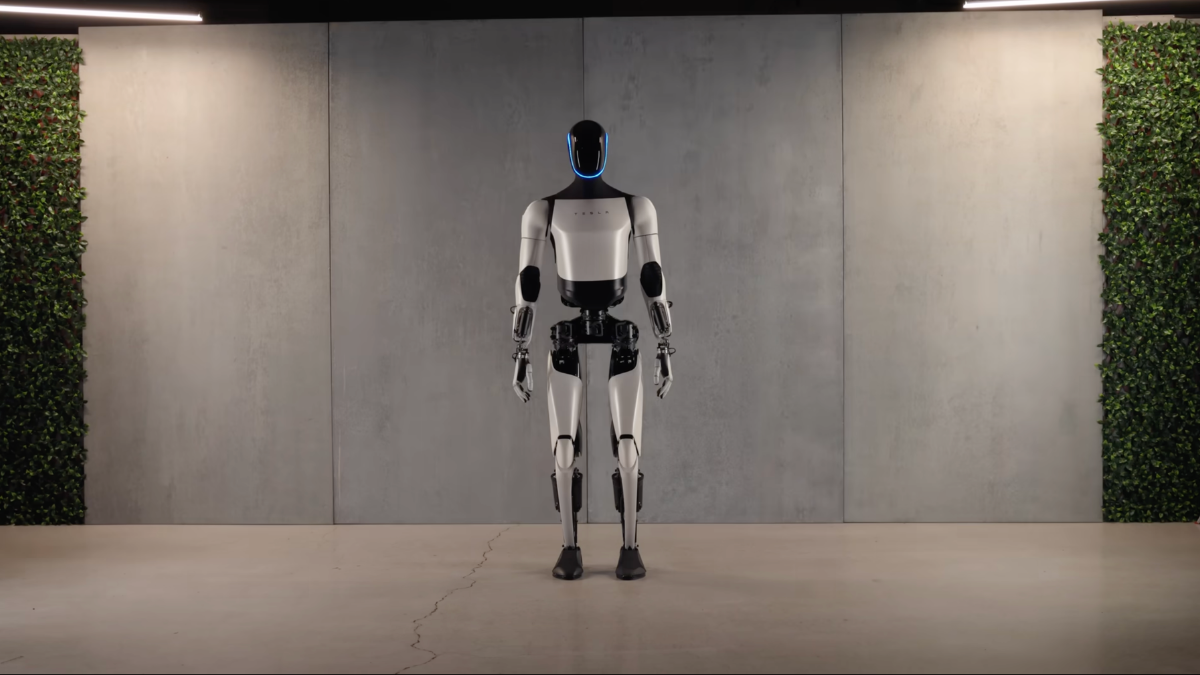
In March Amazon, Nvidia, and Atoms all initiated new efforts into advanced robotics and “physical automation,” which, according to Atoms, intends to “transform industry” by developing robots capable of performing labor-intensive work. Earlier this year Elon Musk pivoted Tesla to prioritize its new production line of humanoids, called Optimus. “My prediction is that work will be optional. It’ll be like playing sports or a video game or something like that,” Musk declared at the recent U.S.-Saudi Investment Forum. Ali Gohar, CHRO at Software Finder, has similarly predicted that “some high-skill knowledge workers will have the option to stop working thanks to automation and AI-driven software ecosystems.”
While innovations in robotic automation may create new and exciting economic opportunities, a world without work is something none of us should desire.
Robotic Automation Has Real Promise
Musk predicts a future within a few decades in which millions of robots will enter the workforce (and he’s certainly putting his money where his mouth is, publicly stating that he aims to derive 80 percent of Tesla’s value from Optimus robots). These robots won’t just be doing work in factories on the assembly line — Musk in March suggested that there would be more Optimus robots trained as surgeons than human surgeons in 10 years. That sounds outlandishly optimistic, though over the last few decades we have all learned not to underestimate the world’s wealthiest entrepreneur.
We may grimace at the thought of performing tasks we have always assumed would be done by well-trained human experts, but it’s worth remembering that automation over the last century has significantly improved the lives of laborers and created a remarkable amount of wealth, while often making life safer.
As a recent Heritage Foundation paper observed, “technology increases labor productivity, which increases investment and wages, which increases demand, which increases employment.” Modern digital advancements have enabled millions of Americans to do at least some of their work from home (or anywhere they like) while still using cutting-edge technology, and AI carries at least the potential to further this trend. Technological innovations inevitably disrupt, but they also create new opportunities that can (and often do) improve man’s lot.
But Nothing Can Replace Fulfilling Work
The problem with robotic automation (and the broader AI movement) is not the technological developments themselves — which, frankly, are only an extension of the calculator, which we are all grateful for — but that they are being developed and promoted by those who have such an impoverished anthropology. To hope for a future in which work is “optional” is deeply misguided, because labor, properly understood, is one of the things that defines us as humans. A future bereft of labor will not be a utopia, but a nightmare that undermines our humanity.
Regardless of one’s religious beliefs, it’s fascinating to observe that in the creation narrative of Genesis, the task given to man from the very beginning of creation is to till and keep the garden, and that man immediately begins naming and classifying the natural world. We were created not for mindless tasks or self-indulgence, but to work (Gen 2:15-20). Alternatively, we perceive from scientific and philosophical study that humans are capable of creating and using tools, doing abstract thinking, and forming complex, thriving communities that transcend anything done by other creatures. We design, we build, we contemplate, we speak, we read, we write, we craft, seemingly all because we are hardwired to do so in a way incomparable to anything on earth.
Indeed, it is in labor that we discover meaning and happiness. Anyone who has children knows that as much as they appreciate being entertained, even infants and toddlers want to engage with and manipulate their surroundings. The 3-year-old is proud of his drawing, because he created it.
Good work, philosopher Alasdair MacIntyre argued, is work that we do that “is recognized to be our work, our contribution, in which we are given and take responsibility for doing it and for doing it well” (emphasis added). To learn a task that requires practice, skill, and thoughtfulness engenders confidence and a sense of self-worth. That could be performing surgery, designing a bridge, preparing a delicious meal, or even doing what’s necessary to ensure a customer’s satisfaction. This extends just as much to the work involved in caring for our own property.
There is often suffering involved in labor, but even that is something we humans need. We grow and become better by finding the courage or patience to overcome a conflict or crisis. We struggle to find a solution to a problem. But when we do and see it through to completion, even if we’re tired and have dirt on our hands, we’re proud that we did. Because we did it.
Work Is Not a Problem From Which We Need Freedom
It’s worth remembering that the companies now investing in advanced robotics are the same ones that developed the digital technology that — though sold to us as a means of making us happier and more efficient — has also brought all manner of unexpected misery. Millions of Americans are addicted to their smartphones, social media, and streaming services in ways that do not equate to meaningful work or rejuvenating leisure, but rather facilitate isolation, anxiety, and even self-hatred. As many Americans are realizing, technology presented as improving society has very obviously made it less happy, less pleasant, and less human.
Admittedly, we are already living in a world in which robots do work once performed by men and women. We can be grateful for much of this, because in freeing us from time-consuming, mindless toil, it frees us to do more interesting and fulfilling tasks, whether at the job or in our personal lives. (I’m certainly glad for my dishwashing and laundry machines!)
Yet it is another thing to speak of the “amazing abundance” of a supposed future without work, language that, ironically enough, is very similar to how Karl Marx described an imagined communist utopia in his book The German Ideology. Labor is not, and has never been, a problem to “solve.” Making it such, as Marxism proved, will ironically create for us problems we can hardly imagine.
Casey Chalk is a senior contributor at The Federalist and an editor and columnist at The New Oxford Review. He is a regular contributor at many publications and the author of three books, including the upcoming “Wisdom From the Cross: How Jesus’ Seven Last Words Teach Us How to Live (and Die)” (Sophia Institute Press, 2026).