Order Michael Finch’s new book, A Time to Stand: HERE. Prof. Jason Hill calls it “an aesthetic and political tour de force.”
After the 12-day war that they fought against Iran last June, both Israel and the US announced that they had “obliterated” Iran’s nuclear program and severely reduced its store of ballistic missiles, as well as destroying ballistic missile factories. Iran at first denied the extent of the devastation, but now it has admitted that all of its centrifuge arrays, essential to the enrichment of uranium to weapons-grade, had indeed been destroyed. More on this admission, and how Khameini plans to proceed in the region, can be found here: “Iran giving up on nuclear uranium enrichment shows Khamenei has gone off the deep end – analysis,” by Yonah Jeremy Bob, Jerusalem Post, November 17, 2025:
Iran finally has come out and said it straight to the public: Five months after the June war with Israel, its fleet of 20,000 centrifuges, including several hundred advanced centrifuges, remains in ruins.
There is zero uranium enrichment going on in Iran right now, an Iranian official confirmed publicly on Monday.
Lest readers scoff at the comment as a cover-up, this is no cover-up.
Israeli intelligence – which incredibly and skillfully took apart each aspect of Iran’s nuclear program in June – confirmed the statement.
There are certainly extensive efforts by Iran to build nuclear facilities and to place them farther underground so that a new nuclear program might be built in the future. Therefore, Israel cannot take its eye off the ball on this issue for even a second.
Iran is building, but is years from completing, a new nuclear facility at Pickaxe Mountain. The Israelis are able to monitor the progress of the construction; when it gets closer to completion, the Israeli Air Force, without too much trouble — Iran has no credible defense against Israeli air strikes, as became obvious during the 12-Day War — will reduce Pickaxe to the same rubble as the nuclear facilities at Natanz, Fordow, and Isfahan became.
But the current state of play is that the Islamic Republic has made zero progress toward restoring its enrichment capabilities. Why?
Part of the answer is that Israel and the US destroyed Tehran’s nuclear facilities so thoroughly – and left so much rubble on top of them, with many of the facilities being somewhat or deep underground – that Iran simply decided that it would take too long and was not worthwhile to dig through the rubble to rebuild them.
Better to rebuild new facilities, even if they may not be operational for years, it thought….
Iran needs new facilities to raise the level of 60% enriched uranium it now possesses to the weapons-grade level of 90%. Right now its small amount of 60% enriched uranium simply sits there, while Iran tries to build a new enrichment facility. It is estimated that that project will take several years.
If on the eve of the June war, Iran had 2,500 ballistic missiles, Israeli intelligence estimated that this number would more than double to 6,000 sometime in 2026 and that by early 2028 it might top 10,000.
These were numbers which Israeli intelligence feared could overwhelm the IDF’s missile defense shield….
That is why the Israeli Air Force struck Iran’s existing supply of ballistic missiles, and also destroyed the plants where the missiles were produced. It will take years to rebuild those plants, and tens of billions of dollars that, at this point, Iran does not have. Ninety-percent of its oil is sold to China at deep discounts from the market price. Iran’s riyal has sunk to a new low: 1,060,00 riyals to the dollar. Forty percent of Iranians now live below the poverty line. And Iran’s historic drought is so great, according to Iranian President Masoud Pezeshkian, that the entire population of Tehran may have to be evacuated. Where will Iran get the money to pay for rebuilding its ballistic missile plants?
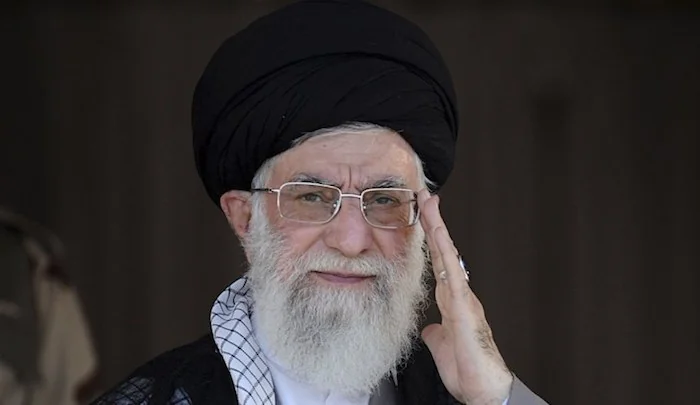
Khamenei has seen how Israel has destroyed the threat from all three of Iran’s proxies — Hezbollah in Lebanon, Hamas in Gaza, and the Houthis in Yemen — while also devastating the weapons arsenals, the airbases, and the planes that once belonged to Iran’s ally, Bashar Assad’s Syria. This has led Khamenei to turn his attention away from Israel; now Iran is focusing on its rivalry with Sunni Arab states for influence in the region. Israel is on the back-burner.
Iran’s radar systems, including the Russian S-400 anti-missile defense system that protected Tehran, were no match for Israel’s fighter jets, drones, and missiles, which in the first hours of the June war established complete mastery of the skies over Iran. Despite their having been proved of little worth against Israeli planes and missiles, Khamenei is rebuilding those same defense systems. He is also trying to rebuild the ballistic missile manufacturing plants that Israel destroyed, with no improvement in his defenses. And Israel is prepared to destroy those radars and ballistic missiles again, without having to devote any of its effort to devastating nuclear facilities that were destroyed in June and will not be replaced for several years.
The IDF for now is not worried about Iran’s lengthy effort to build a new uranium enrichment plant at Pickaxe Mountain and other, related nuclear facilities. it knows that project will take years. And should the Iranians be coming close to its completion, the IDF can again reduce it to rubble. The IDF is now concentrating its efforts on preparing for attacks on the storehouses of ballistic missiles and the plants where they are built.
Iran is becoming steadily weaker. It is now stripped of all of its proxies — Hamas, Hezbollah, the Houthis, Assad’s Syria — that once might have helped Iran in a face-off with Israel. If Tehran were to try to launch a ballistic missile attack on Israel, the response would be much more powerful than the one the IDF delivered in June, when the war was halted, some in Israel say too soon, by President Trump’s announcement of a ceasefire on June 24.
With ceasefires in Gaza with Hamas, and in Lebanon with Hezbollah, with the Houthis having declared an end to their attacks on Israeli shipping in the Red Sea, and with Assad’s weapons, airplanes, and airbases destroyed, and Syria no longer an ally of Iran, Israel can concentrate all of its military might on Iran’s ballistic missile stockpiles and manufacturing plants. Iran’s nuclear threat for now has ended; it will take years to build new uranium enrichment facilities. It is military madness for Khamenei to again be building ballistic missiles to be used against Israel. But he lives in a shame/honor culture, and his honor, and that of his country, depend upon his being ready to take on the Jewish state — even if it means a certain defeat — yet again. Honor is preserved in the attempt, not in the result.