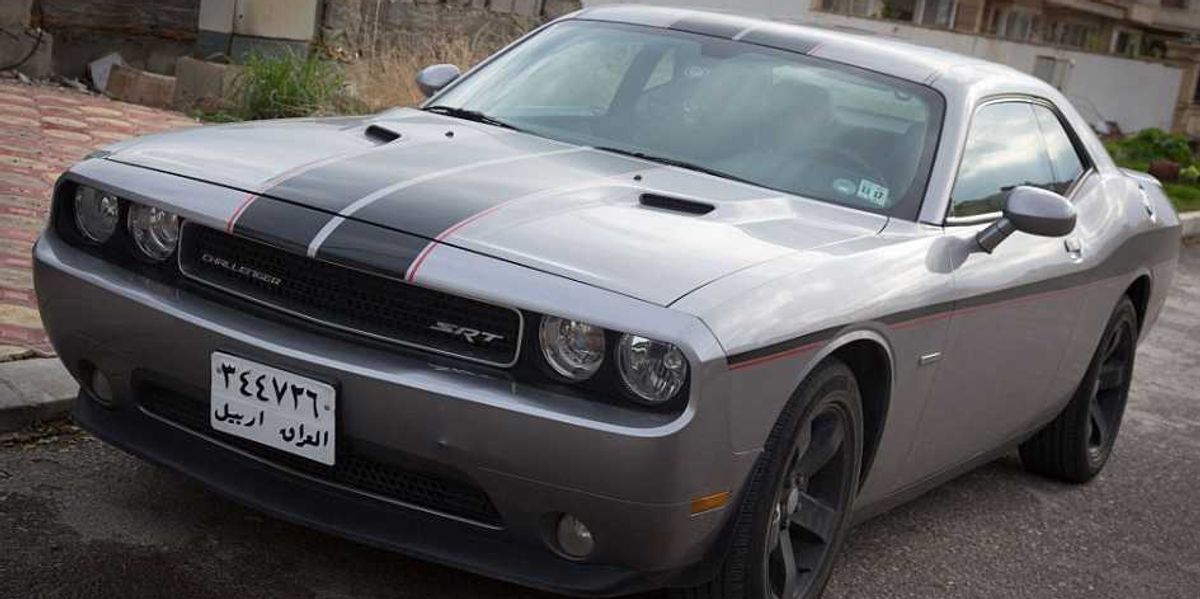
One of the first things I did when I moved to Dubai was buy a Dodge Challenger. Not the volcanic Hellcat or the feral Scat Pack — the SXT, the V6 base model.
Nevertheless, for those nine months in 2023, the car carried itself like it had seen things it couldn’t legally discuss. I miss it the way a grounded teenager misses his phone — painfully and often. The car was, in many ways, gloriously pointless. But to me, it was absolutely perfect. Nobody buys a Dodge for practicality. You buy one because fun is a dying art and driving is supposed to feel alive.
America insists this is why we can’t have nice things. The UAE shrugs, inhales some shisha, and says, ‘Great, we’ll have them instead.’
What fascinated me then, and still does now, is how the Middle East has quietly become the last stronghold for real American muscle.
Dubai drift
While America agonizes over emissions charts and frets about carbon neutrality, Dubai is out there treating a supercharged V8 like a household appliance. You hear them everywhere — echoing off glass towers, screaming down Sheikh Zayed Road, prowling through parking lots like metal predators looking for prey. It’s the sound of a culture still in love with combustion, unashamed of horsepower, and utterly allergic to guilt.
The region adores these cars. Worships them, even. In the West, muscle cars are increasingly treated like contraband with headlights, monitored by regulators the way principals monitor school corridors. But in the UAE, they’re symbols of power, freedom, excess, and the simple joy of pressing a pedal and feeling physics panic.
The numbers back it up. The UAE’s classic-car market is projected to grow from roughly $1.23 billion in 2023 to nearly $1.83 billion by 2032, with collectors routinely paying well above American estimates. This is particularly true for rare models, such as the 1971 Plymouth Hemi ’Cuda convertible that sold for about $4.2 million in Dubai, roughly 35% above its American estimate.
Men in flowing robes and sandals race around industrial estates with the confidence of emperors and the cornering ability of a wardrobe on wheels. Somehow, by the grace of God (not Allah), it all works. There’s something delightfully surreal about watching a man dressed like he stepped out of the book of Exodus drift a Challenger with monk-like serenity.
Combustion cosplay
Back home, Dodge now calls its new EVs “muscle.” But that’s like a woman getting very expensive surgery in a very private place and calling herself a man. Without the roar, the vibration, the combustion, it’s cosplay — an impersonation that fools no one except the marketing department. You can’t call something a muscle car if it sounds like a dentist’s drill.
Real muscle needs rumble. It needs that primal, throat-deep growl that shakes your sternum and announces your arrival three zip codes away. Take that away, and you’re just a sad sack who should have bought a Tesla and called it a day.
When muscle cars disappear, the loss isn’t just mechanical but cultural. For decades, when the world pictured America, it didn’t picture Washington or Wall Street. It pictured steel, cylinders, and a V8 rumble rolling across a desert highway.
Hollywood hardwired that association into the global imagination. “Bullitt,” “Vanishing Point,” “Smokey and the Bandit,” even the “Fast & Furious” franchise, for all its awful acting and cheese thick enough to insulate a house. I still remember being 8 years old, watching “Gone in 60 Seconds,” and thinking, Yes, this is what adulthood should look like.
You could grow up thousands of miles away, never having set foot on American soil, and still recognize the sound of a Mustang firing up. It was the unofficial anthem of the greatest nation on Earth, a national ringtone encoded in exhaust fumes. It symbolized everything the country loved about itself: rebellion, possibility, the belief that any man with a heavy foot and enough premium gasoline could outrun his problems. It was an identity as much as a mode of transport.
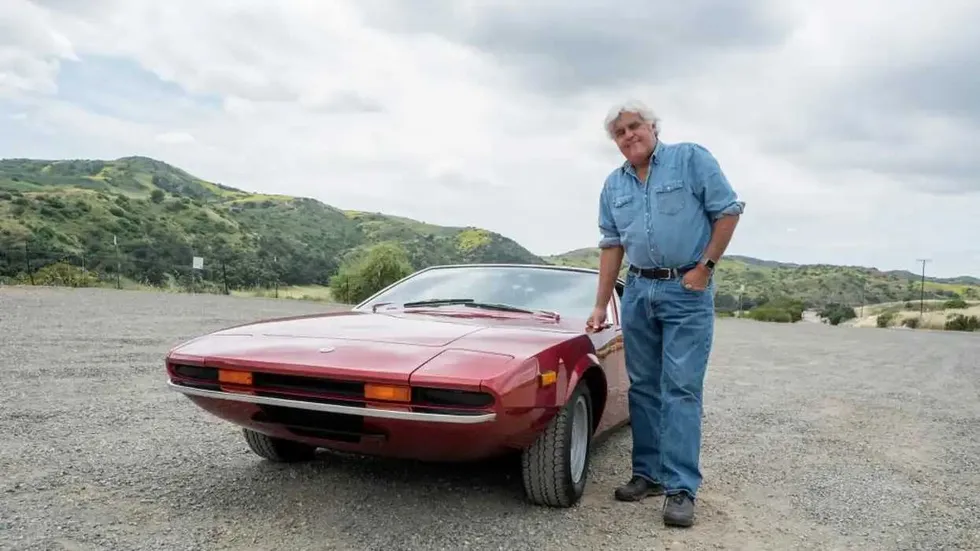
RELATED: ‘Leno’s Law’ could be big win for California’s classic car culture
 CNBC/Getty Images
Revvers’ refuge
And that’s the tragedy. A silent America isn’t an America anyone recognizes. The muscle car was more than a vehicle. It was a character, a co-star, an accomplice. Kill it off, and the whole story changes — and not for the better.
And oddly, it’s the Middle East that seems most intent on preserving that myth. It’s as if the region has been appointed the accidental curator of America’s automotive soul. The UAE, in particular, feels like the final refuge where these cars can run wild. Environmental regulations exist there, but only in the same way that scarecrows exist — present, decorative, and cheerfully ignored. The country is spotless, the air somehow clearer than cities that run entire marketing campaigns screaming “sustainability!” And yet it’s bursting with Challengers and Chargers. America insists this is why we can’t have nice things. The UAE shrugs, inhales some shisha, and says, “Great, we’ll have them instead.”
It makes you re-think the demonization of muscle cars. We were told they were barbaric, dirty, irresponsible — rolling catastrophes portrayed as personal hand grenades lobbed at the atmosphere. Meanwhile, Dubai keeps its streets cleaner than half of California while simultaneously hosting enough horsepower to make a U.N. peacekeeper reach for the radio. The contradiction is almost poetic. The place accused of excess manages to be pristine, while the places preaching virtue can’t manage basic cleanliness without a committee and a grant.
Selling sand to a camel
A quick disclaimer for anyone feeling inspired to follow my lead. Dubai might be paradise for muscle cars, but it’s also the Wild West of used-car dealing. A shocking number of “mint condition” imports arrive after being wrapped around a tree somewhere in North America, are given a light cosmetic baptism, and are relaunched onto the market as if they had spent their lives humming gently down suburban streets.
Half the salesmen — greasy, fast-talking veterans from Lebanon, Palestine, and everywhere in between — could sell sand to a camel. You need your eyes open. Fortunately, I knew the sites where you can run a chassis number and see the car’s real history, dents, disasters, and all. It saved me from driving home in a beautifully repainted coffin.
Even with this dark underbelly, Dubai’s affection for American muscle is entirely authentic. You see it on weekend nights at the gas stations, which double as unofficial car shows. Dozens gather, engines idling like caged animals, while men compare exhaust notes with the seriousness of diplomats negotiating borders. Teenagers film everything, because why wouldn’t you document a species this endangered? The entire scene feels like a sanctuary, a place where mechanical masculinity hasn’t been entirely euthanized.
Muscle migration
Some of the funniest moments came from watching Emirati drivers — men dressed in immaculate white garments — exit their cars with Hollywood swagger, as if the Challenger were simply an extension of their personality. And in many ways, it was. It was part “Need for Speed,” part Moses at the Marina. And somehow, without irony, they pulled it off.
Living there made me realize that muscle cars aren’t dying everywhere. Rather, they’re migrating. Fleeing the jurisdictions that shame them and settling in regions that still celebrate joy. The Middle East has become the last refuge for these beasts. Not because it rejects the future, but because it refuses to surrender the past for a machine that feels clinically dead on delivery.
And that’s the real tragedy. America built the muscle car, mythologized it, exported it, then surrendered it to paper-pushers in Priuses, armed with clipboards and calculators. The UAE bought the export and kept the myth alive. My Challenger is gone now, sold to a man who claimed he needed it for “family errands.” But the fond memories of tearing around the city have never faded. America may have abandoned its automotive adolescence, but Dubai, thankfully, hasn’t.
Someone has to keep the engines roaring. And right now, it’s the men in sandals.