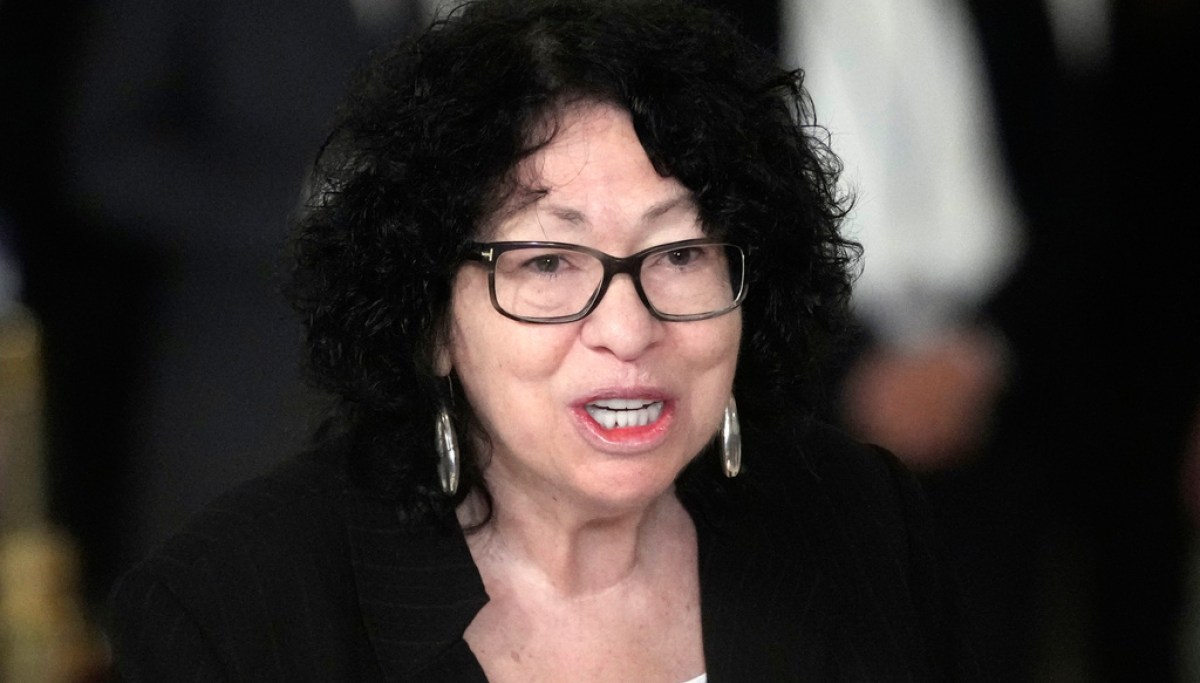
“It shows we’re way too predictable,” she said during a Thursday event at the University of Alabama School of Law. “And we may not be stepping out of our normal thinking and opening our minds to new ideas enough if something like an AI system can actually predict with that high a level of success what the outcome will be.”
The 71-year-old liberal justice did not point to any specific AI models, such as Anthropic’s Claude or OpenAI’s ChatGPT, responsible for predicting the outcome of certain cases but noted she was made aware of the topic by a colleague.
A machine-learning algorithm accurately predicted 71.9% of the justices’ votes and 70.2% of the high court’s decisions between 1816 and 2015, according to a 2017 peer-reviewed study. That success rate may be higher now that AI models have progressed significantly since then.
Sotomayor is cautious about how the rapidly advancing technology will be incorporated into law practice and the court system in the future.
“AI is a sophisticated human,” she said. “It is — all of its input is input from human beings. And because it is that, it has the potential to perpetuate the very best in us and the very worst in us.”
Still, she recommended that Alabama law students attending the event use AI to streamline their work.
“Do not graduate this institution without learning how to master AI as a tool,” Sotomayor advised.
ANTHROPIC LOSES BID TO BLOCK PENTAGON’S ‘SUPPLY CHAIN RISK’ DESIGNATION
The Economist started employing an AI tool last summer to anticipate the end result of rulings handed down by the Supreme Court. At the time, the British publication assured its readers that “SCOTUSbot does not threaten to replace human analysis of the American justice’s work” but it instead “offers a lens on AI itself, and may shed light on the role of politics in the court.”
Last week, the Economist said its AI bot believes President Donald Trump will lose his administration’s case against birthright citizenship. A final decision on the issue will come by the end of June or the start of July when the justices recess for the summer.