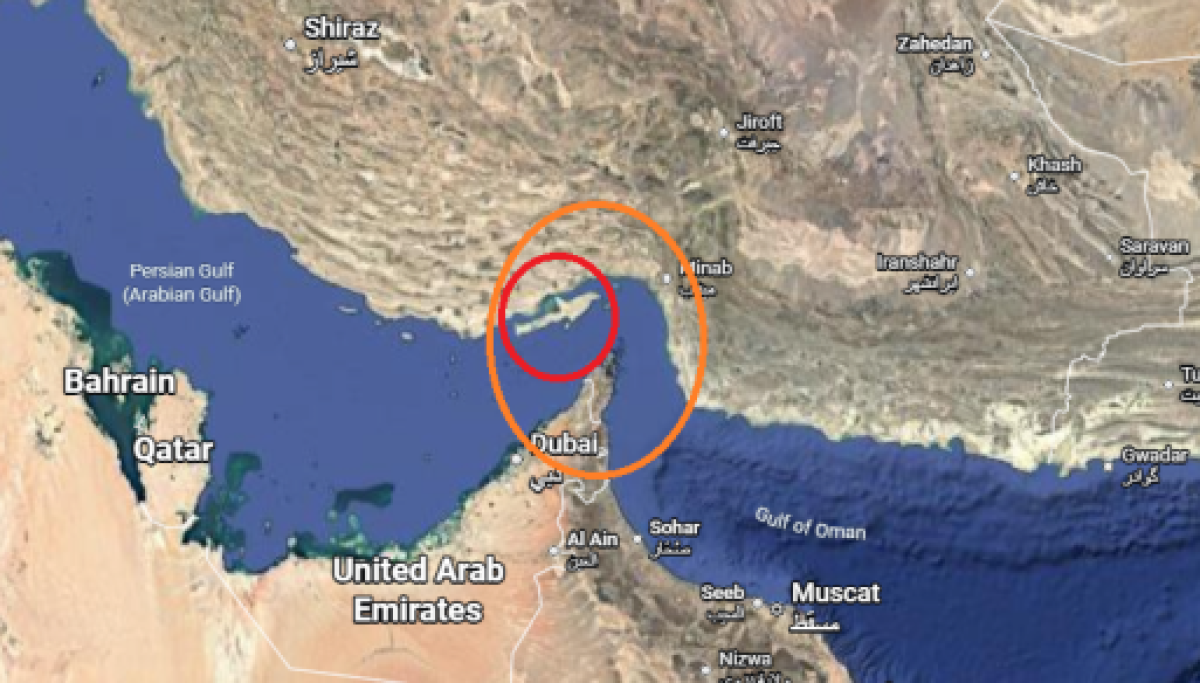
In recent weeks, the world has seen exactly what happens when a reckless regime effectively controls the Strait of Hormuz. Shipping routes disrupted. Energy prices spiking. Insurance costs surging. Markets reacting in real time. This is the cost of instability at a chokepoint that powers the global economy.
And yet, the Iranian regime controls one side of this passage and has consistently abused that responsibility.
The Iranian regime has harassed commercial vessels, seized tankers, threatened closure of the strait, laid naval mines, and deployed fast attack boats to swarm and intimidate ships. It has fueled global chaos, disrupting markets, trade, and security.
TRUMP SAYS OTHER COUNTRIES WILL HAVE TO BE RESPONSIBLE FOR STRAIT OF HORMUZ SECURITY
Under international law, the strait must remain open to all ships in transit. But control of the water has allowed the Iranian regime to flout that principle repeatedly.
When those two laws collide, “free passage” becomes an empty promise. We cannot pretend both can coexist. That contradiction cannot stand. It demands a new framework.
International law only works when it is enforced. When a regime can break it without consequence, the system fails.
When the system fails, it must be replaced.
Oman, by contrast, has acted as a responsible and stabilizing steward. Its sovereignty should remain intact. The Iranian regime’s should not be treated the same way.
The Strait of Hormuz is essential global infrastructure. It sits at the core of the world’s economic stability, energy security, and prosperity. It cannot be left vulnerable to a regime that is actively weaponizing it.
It is time to act.
That means establishing an international security and governance framework that limits the Iranian regime’s ability to threaten or disrupt the strait. This does not have to be permanent dispossession. It can be conditional sovereignty. If the regime wants the privileges of controlling a global chokepoint, it must meet all the responsibilities that come with it. Until then, those privileges must be revoked.
There is also a second problem.
For decades, the U.S. has carried the burden of protecting global shipping lanes, including the Strait of Hormuz. Others have benefited without contributing proportionally.
That model no longer works. If the global economy depends on this waterway, then the global economy must help secure it.
Contributions should be based on a combination of factors: volume and value of goods transported, frequency of transit, and overall dependence on the route. The more a country relies on the strait, the more it contributes to protecting it.
DAN HANNAN: THE IRAN WAR HAS ALREADY FAILED
Those that refuse to contribute should not expect equal treatment. Their ships can be deprioritized, delayed, and subject to higher costs. The economic consequences will quickly make clear what free riding actually costs. There should be no free riders on a system this critical.
The U.S. should lead. But leadership means enforcing participation, not subsidizing it.
And there is a window to do exactly that.
President Donald Trump is confronting adversaries and demanding more from allies. We are already seeing countries that initially resisted stepping up begin to shift their position. They hesitate, then recognize that refusing to act is not a real option. And they adjust. This is one of those moments.
A coordinated system that combines security presence, intelligence sharing, and proportional funding would keep the strait open and send a clear message that no regime can hold the global economy hostage.
There should also be a path forward.
If the Iranian regime changes course and demonstrates sustained, verifiable responsibility, then elements of sovereignty can be restored. But that must be earned. Any restoration must include mechanisms to immediately reimpose protections if the regime reverts to its current behavior. The world cannot rely on promises.
Right now, the cost of inaction is being paid by everyone. Higher fuel prices. Rising shipping costs. Increased prices for goods. Slower growth. And if this escalates further, the cost will include military intervention, massive expenditures, and potentially lives lost.
The longer this is delayed, the higher the price. The Strait of Hormuz is too important to leave in the hands of a regime that has already shown how it will use that power.
The solution is clear.
IRAN ATTACK ON DIEGO GARCIA IS A ‘THREAT TO BRITISH INTERESTS,’ UK SAYS
Limit the Iranian regime’s control until it proves it can act responsibly. Maintain Oman’s sovereignty. Require every nation that benefits from the strait to help secure it. And ensure the U.S. leads a coalition that enforces it.
Because the choice is simple. Either the world secures the Strait of Hormuz now. Or it will pay a far greater price, starting now and continually compounding for as long as this continues.
Jason D. Greenblatt was the White House Middle East envoy in the first Trump administration. He is the author of In the Path of Abraham: How Donald Trump Made Peace in the Middle East and founder of Abraham Venture LLC.