Supreme Court Chief Justice John Roberts’ “same Constitution” line during Wednesday’s oral arguments over birthright citizenship at first sounded like a defense of originalism. But in fact, it was the exact opposite.
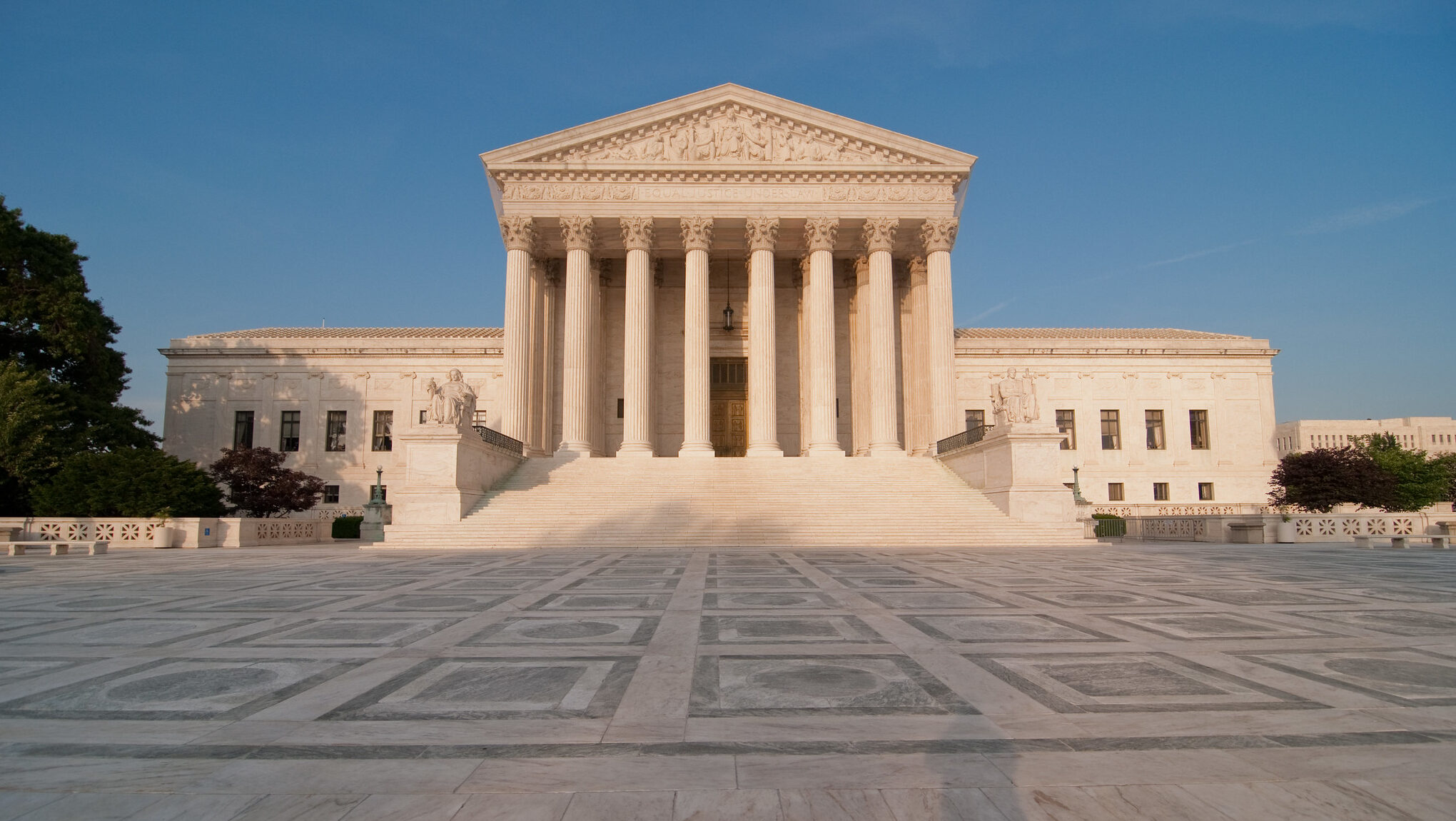
The high court heard oral arguments Wednesday in Trump v. Barbara, a case challenging the president’s 2025 executive order restricting birthright citizenship. U.S. Solicitor General John Sauer, arguing for the administration, pointed out that the world that existed when the 14th Amendment was ratified is not the world that currently exists. “Eight billion people are one plane ride away from having a child who is a U.S. citizen,” Sauer pointed out.
Roberts responded with what was seemingly an attempt to posture himself as a principled originalist, saying that while it may be a “new world, it’s the same Constitution.” His response met with adoration across the spectrum.
The Cato Institute’s Thomas Berry said Roberts’ line was the “line of the morning.”
“That really does sum up why the government’s policy-based arguments had no bearing on the constitutional question. Today’s oral argument focused on the original public meaning of the Fourteenth Amendment’s text, which is the correct approach.”
Michigan’s Ottawa County GOP said, “It’s a tough argument our side is making … Suddenly, the conservative position is that we’re no longer originalists? The Solicitor General should not have said, ‘It’s a new world.’ Roberts: ‘It’s the same Constitution.’ We cannot expect a majority, originalist court to suddenly change on a dime.”
Reason reporter Billy Binion lauded the line as his “favorite Supreme Court exchange in recent memory.” “Into my veins,” he added.
Adam Cochran called Roberts’ one-liner “fantastic” and said it shows Roberts is “capable of having a spine.”
But the idea that the “same Constitution” would grant birthright citizenship to children of Third World illegal aliens or patrons of birth tourism companies is not originalist. In fact, it’s the opposite.
Originalists are supposed to ask what the Constitution’s words were understood to mean at the time they were adopted. The idea that the framers of the 14th Amendment would have understood the amendment to grant birthright citizenship to children of illegal aliens or customers of a birthright tourism company is risible because such problems did not exist — they are indeed part of a new world. Retrofitting the 14th Amendment to cover unprecedented circumstances is not originalist.
A few decades after the ratification of the 14th Amendment, the Supreme Court issued a decision in United States v. Wong Kim Ark. The case involved a man born in the United States to Chinese parents who were not citizens but were legally residing in the United States. The court ruled in his favor. But the case did not rule on whether children born to parents illegally residing in the country are granted citizenship, nor did it rule on whether the children of temporary visitors who come to the U.S. via birth tourism companies to give birth and then return to their native countries satisfy the criteria for citizenship under the 14th Amendment.
Extending the 14th Amendment — or Wong Kim Ark’s holding — to apply to millions of illegal aliens’ children is not originalist by any standard. If the original meaning of the text is supposed to be the guide — and the original text did not in any way foresee mass illegal migration or birth tourism — then it’s not originalist to broaden the scope of the amendment to fit the current political circumstances.
The Constitution has not changed — nor is that the debate. The debate is whether the current application of the Constitution reflects what the framers originally had in mind when drafting it.
Brianna Lyman is an elections correspondent at The Federalist. Brianna graduated from Fordham University with a degree in International Political Economy. Her work has been featured on Newsmax, Fox News, Fox Business and RealClearPolitics. Follow Brianna on X: @briannalyman2