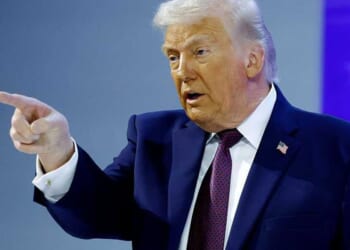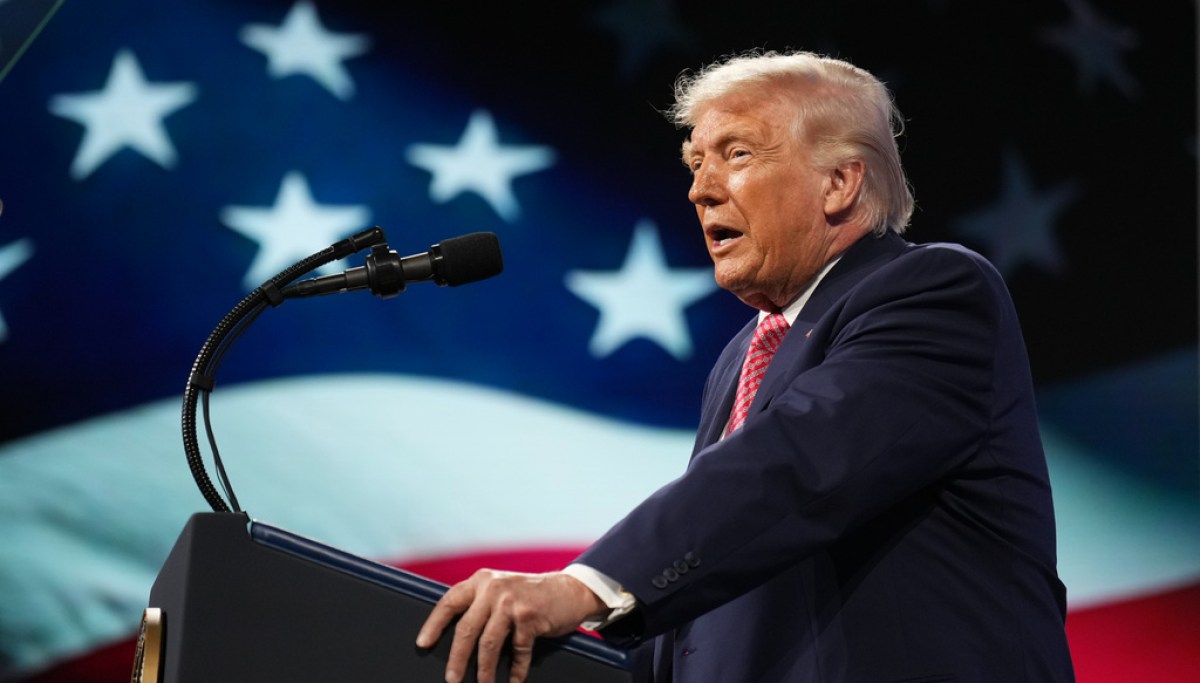
President Donald Trump is set to give his most extended public remarks explaining the Iran war and updating voters on its progress in a televised address on Wednesday night.
Trump’s speech, announced Tuesday night by White House press secretary Karoline Leavitt as “an important update on Iran,” comes amid questions about whether the war is winding down or getting ready to escalate with ground troops.
“Why now?” is a question Trump has faced since Operation Epic Fury began a month ago. That question will be asked anew if he declares victory in Iran in his remarks. Given public uncertainty about the war aims, it is also an apt question for why he waited until now to deliver an address to the nation. He barely mentioned Iran in his State of the Union speech, though he reiterated that the regime would not be allowed to acquire a nuclear weapon.
But Trump and his subordinates haven’t exactly been silent, either.
Secretary of State Marco Rubio released a nearly two-minute video this week laying out the rationale for the intervention, arguing that it was necessary to degrade Iran’s military capacity to guard against future attacks on its nuclear program.
“Iran was trying to build a conventional shield, in essence, have so many missiles, have so many drones that no one could attack them,” Rubio said. “We were on the verge of an Iran that had so many missiles and so many drones that no one could do anything about their nuclear weapons program in the future.”
That would presumably include the United States and Israel, which last year struck Iranian nuclear facilities in Operation Midnight Hammer.
Trump signaled on Tuesday that the war could be coming to an end soon. “I would say that within two or three weeks … but we want to knock out every single thing they have,” he told reporters in the Oval Office. “Now, it’s possible that we’ll make a deal before that.” Trump has said the war could conclude without a negotiated settlement or the reopening of the Strait of Hormuz.
At the same time, Trump could easily announce new operations to seize Iranian uranium or invade Kharg Island rather than declaring victory and going home.
A big part of Trump’s strategy for Iran and other global hot spots has been maintaining an element of surprise, something War Secretary Pete Hegseth emphasized on Tuesday.
“Our adversary right now thinks there are 15 different ways we could come at them with boots on the ground,” Hegseth explained. “And guess what? There are. So if we needed to, we could execute those options on behalf of the president of the United States and this department, or maybe we don’t have to use them at all.”
The U.S. has been able to inflict serious damage on Iran’s military and missile-launching capabilities, but has not fully toppled the regime or reopened the Strait of Hormuz. Trump has characterized the current Iranian negotiating partners as a “new and more reasonable regime,” though Rubio has acknowledged that they might not end up ruling Iran after the war.
There are fears that the war will choke off the oil supply, sending prices as high as $150 per barrel just months before Republicans have to defend their narrow congressional majorities in the midterm elections.
Trump has managed to keep most of his base behind the Iran war, despite opposition from high-profile new media supporters of the administration. But it polls badly among independents and overall doesn’t much outperform Trump’s job approval rating, which sits at 41.3% in the RealClearPolitics polling average. A Reuters/Ipsos poll found that two-thirds would like to see a speedy end to the war.
TRUMP’S TWO PATHS FOR IRAN WAR: NEGOTIATION OR ESCALATION
Wednesday night is an opportunity for Trump to make the case for staying the course, sending additional troops, or declaring the mission accomplished in Iran.
What exactly Trump will say, or choose to focus on, remains up in the air.