Remember the viral trend from a few years ago when America’s women were mystified to learn their husbands, fiancés, and boyfriends regularly daydreamed about the Roman Empire? Given this, you’d think those in the field of classics would be overjoyed, eager to capitalize on this masculine obsession. Millions of American men want to know more about ancient history, and who better to benefit from that interest than those Ph.Ds fluent in Latin and ancient Greek? Commence with the podcasts, YouTube channels, and web-based continual learning!
But no. At an event last September in Brooklyn entitled “Radical Re-Imaginings: Classics for the 21st Century,” prominent academics from leading American universities discussed the provocative theme, “Forget the Classics?” Many progressive classics professors now question the relevance of their field, which some now call “Ancient World Studies,” because of the academic discipline’s alleged association with white supremacism. One panel featured Princeton’s Dan-el Padilla Peralta, who has notoriously called for the destruction of classics because of its alleged ties to racism, sexism, and misogyny, while classics professor Curtis Dozier declared: “Doing classics in dark times may mean not doing as much classics as we’re used to doing.”
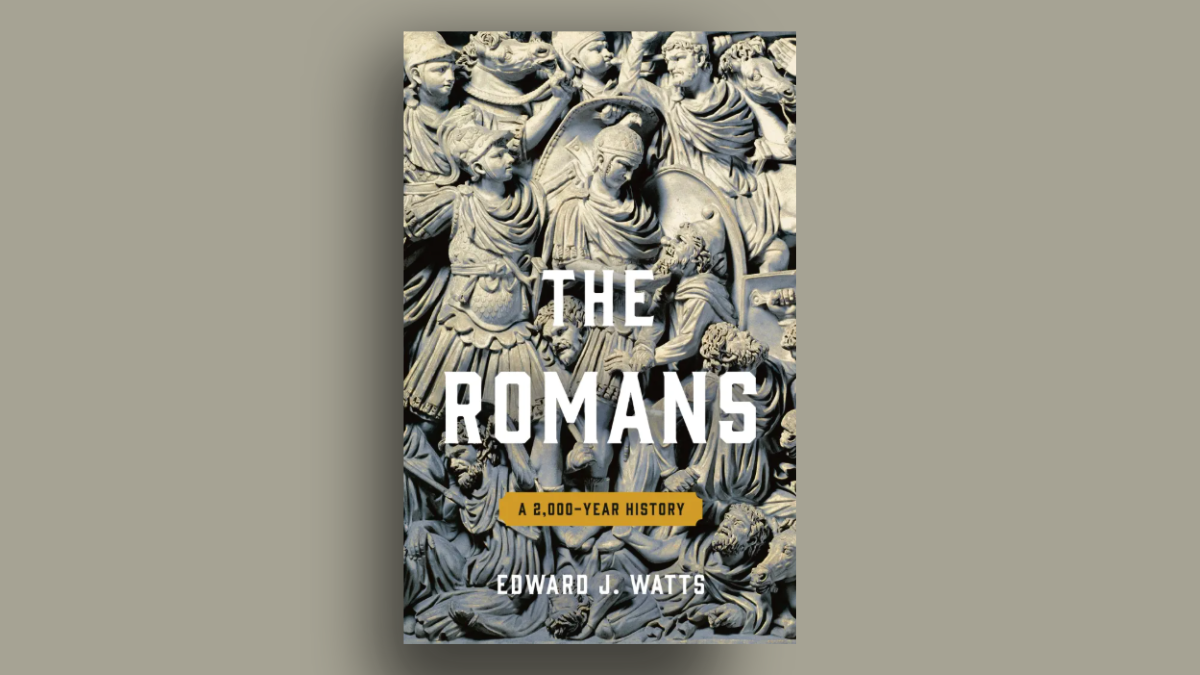
Thankfully, not all academics are driven by a political ideology that engenders a desire for professional irrelevance. Edward J. Watts, distinguished professor of history at the University of California, San Diego, is one such person. His recent book, The Romans: A 2,000-Year History, is not only an excellent introduction to Roman history, but a persuasive reminder of why the classics will always be relevant, especially for a nation such as America.
Are We Asking The Wrong Question About Rome?
In surveying Rome’s history — which Watts argues should not end with the deposing of the last emperor in Rome in 476 A.D., but the capture of Constantinople by Crusaders in 1204 A.D. — we moderns often focus our attention on why Rome fell. But an equally important question to ask is how it survived for so long. The answer, Watts persuasively argues, is that Rome throughout its two millennia history evinced an unparalleled level of openness and adaptability that enabled a latecomer society of pastoralists and itinerant herders in central Italy to surpass the more venerable Egyptians, Greeks, and Persians as the greatest civilization of the ancient world.
From the beginning, asserted Dionysius of Halicarnassus, the Romans “gladly received all strangers and made them citizens.” Unique among ancient societies, the Romans were willing to grant large numbers of foreign-born people membership in their political, religious, and economic life. As the Romans conquered various groups on the Italian peninsula, they absorbed captured cities into their state and extended citizenship to their residents. “Romans could not have known it at the time, but this nuanced approach to defeated adversaries would allow them to build the most formidable military machine the Mediterranean world had ever known,” argues Watts. That’s not to say that this approach did not come without consequences: people illegally claiming citizenship became such a problem that one Roman tribune in the 2nd century B.C. barred foreigners from “enjoying the advantages of their city.”
The effective assimilation of peoples was only one marker of Rome’s success. Rome adopted and improved the Greek phalanx beginning in the sixth century B.C., making their infantry into a formidable force. In the fifth century B.C., they built a legal and political system patterned on Greek models. In the third century B.C., they copied and improved Carthaginian naval designs, resulting in a naval superiority that lasted almost a thousand years. They appropriated and expanded agricultural and medical practices, and even developed a financial system with Greek roots, innovating a lucrative practice of reselling large loans to recapitalize the lender.
The Romans Were Indefatigable Comeback Kings
Another underlying theme in Watt’s treatment — though less explicitly celebrated — is Rome’s impressive ability to recover. Given Rome’s impressive rise to domination over the ancient world, it’s easy for readers today to marvel at the civilization’s seemingly unstoppable ascent. In truth, Roman history is defined almost as much by failure as victory.
In 390 B.C., Rome was defeated by an army of Gauls who then sacked the city. Rome responded by developing better military equipment, and a little over a decade later, a Roman army successfully ambushed another invading Celtic army, as Plutarch documented. Beginning in the third century B.C., Rome engaged in three successive wars with Carthage, their greatest competitor in the western Mediterranean. In the Second Punic War, the great Carthaginian general Hannibal not only invaded Italy, but in less than two years of campaigning on the Italian peninsula killed more than 100,000 soldiers, amounting to more than a third of the entire population of fighting-age men in the Republic. Yet fourteen years later, the Roman general Scipio invaded northern Africa and defeated Hannibal.
Even after Rome had wiped out the Carthaginian Empire, the Romans regularly suffered disastrous defeats. In 105 B.C., they lost 80,000 soldiers in a battle against barbarian tribes outside the modern French city of Orange. Yet about half a century later, all of present-day France had come under Roman sovereignty. In 9 A.D., the empire lost three legions in the Teutoburg Forest in what is now Germany; about 160 years later, the emperor Marcus Aurelius began a series of successful campaigns that defeated and neutralized German tribes north of the Danube. Even after the collapse of the western Roman Empire in the fifth century A.D., the eastern Roman Empire survived and thrived, even recapturing parts of the west during the reign of the emperor Justinian. The eastern Roman empire, which we today call Byzantium, survived for centuries more.
Rome as the Eternally Relevant City
Wedded to innovation, adaptability, and dogged determination was also a Roman impulse to celebrate its traditional identity, which tempered periods of dramatic change. “Rome’s long-term success depended on its repeated ability to (mostly) strike an appropriate balance between change and tradition,” writes Watts. Virgil’s Aeneid, for example, glories in Rome’s mythological creation narrative. Each successive emperor sought to unite his reign with those who came before. Even in the final years of the Roman west, Merobaudes of Gaul in the fifth century A.D., described the Roman general Aetius as “our Cato,” who preserved “our customs and integrity.”
That pride in a shared Roman story of virtue and tradition influenced our own nation’s founding, evidenced not only in documents such as the Declaration of Independence, but in our government, architecture, and art. Cincinnatus, the poor farmer elected to serve as dictator to defeat Rome’s enemies on the battlefield and who quietly retired to his four-acre farm, was an inspiration for George Washington, who retreated to Mount Vernon after the presidency.
This influence of course has provoked myriad reflections on how America is recapitulating the story of Rome, moving from a strong and independent republic to a lethargic, decadent empire, who for all its opulence, is in irreparable decline, incapable even of defending its borders. “These men! How ready they are for slavery!” the first-century emperor Tiberius is reported to have complained about Roman senators who preferred the emperor make decisions for them. Even then, Rome had another millennia of empire ahead of it. Will America, like Rome, survive to enjoy eighty generations of citizens? It’s a question the classics should help us answer.
Casey Chalk is a senior contributor at The Federalist and an editor and columnist at The New Oxford Review. He is a regular contributor at many publications and the author of three books, including the upcoming “Wisdom From the Cross: How Jesus’ Seven Last Words Teach Us How to Live (and Die)” (Sophia Institute Press, 2026).