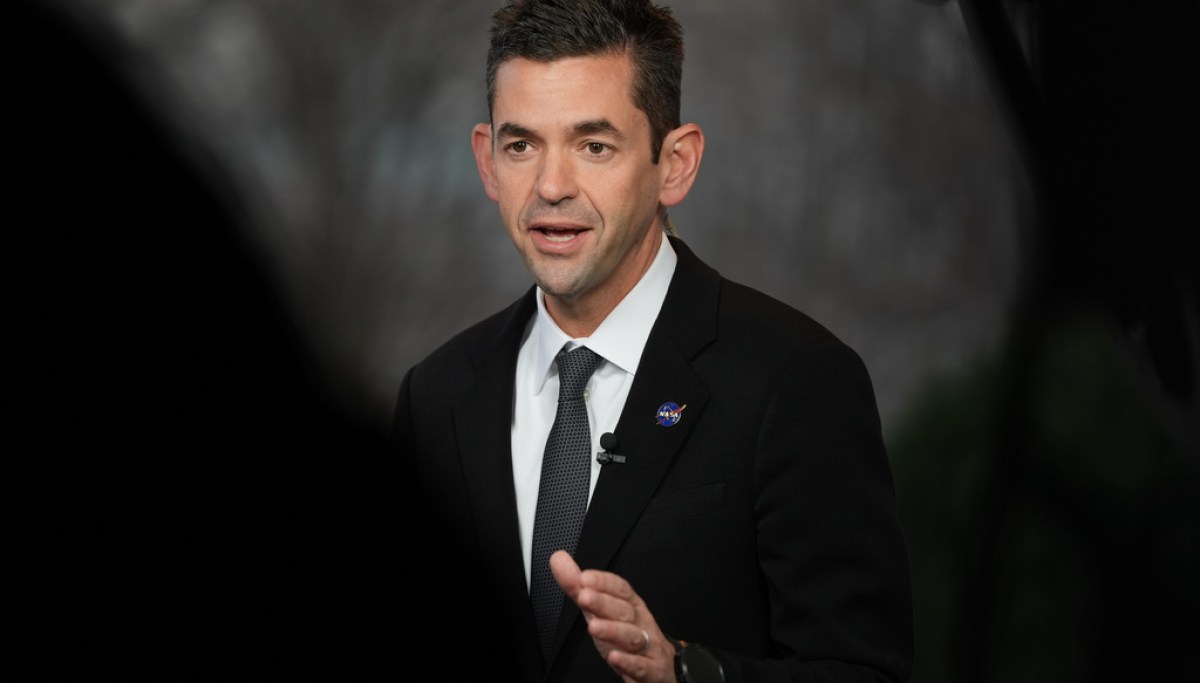
NASA announced a new plan this week to build a $20 billion base on the surface of the moon instead of an orbiting Lunar Gateway station, the latest move in a transformative phase of the space agency’s mission.
NASA Administrator Jared Isaacman made the announcement at an event he called “Ignition,” where he spoke about the future of NASA’s space policy under the Trump administration. He declared that “America will never again give up the moon,” and delivered a hopeful message for the future of America’s space exploration.
“Today is called ignition for a reason. This is the moment where we should all start believing again, when ideas become missions and when hard work delivers world-changing accomplishments. NASA once changed everything, and we’re going to do it again,” Isaacman said.
NASA ANNOUNCES $20 BILLION MOON BASE, CANCELING ORBITING LUNAR STATION
Isaacman, who in late December became one of President Donald Trump‘s last agency heads to be confirmed by the Senate, has aimed to usher in a new era at NASA as the agency enters a pivotal juncture of moon landing and exploration with its Artemis program.
Isaacman, 43, is a billionaire entrepreneur and astronaut who went to space through Elon Musk’s SpaceX program. Originally from New Jersey, he founded a payment processing company, now called Shift4 Payments, at the age of 16 from his parents’ basement.
A graduate of Embry-Riddle Aeronautical University, Isaacman is also a pilot who has flown over 8,000 flight hours. He started the company Draken International, which trains U.S. Air Force pilots.
In 2021, Isaacman commanded Musk’s SpaceX Inspiration4 mission, which was the first all-civilian crew to orbit the Earth. He worked again with SpaceX in 2024 for the Polaris Dawn mission, which, according to NASA, marked the farthest humans have traveled from Earth since Apollo 17.
But Isaacman’s nomination did not come without a bit of turmoil.
Trump originally appointed Isaacman for the role as NASA’s chief in December 2024, but his past donations to Democrats or “prior associations,” as Trump put it on Truth Social, led to his nomination being yanked in May 2025. However, in November, Trump renominated Isaacman for the position, calling him an “accomplished business leader, philanthropist, pilot, and astronaut.”
“Jared’s passion for Space, astronaut experience, and dedication to pushing the boundaries of exploration, unlocking the mysteries of the universe, and advancing the new Space economy, make him ideally suited to lead NASA into a bold new Era,” Trump said at the time.
Musk, who at that time also largely moved past his own tensions with Trump, celebrated that announcement.
Isaacman is now seeking to take on Trump’s call to “lead NASA into a bold new Era.” He laid out his strategy for ensuring the United States beats China back to the moon during this week’s “Ignition” event.
He emphasized that NASA’s current goal is to get back to the moon before the end of Trump’s term, while China’s is the end of 2030. But he warned that “the difference between success and failure will be measured in months, not years,” alluding to the recent delays in its Artemis program and charting how to course-correct.
“If we concentrate NASA’s extraordinary resources on the most important goals on the president’s National Space Policy, clear away needless bureaucracy and obstacles that impede progress, and empower the workforce and partners, then returning to the moon and building a moon base will seem pale in comparison of what we’re capable of accomplishing in the years ahead,” Isaacman said.
In addition to announcing the $20 billion base on the surface of the moon, Isaacman has begun putting his stamp on NASA through its Artemis program.
After the Artemis II mission launch was moved from Feb. 8 to early April, Isaacman announced major changes to the Artemis lunar exploration program.
NASA MAKES MAJOR CHANGES TO SPEED UP ARTEMIS PROGRAM
He restructured the sequence of scheduled Artemis missions to add more testing before the next crewed lunar landing. He said the changes would help improve NASA’s readiness for each mission and ultimately shorten the amount of time between missions.
Artemis II’s expected launch timeline opens on Wednesday, April 1.