Buckle up, Boomers and Gen Xers, because I’m going to serve you up some nostalgia bait. Stop at the concession booth to pick up your complimentary rose-colored glasses, and don’t feel shy.
Generation X was born between 1965 and 1980. We are the last generation who experienced the real, physical world the way most humans have experienced it. We came along when generational transitions were gradual. We knew our Boomer parents’ music and movie stars, and we know our Silent Generation grandparents’ music and movie stars. As a kid, I knew who the Andrews Sisters were, and I could sing along because my grandmother played their records.
There will be Slant Six engines running in good health long after I’m dead, just as God intended.
Compare to today: The average Gen Z kid has no idea who Michael Jackson, Madonna, or Lucille Ball are. Starting with Millennials, a chasm opened up between generations. People a generation younger asked who some of the most world-famous stars were when they were working and alive just 20 years earlier.
With Gen Z it’s even starker. They were given digital poison in the form of smartphones in their tender years, and the entire cultural landscape fragmented into a billion bespoke Balkan states.
It’s hard to convince young people that some of the technologies from the bad old world of analog were actually superior to what we have today. They don’t believe that phone calls on copper wire were clear and never dropped (it’s true, though). Hilariously, they think film photography was always blurry and little better at capturing detail than an Impressionist painter.
Well, some of these things were better. And I want them back.
1. Kodachrome film
 Smith Collection/Gado/Getty Images
I trained as a photographer in college, and that was going to be my career. But then digital came along. I was in romantic love with the hands-on craft that was film photography. When computers took over, I packed it all away because I was in love with silver gelatin emulsions, not silicon chips.
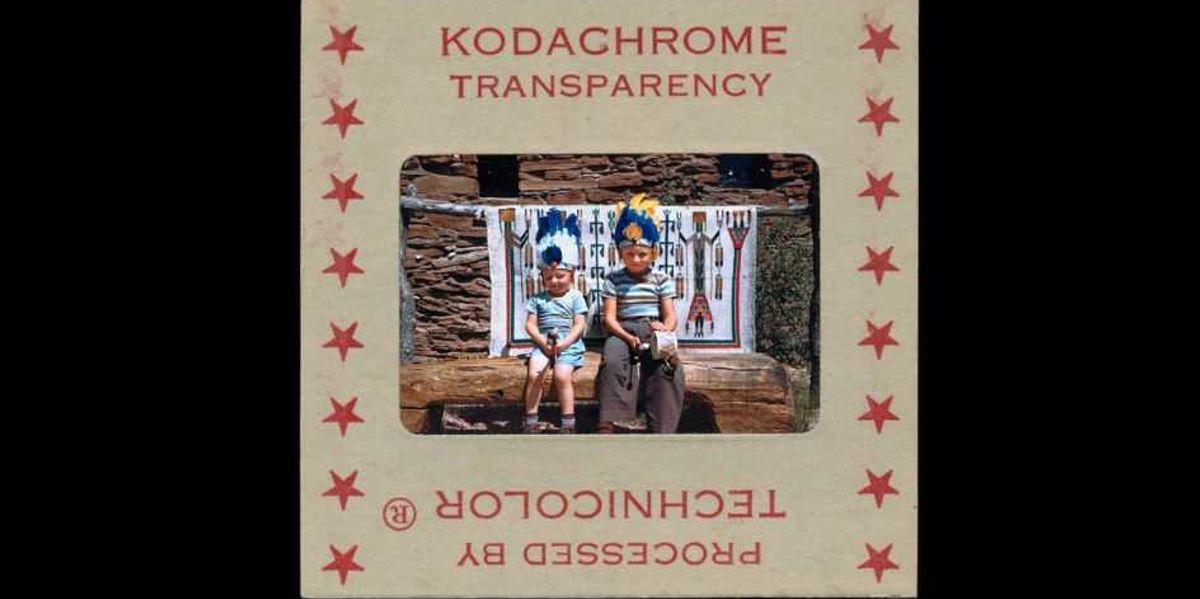
The loss of Kodachrome color slide film was the worst, and I shed real tears when Kodak pulled the plug. There was no color film in history that reproduced color as well as Kodachrome did; there’s a reason Paul Simon wrote the song. He was right.
Kodachrome was actually a black-and-white film with no built-in dyes like all other color films. Instead it captured the blue, red, and green light on three layers in the film separately. The color dyes were added during the wet chemical processing, and those dyes were richer and more time-stable than ordinary color film. This is why a Kodachrome slide from the 1940s looks like a high-quality photograph taken today — there’s no fading or washed-out colors like many of us see in old color photos in our family albums.
It was also the sharpest film with the highest resolution. A scene taken on Kodachrome was reproduced in such detail that looking at the slide was nearly like looking at real life through a window.
Because you’re reading this on a computer screen, you and I can’t see what the slide “really” looks like. It’s mediated by an electronic screen. But you can still see the rich color and fine detail that no other film could achieve.
2. Three-strip Technicolor
People today talk about bright hues looking like “Technicolor,” but few people understand what that really meant. For decades in Hollywood, the patented Technicolor film process was different from every other color film technology, and it reined supreme. Motion pictures shot in Technicolor were brighter and more vivid than any other process. They made real life look like the Land of Oz.
The quality came at a price. Like Kodachrome, Technicolor used black-and-white film, adding stable, rich color dyes later during processing and printing. This made the shooting process difficult. The film was “slow,” requiring so much light on set that actors sometimes got eye damage. They certainly sweat a lot.
Technicolor cameras ran three separate strips of black-and-white motion picture film through the camera at the same time. A “beam splitter” separated the light into red, green, and blue, directing one color only to each of the three strips of film. The cameras were heavy and needed to be sound-baffled during a shoot.
Striking the final print for projection required precision machines that could line up each of the three strips of film in perfect registration to lay down cyan, yellow, and magenta dyes. It took precision-machining, skill, time, and money. That’s why the process was abandoned when cheaper, easier all-in-one color motion picture film became available.
But that’s also why the Technicolor process was so beloved that songs were written about it. This is from the Technicolor production “Silk Stockings” with Janis Paige singing to Fred Astaire.
3. Air-cooled Volkswagen engines
I went outside to play in 1978 and came upon my stepfather on his knees behind the 1967 beige VW bug that was our family car. “God — son of a *@^%!” he cussed as the engine cranked and cranked and wouldn’t fire up. He was trying to gap the points in the distributor, a job he was never good at. I learned to do it decades later from a classic butch lesbian, and it didn’t seem that hard to me.
My stepdad was doing this because that’s what normal people did in those days. You tuned up your own car. Most dads had a toolset and the know-how to do car maintenance at home. Repairs were less expensive, and you didn’t have to have a computer technician “scan” your engine to figure out what the bloody computer thought was wrong with it.
Sure, the old VWs were simple and had few features. The heaters were so bad that winter driving required an ice scraper for the inside of the windscreen. The bugs were tiny compared to modern cars, but you could get a surprising amount in there if you were clever.
Sure, they were light (some people call them death traps), but that was great when my mother went off a snowy road in Upstate New York, and four boys from the local college fraternity just picked it up out of the ditch and set it back on the road.
I’d give anything to hear that musical, metallic tinkle of the exhaust pipes on America’s roads today.
4. The Chrysler Slant Six engine
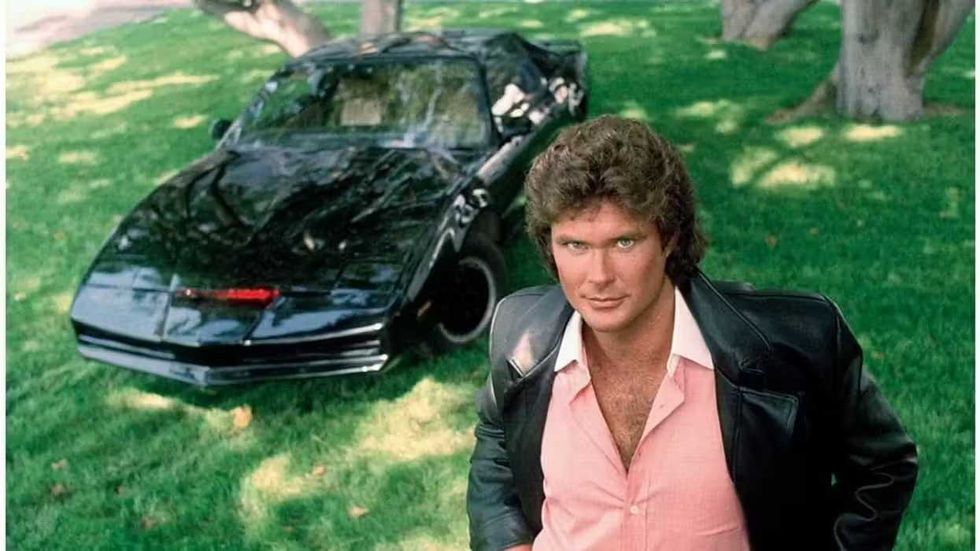
If you know, you know. America never built a more durable engine than the famous Chrysler Slant Six. The engine got its name because the designers tilted it 30 degrees to fit the block under the lower, sleeker hoods that became stylish in the early 1960s.
This six-cylinder may not have had the raw horsepower of a big block V8, but it produced a surprising amount of oomph for its size, and it was an engine that never died. If you’ve owned one, you can hear the sewing machine-like purr and tick in your mind.
We had two Slant Six-powered family cars growing up. As an adult, I’ve had a Dodge Dart and a Plymouth Belvedere powered by this motor. There’s no better way to spend an afternoon than adjusting the valves on a Slant Six while it’s running. I miss how easy it was to work on these engines, made in the days when you could move around under the hood and adjust something without taking off 15 components just to get enough room to put a finger in the engine bay.
There will be Slant Six engines running in good health long after I’m dead, just as God intended.
RELATED: My 1966 Plymouth Belvedere let her 225 Slant-6 do the talking
 NBC/Getty Images
5. Customer service
This is a social technology that needs to make a comeback. My first jobs as a teenager were running the cash register at a Wegman’s grocery store and bringing burgers to tables at a Big Boy restaurant. Friendly, efficient customer service was mandatory. It was expected by every customer and every employer.
You were to greet customers with a friendly hello and an offer to help. Smiles were either compulsory or strongly encouraged. If a customer needed to find an item, you found it for them and walked them over to the right aisle.
What do you get today when you walk into any retail store? Dead-eyed, silent stares from any staff younger than 35. Need to find a pipe fitting in a big store like Lowe’s? Try asking. You’ll get, “Um … a what? If we had any, they’d be, like, over there,” as “Jonas” waves in a northeasterly direction.
Surprisingly, a young clerk at my local McDonald’s reminded me of the good old days of customer service last week. Like so many places, McDonald’s is making its restaurants hostile to humans. In addition to the ugly, gray, brutalist “updated” architecture, the lobbies are crammed with touch-screen kiosks, while the staffed registers have been reduced to one or two maximum. As recently as 15 years ago, McDonald’s had a reputation for employing staff that were neater, tidier, and friendlier than the competition.
That’s gone now — except for this one young man at my local McD’s. I walked past the kiosks and up to the register, expecting to be ignored for five minutes as is now McDonald’s standard. “Jeff” was about 22. His shirt was tucked in. He was neatly groomed. He smiled at me and said, “Welcome to McDonald’s; how are you today?” He meant it. He was looking me in the eye. I was so pleasantly surprised I thought I was dreaming, and I made a point to thank him for being human and polite.
The other day, I saw this old early ’80s commercial for McDonald’s Shamrock Shake. Take a look, and try not to tear up. If you’re 35 or under, you probably think the chipper and upbeat tone looks “fake.” You may not believe anyone ever acted that way. You might even find this level of cheer “cringe.”
Well, it was like that. I was there. And I want it back.