Something revealing — and increasingly dangerous — shows up in the people who still react to Donald Trump as if he were mainly an offense against etiquette rather than a political fact. They study him the way Victorian naturalists might study a rhinoceros loose in the drawing room: with alarm, fascination, and deep concern for the upholstery.
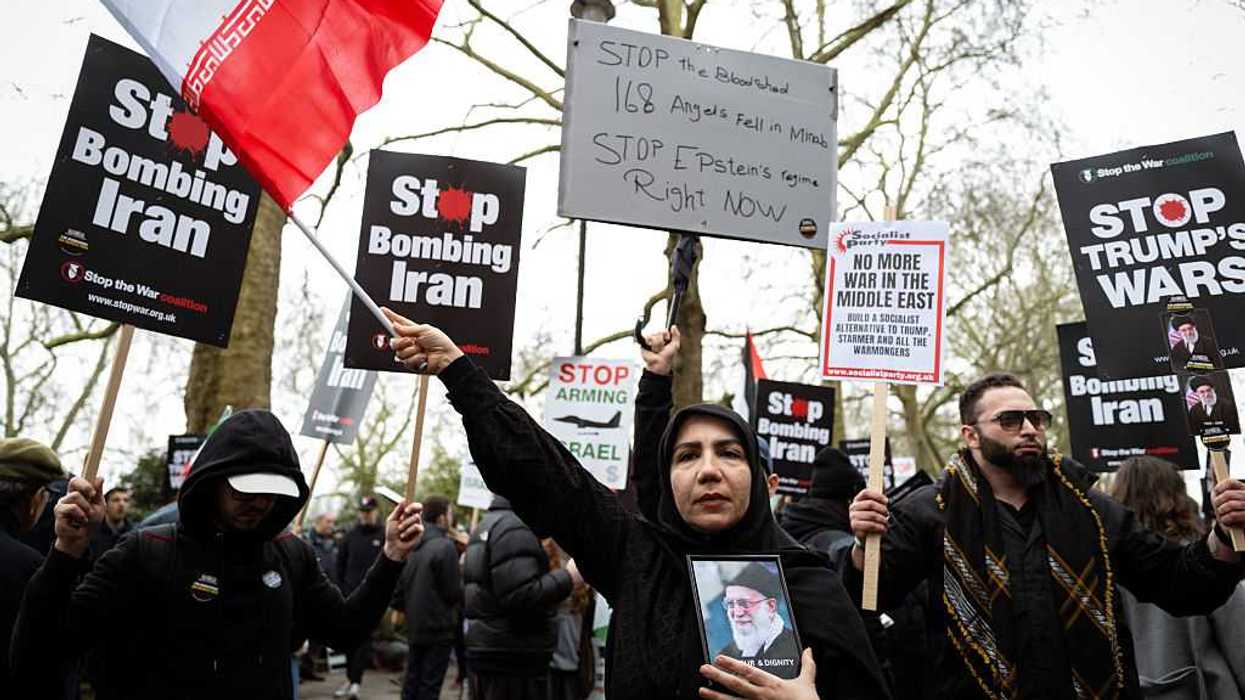
The Iranian strike has brought it out again. After 47 years, Israel and the United States struck back. Trump moved hard, moved fast, and moved before the foreign-policy clergy finished the first round of throat-clearing. Then, after he acted, he turned and pressed allies and other beneficiaries of Persian Gulf oil to help manage the consequences.
Trump derangement syndrome now imposes a cost beyond mere foolishness. It has become a strategic liability.
To the establishment mind, that looks like barbarism. First you convene. Then you posture. Then you circulate papers. Then you hold a conference where several men with rimless glasses say “regional framework” and “off-ramp.” Only then — after adequate procedural embalming — may anything actually happen.
Trump has never shown much interest in being embalmed.
To the establishment, Trump isn’t merely wrong. His vulgar method offends them. He violates process. He makes the priesthood sweat through its linen.
But the plain truth cuts the other way: Many of the traits that make him unbearable to refined opinion make him effective in world affairs. In Iran, effectiveness isn’t a lifestyle preference. It decides whether we end a threat or let it metastasize from theoretical to fatal.
This moment changes the argument. It no longer turns on whether Trump’s style offends the salons of Washington, New York, Brussels, and Aspen. It turns on whether the United States will stop a fanatical regime from acquiring nuclear weapons and blackmailing the world through oil, terror, and fear. The Wall Street Journal editorial board, often critical of Trump, supports his actions against Iran because the alternative looks worse: Iran survives the confrontation with its nuclear ambitions intact and its grip on the Strait of Hormuz strengthened.
So what should we understand about Donald Trump?
He accepts risk. He will do things that may blow up in his face. Most public people spend their careers dodging blame and pinning it on rivals. Trump cares less about pleasing the people who write essays about “norm erosion.”
He’s a developer with a better feel for leverage than for liturgy. A man doesn’t conquer the Manhattan real estate jungle, build a brand out of his own name, or survive bankruptcies, tabloid wars, casino collapses, and the mockery of half the respectable class by worshipping tidy sequencing. His route to wealth didn’t resemble a ballet. It looked like a demolition derby with gold trim.
That history matters. Men shaped by bureaucracies tend to treat legitimacy as a product of process. Men shaped by dealmaking tend to treat legitimacy as a product of outcomes. One group asks, “Was this properly staffed?” The other asks, “Did we get it done?” Washington fills up with the first type and recoils from the second.
Trump also improvises. Washington treats improvisation like a vice. But improvisation belongs to people operating in the realm of consequence rather than memo circulation. Trump rarely arrives with a doctrine polished for a Brussels seminar. He arrives with an instinct, a pressure point, a threat, a phone call, and a willingness to revise in public. That horrifies people who would rather run a failed plan with perfect footnotes than run a messy plan that changes the landscape.
RELATED: While America fights, Europe loses its spirit
 Andy Barton/SOPA Images/LightRocket/Getty Images
Trump’s critics call this incoherence. Sometimes it is. He can be erratic. He can be excessive. He can mistake motion for strategy. But his critics often commit the opposite error. They confuse caution with wisdom, process with seriousness, and rhetorical tidiness with strength.
And the stakes outrun Trump. Iran has pursued the bomb for years. It lied, concealed, dispersed, negotiated, cheated, and waited. The fairy tale that this menace sat safely contained until Trump disturbed the peace has worn thin. Tehran didn’t become dangerous because Trump acted. Trump acted because Tehran already posed a danger.
That’s why Trump derangement syndrome now imposes a cost beyond mere foolishness. It has become a strategic liability. When a domestic class hates one man so much that it prefers his failure to the country’s safety, it stops functioning as a normal political opposition. It becomes a hindrance to national self-preservation.
If Iran emerges from this conflict still able to terrorize the Gulf, still able to menace the Strait of Hormuz, still dreaming its nuclear dreams, America won’t merely have fought badly. America will have invited the next crisis on a higher rung of danger. A short war that leaves the central threat intact doesn’t qualify as prudence. It amounts to cowardice on an installment plan.
That’s why he makes them crazy. He walks around as a rebuke to the managerial fantasy that calibrated people with soft hands and impeccable credentials can safely “manage” history. Trump reminds them — rudely, constantly, and in public — that moments arrive when nerve beats nuance and the man willing to absorb disorder defeats the man who can only describe it.
And now the insult cuts deeper. He doesn’t just break their rules. In a moment when America can’t afford illusion, he may be right about what winning requires.