Less than $600. That’s how much taxpayer money the Trump administration just spent to give American workers more of the transparency they deserve.
On March 17, the Department of Labor rolled out an improved system — www.unionreports.gov — that lets workers quickly see how labor unions are spending their members’ dues. This information is essential to helping workers decide if unionization is right for them. The new transparency system is surely one of the most efficient and effective uses of taxpayer dollars in American history.
Practically, the Labor Department has improved how workers and the broader public can view the disclosure forms that unions are required to file annually. It prioritized this transparency after President Donald Trump ordered agencies to modernize their technology last year. All told, the department only spent 78 days designing this system, and it only had to pay for new software. That’s what cost less than $600 — a steal for taxpayers and workers alike.
BIG LABOR HAS ORGANIZED ITS OWN DOWNFALL
The agency focused on these disclosure forms for a good reason. These LM-2 forms, as they’re technically known, have been posted to the Labor Department’s website for decades. While the forms have reams of important information, they can run into the hundreds, if not thousands, of pages, and can be difficult to understand. It’s easy to get lost while scrolling through complicated spreadsheets and seemingly endless lines of text.
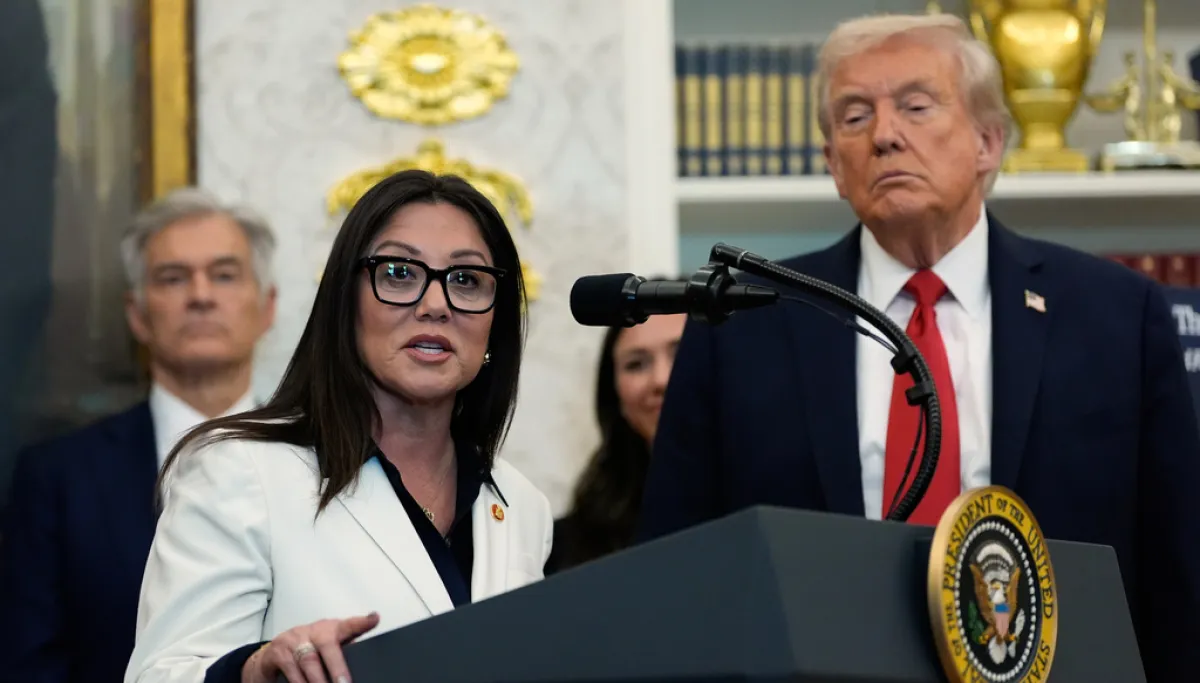
If you’re a line mechanic coming off your shift or a truck driver finishing a daylong trip, the last thing you probably want to do at the end of the day is spend hours working your way through an LM-2 form. Most people would rather have dinner with the family, take the children to practice, and relax before bedtime, not spend the equivalent of a second shift trying to make sense of a form. As Secretary of Labor, Lori Chavez-DeRemer said when announcing this tool, “union members work hard to earn their paychecks and contribute their union dues — they shouldn’t have to work hard to understand how those dues are being spent.”
At the end of the day, workers and others need easy answers to simple questions. Is their union spending more on politics than representation? Does a huge percentage of their dues go toward officer salaries and benefits? These are the sorts of practical things that help workers decide whether unionization meets their needs. And while workers are certainly smart enough to figure out the old system, they’ve long needed this information to be accessible in just a few seconds, with just a few clicks.
That easy access is now a reality under the Labor Department’s improved system. All workers have to do is go to the department’s new database, search for a union, then click on the visualization tab. They’ll see regular charts that illustrate where unions spend their members’ dues — everything from political donations to officer salaries and more. They can also compare a union’s spending over the previous five years to see how things have changed.
Workers can also see the union’s assets and liabilities to gauge if the union is in a healthy financial shape. And the easily digestible information will also help people identify possible union corruption. Elisabeth Messenger, head of the Office of Labor-Management Standards that spearheaded this project, encouraged union members to contact her office if they see “anything out of the ordinary.”
PROFESSORS GET SHORT END OF THE STICK IN VIRGINIA COLLECTIVE BARGAINING PUSH
Bottom line, 30 seconds of searching or less can now give workers the facts they need to hold unions accountable and control their own future. In that sense, the department’s improved system will help protect and strengthen workplace democracy.
Workers need this sunshine whether they’re in a union or considering joining one. They need to know if union membership is worth a good chunk of their own hard-earned money. Full credit goes to the Labor Department for delivering more of this transparency while protecting taxpayers, too. Millions of workers stand to reap the rewards — and take more ownership of their future.
F. Vincent Vernuccio is president of the Institute for the American Worker.