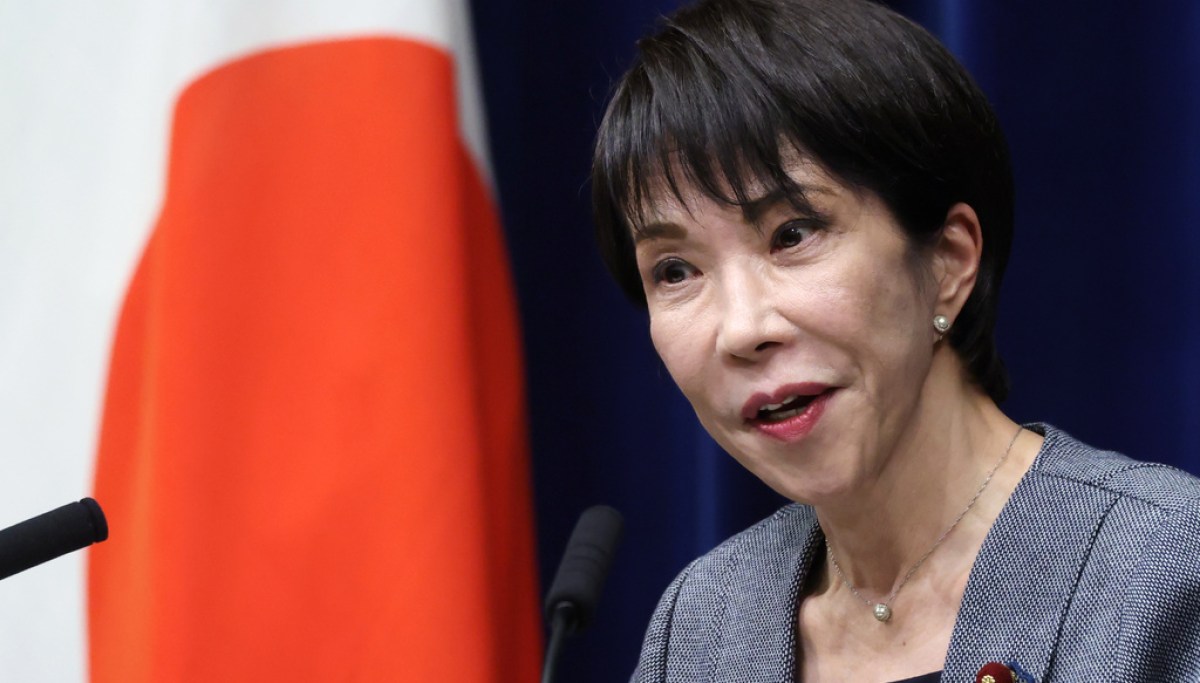
Prime Minister Sanae Takaichi’s party won a landslide election last month with a platform that included transforming the Japanese Self-Defense Force into a formal military. But meddling with the constitution could give opposition parties an unwelcome opportunity to demand their own adjustments.
A senior Japanese official told the Washington Examiner that moving to change Article 9 of the Japanese Constitution, which states that Japanese “land, sea, and air forces, as well as other war potential, will never be maintained,” would be like opening “Pandora’s Box” for debate on other constitutional changes demanded by opposition parties.
“Just focusing on revision of the [Japanese Self-Defense Force] is not realistic from a political perspective, because the opposition parties are always insisting on the necessity of revisions in other areas,” the senior official told the Washington Examiner.
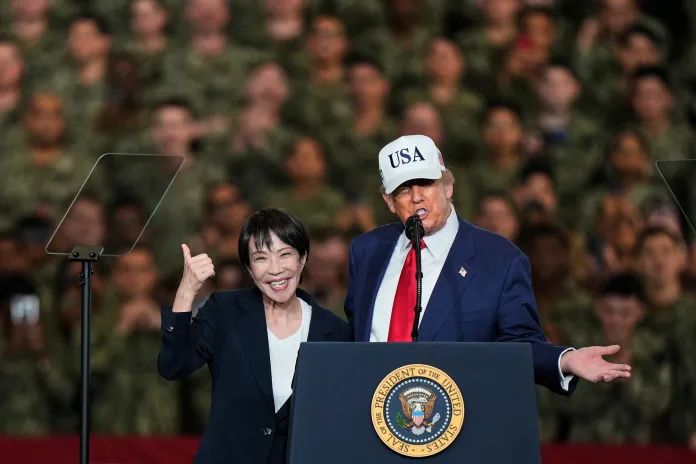
The Japanese Constitution, drafted by American legal scholars and thrust upon the country in the aftermath of World War II, has not been revised since its adoption in 1947. It was this document that signed away Japan’s right to declare war and restricted its military to the meager Self-Defense Force, which is tightly restricted in activities like overseas security operations or developing “offensive weapons.”
Takaichi has picked up the mantle of her political senpai, the late Prime Minister Shinzo Abe, in fighting for a Japan more capable of flexing its power against regional rivals such as North Korea and China. She has already met President Donald Trump’s demands for 2% of GDP funding defense and intends to go further of her own volition.
“The security environment surrounding Japan is becoming increasingly severe,” Takaichi told the graduating class of the National Defense Academy in Yokosuka City on Feb. 14. “We must not turn away from the harsh realities Japan faces.”
But the prime minister knows that, ultimately, Japan’s current constitution is preventing the islands from reaching their full military potential.
“We intend to tenaciously work to create an environment in which an amendment proposal can be initiated as soon as possible and lead to a national referendum,” she promised the Japanese public following her victory last month.
Changing the constitution requires a three-step process. First, there would need to be a two-thirds vote in the House of Representatives, the lower chamber of the Japanese Diet. Following that, a two-thirds vote in the upper chamber, the House of Councillors, is required. Finally, the issue would be put to a national referendum, with a simple majority required.
The landslide victory of Takaichi’s Liberal Democratic Party last month in the lower chamber elections seems to indicate that the first and third steps are well within reach. The Liberal Democrats enjoy a firm two-thirds majority in the House, and the public has given them an overwhelming popular mandate.
It is the second step in the process — two-thirds support in the House of Councillors — that would be a major logistical hurdle. The Liberal Democrats are still a minority in that chamber, outnumbered by the combined force of the socially progressive Constitutional Democratic Party of Japan and other opposition parties.
“I don’t think revision of the constitution is an easy thing, even for Ms. Takaichi,” the senior official told the Washington Examiner.
But even if Takaichi managed to find a workaround, her allies fear that Japan’s first-ever constitutional amendment would open the floodgates to a deluge of proposed changes that could upheave the country’s delicate status quo.
The senior official offered voter parity as one example, the well-documented trend of rural towns and prefectures accumulating disproportionate voting power compared to metropolises like Tokyo and Osaka due to population decline.
This development, which benefits the Liberal Democrats greatly by maintaining the political strength of conservative-leaning rural communities, has been repeatedly challenged in court on constitutional grounds.
Other groups have sought to utilize the constitution as an avenue for legalizing same-sex marriage in Japan, citing its provisions for equality under the law and “individual dignity.”
The senior official told the Washington Examiner that there are many more special interest considerations that could be raised if constitutional amendments become a reality, from rights in education to legal framework about environmental policy.
Another consideration is the optics of military reform. Japanese officials are quick to object to terms like “remilitarization,” believing that the terminology is too close to rhetoric coming from Beijing and Pyongyang that seeks to portray Japan as going down the militaristic road that led to World War II.
China has been Takaichi’s most belligerent critic since the prime minister reiterated last year Japan’s position that an invasion of Taiwan could pose an existential threat to the country and therefore justify deployment of the Self-Defense Force.
Chinese diplomats have called Takaichi a “witch,” and one stationed in Osaka was even forced to leave the country after he threatened to cut her head off over the challenge to Beijing’s self-proclaimed ownership of Taiwan.
All these considerations have led to speculation on how Takaichi can expand Japan’s defensive capabilities and build legitimacy for the Self-Defense Forces without expending political capital on something as monumental as reestablishing a formal military.
Kristi Govella, Japan Chair at the Center for Strategic and International Studies, told the Washington Examiner that although Takaichi has “said a lot of things in her career” that are “quite provocative” to opposition parties, she will ultimately act pragmatically on the military question.
“Takaichi has been quite moderate since she came to office about what goal she is actually pursuing with her political capital,” said Govella. “She is talking about, for example, constitutional revision, but my expectation would be that if it comes to it and they push for it, the revision will be that the Constitution recognizes the existence and legitimacy of the Self-Defense Forces — not that it will be a return to Japan having a traditional army.”
TRUMP JOKES HE DIDN’T TELL JAPAN ABOUT IRAN STRIKES BECAUSE OF PEARL HARBOR
In the meantime, Tokyo is focused on maintaining its relationship with the United States to ensure its continued international security.
Officials said there would be a positive atmosphere on the plane ride back to Tokyo following Takaichi’s meeting with Trump at the White House on Thursday.
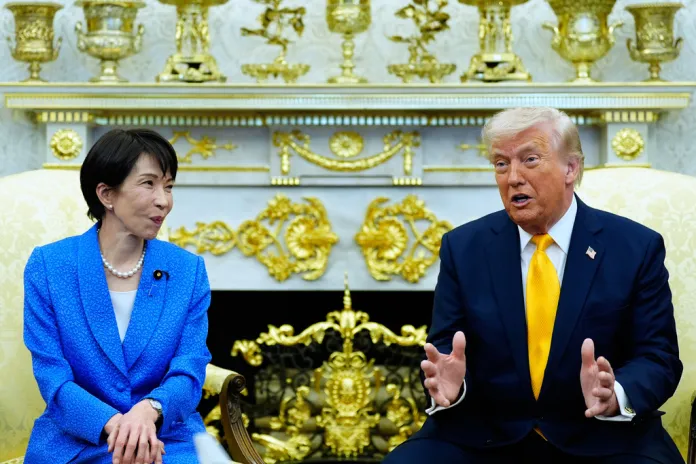
Despite fears that Trump would aggressively demand that Takaichi deploy Self-Defense Force personnel to open the Strait of Hormuz, the president seemed to understand the constitutional constraints the prime minister faces and did not complain.
Takaichi made vague promises to “reach out to many of the partners in the international community to reach our objectives together,” which seemed to satisfy the president, who called her a “powerful woman.”