Does Election Day actually mean Election Day?
That’s the key issue the U.S. Supreme Court is going to consider when it holds oral arguments in a pivotal elections case next week.
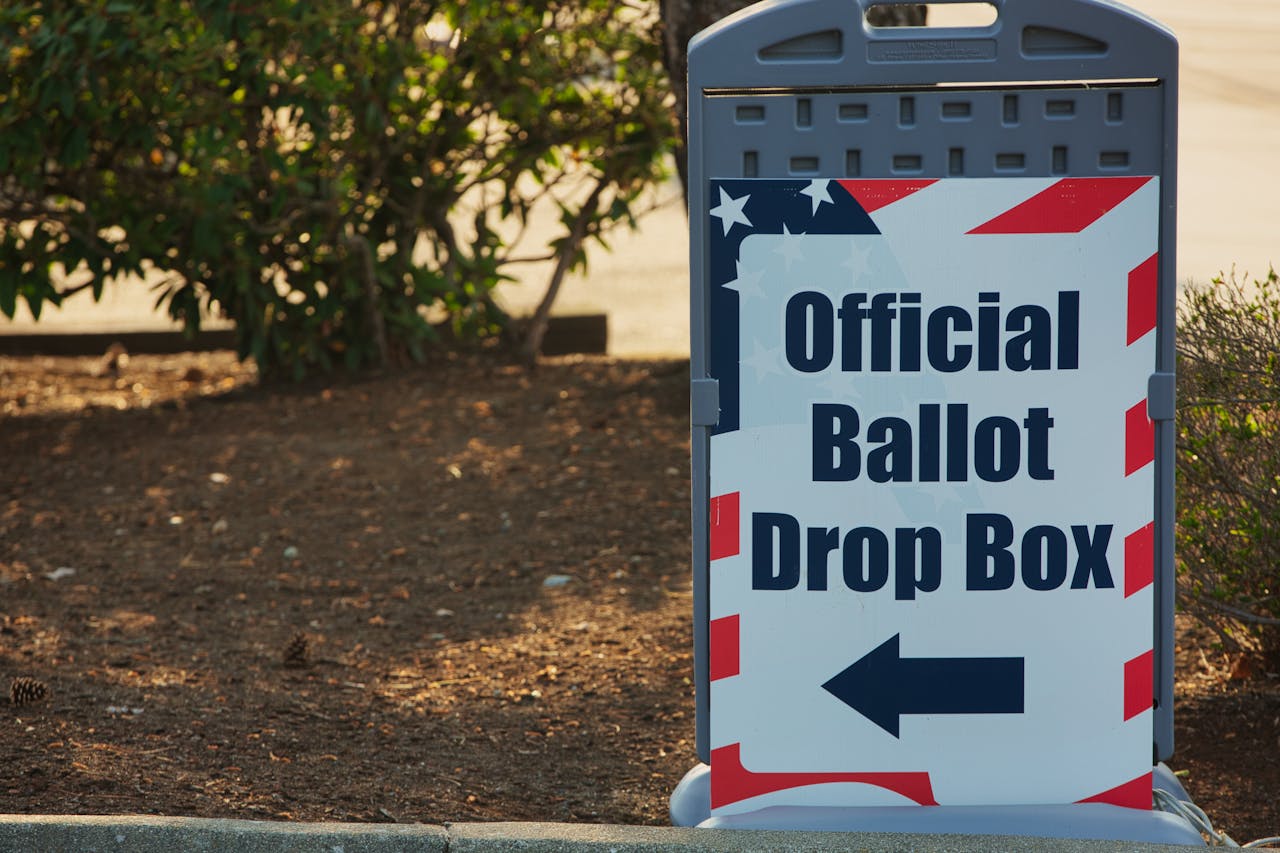
Known as Watson v. RNC, the legal dispute centers around a challenge to a Mississippi law allowing election officials to accept mail-in ballots up to five business days after Election Day so long as they are postmarked on or before the day of the contest. The issue of accepting late-arriving ballots has become a prominent issue in elections in recent years, with more than a dozen states permitting such a practice.
In the case before SCOTUS, the justices will decide whether these state statutes violate existing federal laws that establish an election day for federal races. Speaking with The Federalist, Honest Elections Project Executive Director Jason Snead predicated that a favorable decision from the high court rendering them unconstitutional would go a long way in upholding the law and boosting Americans’ confidence and trust in elections.
“If you’re watching ballots trickle in and margins shrink, and you’re watching winners become losers and losers become winners after an election is over, then that invites skepticism, concerns about fraud, and ultimately, that’s going to sap public confidence and deter people from voting,” Snead told The Federalist. “This is a real opportunity for the Supreme Court to enforce the rule of law and to bring good election practices at the same time.”
Background
As The Federalist previously reported, Mississippi initially adopted its current policy of accepting late-arriving ballots during the 2020 Covid outbreak. This change to the state’s election procedure was later codified into law.
The Magnolia State’s actions prompted the Republican National Committee (RNC) and Mississippi GOP to file a lawsuit challenging the statute’s legality in January 2024. The plaintiffs argued that the law conflicts with federal statutes establishing an election day for federal contests.
After considering the case, the U.S. District Court for the Southern District of Mississippi issued a decision in July 2024 siding with the state. As summarized by Justia, the court ruled that “Mississippi’s statute did not conflict with federal law and thus was not preempted.”
The 5th Circuit Court of Appeals disagreed. In its October 2024 ruling reversing the decision, a three-judge panel for the court “held that the federal Election Day statutes preempt Mississippi’s law because federal law mandates that all ballots must be received by Election Day,” according to Justia. The appellate court additionally remanded the case “for further proceedings to determine appropriate relief, considering the proximity to upcoming elections.”
Mississippi Attorney General Lynn Fitch ultimately petitioned SCOTUS to take up and resolve the case in June 2025. The high court agreed to do so in November.
The Arguments
In its brief filed with SCOTUS, Mississippi disagreed with the 5th Circuit’s conclusion that “federal law requires that ballots be received by election day and so preempts Mississippi’s law.” The Magnolia State instead argued that an “’election’ is the conclusive choice of an officer,” and that the “voters make that choice by casting — marking and submitting — their ballots.”
“So the federal election-day statutes require only that the voters cast their ballots by election day. The election has then occurred, even if election officials do not receive all ballots by that day,” the state’s brief reads. “Under Mississippi law, the voters cast their ballots by election day. So federal law does not preempt Mississippi law. Text, precedent, and history show that the court of appeals erred in ruling otherwise.”
“The problem with that argument,” Snead told The Federalist, “is that if you look at the way that historically elections have been run in this country, votes are not actually considered to be voted until they are in the hands of election officials, until they have been received by an election official.”
“To put it another way, if you or I were to vote in person and go into a polling place, get a ballot and fill in the bubble on that ballot, but then decide, ‘Actually, I didn’t really like this person in the first place [and] I don’t really want to vote in this election,’ and you throw that ballot in the trash, somebody cannot go fish that out at that point and say, ‘This is a vote for a candidate,’” Snead explained. “It only becomes your actual vote when you run it through the tabulator or when you give it to an election official. That is the way that we have always run things in this country when it comes to elections … It was really only in the last handful of years that we have seen states move away from that standard and in essence, extend voting beyond the date that is set by Congress for Election Day.”
Snead’s argument aligns with that put forward by the RNC. In agreeing with the 5th Circuit’s conclusion, the GOP similarly contended that Mississippi’s interpretation conflicts with existing “text,” “precedent,” and “historical practice” — all of which it argued “support[] requiring ballot receipt by election day.”
“The Fifth Circuit rightly held that the ‘day for the election’ has a fixed meaning. It doesn’t mean whatever each State wants it to mean. It means the day by which ballots must be ‘received by state officials.’ … The Court should affirm,” the RNC’s brief reads.
The RNC’s position does not impact post-Election Day ballot-counting processes or early voting, according to Snead. Those issues, he said, are not what’s being addressed in this case.
The Hearing Ahead
While it’s unclear how oral arguments are going to play out, Snead assessed that there will be several pivotal justices to watch who will be instrumental in the case’s outcome. Namely, Chief Justice John Roberts.
The HEP executive director said that Roberts boasts a “pretty good” track record on election-related cases before the court and that it will be interesting to see how he approaches the legal dispute at issue in Watson. The chief justice most recently authored the court’s decision in Bost v. Illinois State Board of Elections, in which a majority ruled that candidates have standing to challenge election rules.
“I’ll be keeping an eye on what sort of questions [Roberts] asks and what has risen to the level in his mind [on this issue]. I think it’s going to be pretty telling about where he might come down,” Snead said. “If he comes down in favor of overturning this law, I’d say that’s a pretty good indicator that there’s enough votes there to get a good ruling, but we’ll have to see.”
Snead also flagged Associate Justice Amy Coney Barrett as a key figure to watch, noting that she has “less experience in the election arena” than Roberts and some of the other justices.
What Americans hear in oral arguments is not always a good indicator of how a case will be decided, however. That’s especially true in the area of election law, said Snead, who observed that it’s “sometimes a little bit unpredictable” how certain justices will rule.
The elections specialist referenced a 2013 Supreme Court decision authored by staunch originalist and Associate Justice Antonin Scalia as an example. In Arizona v. Inter Tribal Council of Arizona, the court “struck down an Arizona law that required voters to show proof of citizenship in national elections” on the grounds that it “conflicted with the 1993 National Voter Registration Act (NVRA),” as The Federalist’s Matt Kittle reported.
That ruling “effectively bound states up when it comes to proof of citizenship, which, of course, is a live issue now with the SAVE America Act in Congress,” Snead said. So, “there’s always a chance that things could go sideways for the RNC in this [Watson] case. … [but] it’ll be interesting to see where things turn out.”
Oral arguments in Watson v. RNC will take place on Monday, March 23, at 10 a.m. ET.
Shawn Fleetwood is a staff writer for The Federalist and a graduate of the University of Mary Washington. He is a co-recipient of the 2025 Dao Prize for Excellence in Investigative Journalism. His work has been featured in numerous outlets, including RealClearPolitics and RealClearHealth. Follow him on Twitter @ShawnFleetwood