The Make America Healthy Again movement has become a pivotal avenue for Republicans to go on offense when it comes to healthcare, turning Democrats’ historical ownership of the issue on its head.
There are caveats. Vaccine policy and the glyphosate controversy recently raised by President Donald Trump’s executive order on the agriculture industry’s widely used herbicide mark some of the wobbles MAHA has encountered along the way. But even those controversies have signaled to the public that the leadership at the Department of Health and Human Services promotes debate and “radical transparency” over “purity tests” and smothering mandates that voters believe characterized federal agencies, particularly in light of COVID-19, public health experts told the Washington Examiner. And many of MAHA’s objectives hold majority support, particularly on nutrition-based policies. In battleground states, that support could be crucial to boosting support for Republicans, including in North Carolina, where a Carolina Journal poll conducted in February found that over 81% of GOP voters back MAHA.
“Generally, I can say we see strong support for some of the MAHA priorities around food,” said Liz Hamel, senior vice president and director of public opinion and survey research at KFF. “In terms of healthy foods and regulating things like dyes and chemicals and highly processed foods, we see strong support among the public overall, and among MAHA supporters for those priorities.”
Gabrielle Minarik, the Paragon Health Institute’s program manager, argued during an interview that voters are drawn to “something about MAHA that does feel very simple and approachable.”
“MAHA has provided a lane for people to be comfortable talking about their health and what matters for health and what is important to their health, and also allows MAHA to be a bridge into some of these more convoluted and typical, traditional issues that are a lot more difficult to understand,” she said. “MAHA is a huge asset to Republicans.”
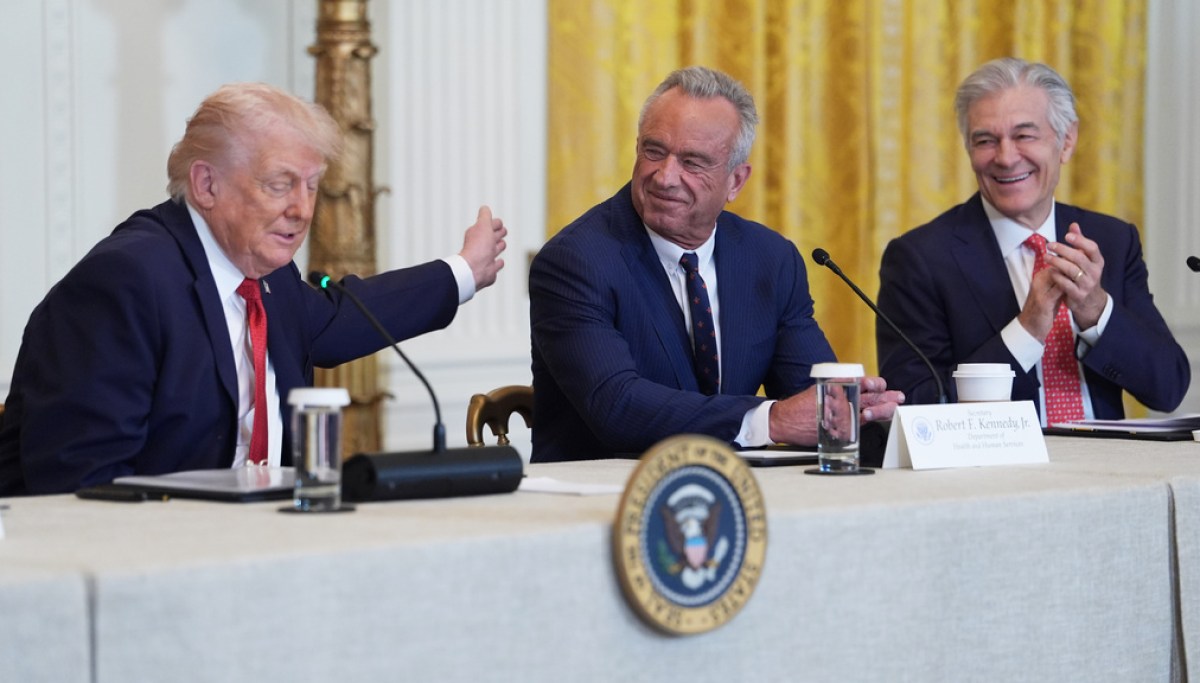
The movement, whose national leader is Health and Human Services Secretary Robert F. Kennedy Jr., largely focuses on targeting the underlying causes of the chronic disease epidemic, rooting out what it describes as sweeping conflicts in Washington that it says have manipulated healthcare policy at the cost of a sicker populace, and overall, questioning the establishment’s ethos on the subject. Trump’s move to bring MAHA into the Republican Party’s fold has marked a rare chance for the GOP to make headway in the healthcare space, a niche typically dominated by the Left on issues such as Obamacare, Medicaid, and Medicare.
Since taking the reins at HHS, Kennedy has become one of the most favorably viewed leaders in the country. A Harvard CAPS-Harris poll released in December 2025 labeled him as the most popular political figure nationwide, alongside Secretary of State Marco Rubio. The finding was comparable to data from You.gov and a previous Gallup analysis of political figures.
“I think that when you look back,” Minarik said, “Republicans have never really gone on offense on healthcare.” But under Kennedy’s leadership, the Republican agenda “sounds very much like the issues Democrats were into in the 1990s and 2000s,” David Mansdoerfer, who formerly served in HHS leadership, told KFF.
“We’ve almost done a 180 and co-opted a topic under a Republican agenda,” he said.
Much of MAHA’s appeal is contained in its promise that simple changes centered on exercise and nutrition can produce radical change, according to Jennifer Galardi, the Heritage Foundation’s senior policy analyst at the DeVos Center. She pointed to HHS’s new dietary guidelines recommending “real food” to help alleviate and prevent chronic health conditions such as obesity, diabetes, arthritis, and depression that affect communities at the national scale, as one of MAHA’s “biggest wins.”
At the time, HHS accused past administrations of recommending and incentivizing “low-quality, highly processed foods” and overmedicalization, fueling an uptick in chronic disease and other issues, and urged people to “ dramatically reduce” highly processed foods. “How we Make America Healthy Again,” Kennedy said in January, is by ensuring households “prioritize whole, nutrient-dense foods—protein, dairy, vegetables, fruits, healthy fats, and whole grains.”
“The food pyramid being flipped upside down, I think, is huge,” Galardi said. “In the end, Americans have to make these decisions for themselves, and they need to make informed decisions. I think that was a very powerful message. I think the greatest strides we’ve made are in just communications, in providing clarity on what healthy is.”
Under the Trump administration, a host of other MAHA-like initiatives have been introduced, including the introduction of the Trump Rx drug discount site, the president’s proposal for Obamacare funds to go directly to patients instead of insurance companies, and the Food and Drug Administration’s actions on food dyes and additives. Minarik referenced last summer’s announcement from the National Institutes of Health that it plans to refocus federal medical research funding on chronic health issues and expand scientific scrutiny into how nutrition affects chronic disease.
Minarik also pointed to the novel MAHA ELEVATE Model, a $100 million Centers for Medicare and Medicaid Services initiative designed to incentivize new, “whole-person” approaches to Medicare beneficiaries. The model aims to target the “core lifestyle choices and human behaviors that are associated with the prevention of chronic disease” and revolutionize what it describes as a health system that “primarily focuses on treating the symptoms of these conditions and managing diseases.”
Hannah Anderson, director of Healthy America policy at the America First Policy Institute, emphasized Kennedy’s initiatives on “transparency,” including on reforming costs and pricing in the healthcare industry, which she said promoted a “patient-first” mentality. The MAHA message holds particular appeal to voters in the aftermath of the pandemic, when many believed health authorities manipulated them. Even on “contentious” issues such as vaccines, which polling shows is a tricky topic for the GOP, voters prefer vigorous debate and medical freedom over a powerful bureaucracy they feel is “twisting the facts to fit their narrative,” Anderson said.
Hamel said KFF surveys indicate there are “more diverging views when it comes to some of the vaccine priorities and actions.” Some in the GOP have warned that those aspects of the MAHA agenda could spell bad news for the party, with Tony Fabrizio, Trump’s chief pollster, warning in a December 2025 memo that “electoral downsides” exist for politicians supporting eliminating vaccine recommendations.
Galardi posited that the MAHA controversies pose an opportunity for the GOP. In “the big-tent party,” voters might not agree on everything, but they prefer intellectual freedom and options in the healthcare space over groupthink, she suggested.
“The Left is the one who ostracizes and who has these purity tests for every issue,” Galardi said. “I think the fact that Republicans have nuanced debate within the party is healthy. I think that the more that we’re honest about these debates and these issues and the challenges, the more people will trust us.”
Polling indicates many of MAHA’s goals have widespread public support, although Hamel noted Democrats still hold a distinct advantage on issues such as Medicaid and Medicare, as well as healthcare costs, pointing to KFF polling released in January.
MAHA GOES TO CONGRESS: HOW RFK JR. HOPES TO TACKLE CHRONIC DISEASE WITH TRUMP
About three-quarters or more of Democratic parents, independent parents, Republican parents, MAHA-supporting, and non-MAHA-supporting parents support increasing government regulation on food additives, highly processed foods, and sugar, according to KFF. Overall, Hamel said 87% of MAGA-leaning Republicans say they support the MAHA movement, and a poll by Change Research found that around 21% of independent voters and 8% of Democratic voters held a favorable or somewhat favorable view of MAHA as of last fall.
“I think people are caught off guard by the power of the moms, the power of the movement, and the longevity of it,” Galardi said. “I don’t think it’s going anywhere. Quite frankly, we might, you know, we might take our hits and might not win every battle, but I think this is a long-term war that we can win.”