The Trump administration is vehemently pushing back on a recent article that the administration “underestimated the Iran war’s impact on the Strait of Hormuz,” calling it “patently ridiculous.”
Iran, in retaliation for the war, has largely closed the Strait of Hormuz, a vital waterway through which about 20% of the world’s oil transits. U.S. officials have discussed the possibility that the Navy could escort commercial tankers through the narrow strait to ensure they aren’t attacked, but this effort has not begun yet.
CNN reported that the administration “significantly underestimated Iran’s willingness to close the Strait of Hormuz,” while it now has a “clarification” note at the bottom stating that the piece has been “updated to reflect additional developments and clarify that top Trump administration officials briefed lawmakers on long-standing military plans to address a major disruption to the Strait.”
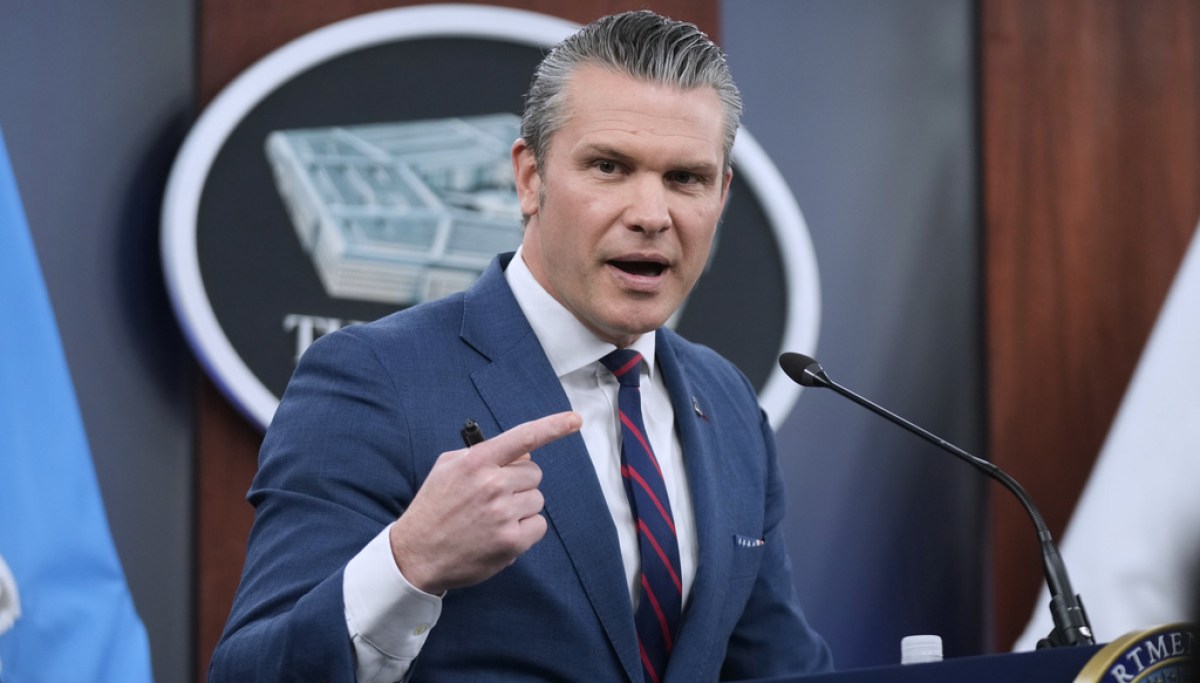
War Secretary Pete Hegseth was the first to dispute the characterization during Friday morning’s briefing.
STRAIT OF HORMUZ TRAFFIC HAS GROUND TO A HALT. HERE’S WHY IT’S VITAL TO GET IT BACK UP AND RUNNING
“The sooner David Ellison takes over that network, the better,” he quipped, referring to CNN, which had a reporter at the briefing. Ellison, the CEO of Paramount Skydance, is in the process of acquiring CNN’s parent company, Warner Bros. Discovery.
White House press secretary Karoline Leavitt also disputed the story on social media.
“CNN decided to run this garbage based on three anonymous ‘sources familiar with discussions,’” she said. “This is despite the fact that myself, the Secretary of War, the Secretary of State, and multiple lawmakers (who were actually present for the recent classified briefing) have directly disputed this false reporting.”
Sen. Tom Cotton (R-AR), the chairman of the Senate Intelligence Committee, and Sen. Tim Sheehy (R-MT), a member of the Senate Armed Services Committee, were also critical of the reporting and disputed that the administration had not planned for Iran to try to shut down the strait.
“CNN should do some fact-checking,” Cotton said. “The U.S. has planned for Iran to try to close the strait for decades.”
Hegseth’s critiques about the media’s coverage of the war come as the conflict is about to reach its two-week mark. The U.S. military has hit over 6,000 targets, destroyed most of Iran’s navy and air force, and targeted the country’s ballistic missile stockpiles, launchers, and production facilities, among other targets.
Instead, he said, “an actual patriotic press,” would report on “‘Iran shrinking, going underground.’ You see Iran’s leaders are hiding in bunkers and moving into civilian areas. The only thing that is widening is our advantage.”
Gen. Dan Caine, the chairman of the Joint Chiefs of Staff, who briefed reporters alongside Hegseth, acknowledged that the U.S. has “made progress, but Iran still has the capability to harm friendly forces and commercial shipping, and our work on this effort continues.”
PENTAGON DECLINES TO SHARE US CASUALTY COUNT IN MIDDLE EAST
Hegseth has long had his disdain for the media apparent since being confirmed to lead the Pentagon.
He also criticized media coverage of last year’s U.S. strikes on three of Iran’s nuclear facilities in June 2025. At the time, the secretary disputed a leaked preliminary assessment from the Defense Intelligence Agency that found the U.S. did less damage to the facilities than Hegseth and President Donald Trump had said.