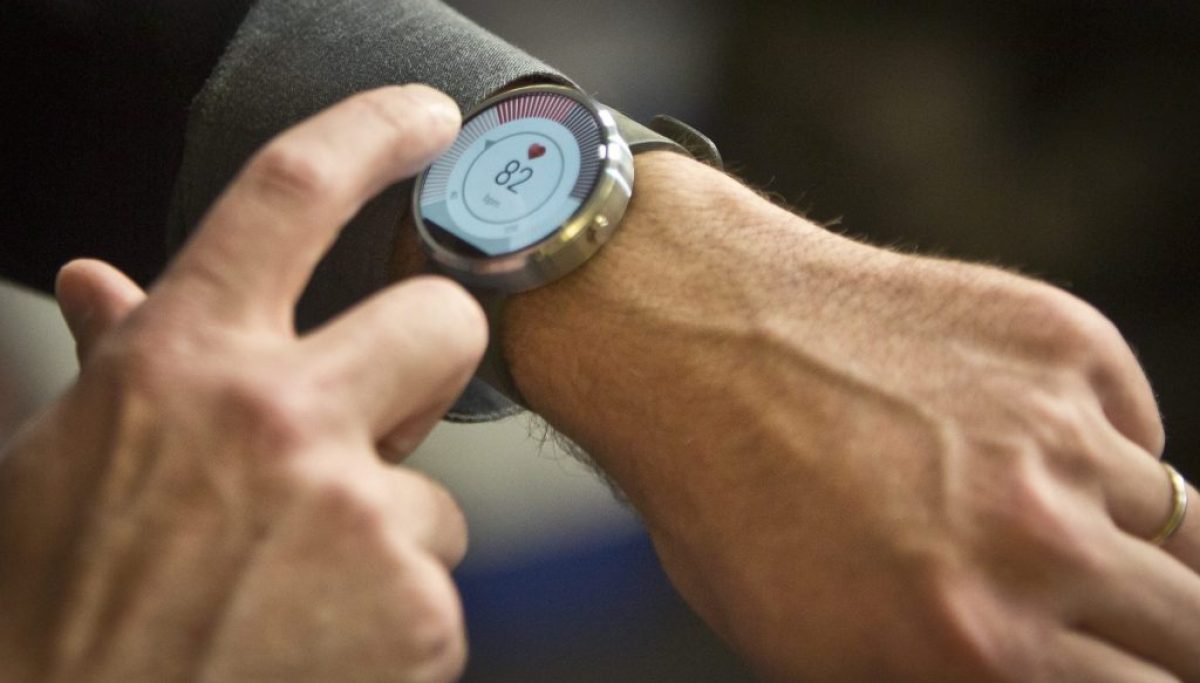
By any reasonable measure, the Trump administration’s and Health and Human Services Secretary Robert F. Kennedy Jr.’s push to expand wearable health tracking technology among Americans is rooted in a laudable goal. The effort seeks to improve public health outcomes in a nation struggling with chronic disease, obesity, and a broken preventive care culture.
Kennedy has repeatedly argued that every American should be using a wearable device within four years, from smartwatches to continuous glucose monitors, as they can provide real-time feedback needed to make healthier decisions and reduce dependence on costly pharmaceuticals.
The underlying premise is simple and appealing: if Americans can better understand their own health metrics, they may change their behaviors before becoming afflicted with disease. In a country facing skyrocketing rates of diabetes and cardiovascular disease, that is certainly a goal worth pursuing.
TRUMP HHS INVESTS IN BIOWEARABLES SO PEOPLE ‘DON’T BECOME PATIENTS’
Still, even the best intentions can carry serious risks. Expanding wearable technology on a national scale means expanding the collection of deeply personal and continuous streams of data. In today’s age, health metrics are stored, analyzed, transmitted, and often combined with location data and behavioral patterns. At that point, the conversation is no longer limited to wellness or consumer choice, instead becoming a matter of cybersecurity, privacy, and national security, as it grows increasingly valuable to foreign intelligence services and nefarious actors such as China that seek to map vulnerabilities in American society.
Incredibly, the healthcare sector is already under relentless digital attack from foreign adversaries. In 2024 alone, the healthcare sector experienced 444 reported cybersecurity incidents, more than any other critical infrastructure in the United States, exposing the protected health information of an estimated 259 million Americans — the highest number ever recorded.
Healthcare data breaches are not theoretical. They disrupt patient care, expose sensitive personal details, and ultimately threaten America’s economic and national security, as the Director of National Intelligence’s National Counterintelligence and Security Center found. This trend is a disturbing part of a larger pattern in which hackers increasingly target healthcare organizations for the high value of the data they protect and the critical systems they serve.
Against that backdrop, a newly published rule from the Centers for Medicare and Medicaid Services deserves close scrutiny. The rule would subject wearables — namely, continuous glucose monitors and insulin pumps — to Medicare’s Competitive Bidding Program. Lowering barriers to entry through the Competitive Bidding Program may open the door to Chinese or other foreign manufacturers with opaque ownership structures, weak cybersecurity practices, or direct ties to adversarial governments. When the devices in question collect real-time health data and continuously transmit it, the stakes are far higher than a typical procurement decision.
China has made apparent its ambition to dominate advanced technology sectors, including medical devices and digital health platforms. Allowing Chinese companies or manufacturers tied to Chinese supply chains into federally supported healthcare programs would risk giving Beijing access to the sensitive health data of millions of Americans.
Investigative reporting revealed that Chinese-manufactured medical devices are already deeply embedded in U.S. healthcare systems, selected often because they are cheaper, not because they are more secure. Federal agencies, including the Food and Drug Administration and the Cybersecurity and Infrastructure Agency, have raised concerns about cybersecurity vulnerabilities in some of these devices. Chinese state-sponsored cyber groups have been documented infiltrating U.S. critical infrastructure networks across energy, transportation, and communications sectors. The FBI has repeatedly warned that the Chinese government poses a persistent and broad threat to U.S. cybersecurity, including through the exploitation of supply chain weaknesses.
In a recent letter to CMS Administrator Mehmet Oz, a coalition of former national security officials, led by retired Army Maj. Gen. James “Spider” Marks, voiced their grave concerns about the national security implication of CMS’s expanded competitive bidding program, noting that vulnerabilities around patient data and in critical medical technology — which play a vital role in the fortification of the nation’s economy and infrastructure — must not be left exposed. By calling on the administration to exclude companies tied to hostile foreign adversaries, such as China, as it involves sensitive medical devices, the officials aim not only to protect national interests but also to promote innovation and competition.
OPINION: MAKE HEALTHY CHOICES EASIER
Empowerment without protection is reckless, and innovation in this sector must be paired with clear rules about who owns data, where it is stored, and who can access it. Americans deserve absolute transparency, knowing exactly what data is collected, how it is used, and who ultimately controls it. Biometric and health data should never be owned, monetized, or accessed by foreign-linked entities operating beyond the reach of U.S. law.
The push to use wearables to improve health outcomes is forward-looking and, in many ways, admirable. But those who care about health freedom must also care about national sovereignty. Encouraging widespread adoption of wearable technology without securing the data it generates is like building a digital pipeline into the most intimate aspects of Americans’ lives and failing to safeguard it. Importantly, innovation and security are congruent values, not competing. When it comes to healthcare and the data that defines our bodies and behaviors, getting this balance right is essential.
Aiden Buzzetti is president of the Bull Moose Project.