In Focus delivers deeper coverage of the political, cultural, and ideological issues shaping America. Published daily by senior writers and experts, these in-depth pieces go beyond the headlines to give readers the full picture. You can find our full list of In Focus pieces here.
Both headline and core consumer price index inflation stayed in line with economists’ expectations and remained at five-year lows in February. Headline CPI rose 2.4% in the year ending in February, and core CPI, which excludes the volatile categories of food and energy, rose 2.5%.
On paper, this is unambiguously decent news: Core goods inflation has cooled dramatically, indicating that whatever price hikes that immediately resulted from President Donald Trump‘s sweeping tariff regime are likely over, and core inflation overall is trending in the right direction toward the Federal Reserve’s maximum 2% inflation target. But the headline measure didn’t account for recent volatility in global oil markets since the president initiated Operation Epic Fury on the last day of the month, thus Wall Street and Washington are broadly brushing off the good news in anticipation of supposed inflation to come as a result of the war with Iran.
Consider me unconvinced: While oil markets escalated into temporary apoplexy earlier this week, the real political risk of inflation is not the transience of an Iran offensive that the White House has indicated will be over in weeks, not months, but rather the housing shortages that have still baked price hikes into already existing inflation. In other words, if affordability costs the Republican Party the midterm elections, it won’t be because of Iran’s impact on oil prices, but rather because of the housing prices that have been the overwhelming driver of both recent inflation and voters’ cost-of-living concerns.
PEOPLE REMAIN SOUR ON AN IMPROVING ECONOMY BECAUSE OF HOUSING
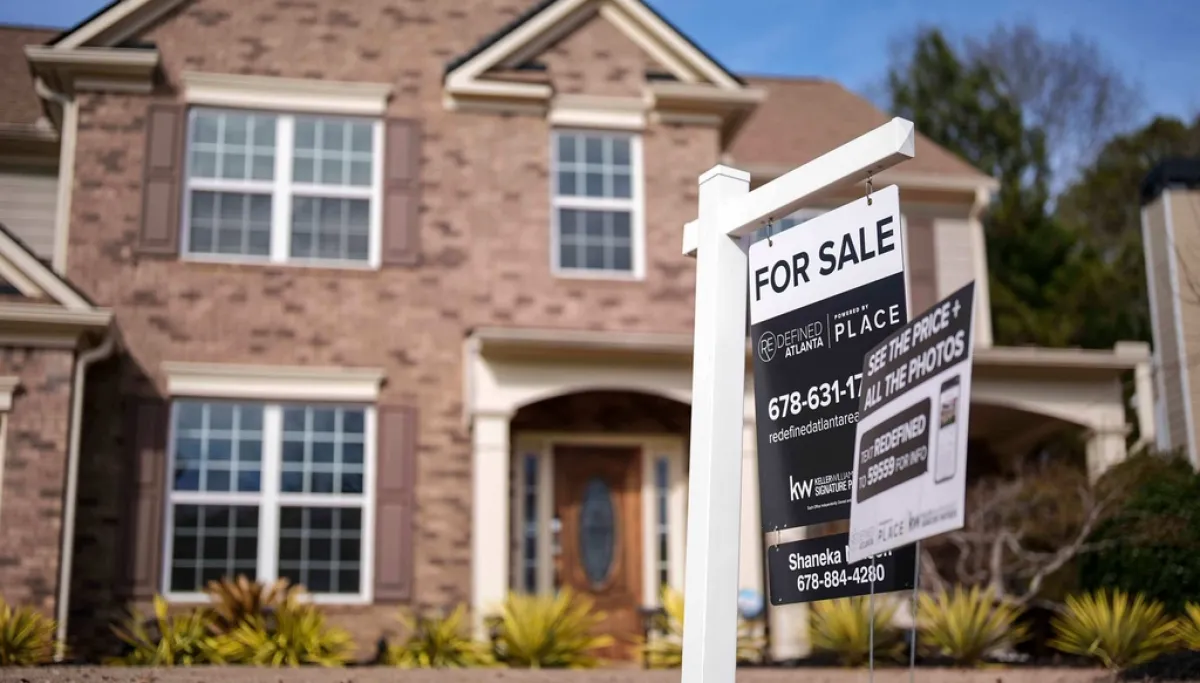
General consumer prices have indeed stabilized close to the 2% inflation target. Grocery price inflation for the first full year of Trump’s second term is down to 2.4%, energy inflation down to 0.5%, core goods down to 1%, and transportation services at 2.2%. But the official measure of shelter inflation by the Bureau of Labor Statistics remains 3%, with the BLS noting that shelter was, once again, the “largest factor” in the overall rise of CPI.
And this, of course, has been the case for Trump’s entire second term. No other single input has fueled accelerating prices more than shelter since the Bidenomics brought inflation rates to the near double digits, and in the year since Trump has been back in office, shelter has been responsible for anywhere between 40% and over 60% of each month’s annual inflation prints.
And the shelter measure itself isn’t a perfect picture of actual housing, relying on homeowners’ estimates of their market values if they were to rent out the home in which they live, rather than actual indices such as home sales prices or the Zillow Observed Rent Index, which aggregates the real asking rents on the market. This means that the BLS shelter index may underestimate housing inflation as it relies on the perceptions of owners, who are largely locked into effective 0% inflation rates thanks to the 30-year fixed mortgage, rather than the reality of increasing rents and seller asking prices that nonhomeowners have to confront every day.
All of this is to say that there is a very good reason that voter concerns about the cost of living in general are actually about the cost of housing. As I detailed last month, the overwhelming majority of persistent economic sentiment is due to the generations locked out of home ownership by decades of government regulation hamstringing new housing supply.
Now, the current problem of housing prices fueling inflation doesn’t mean future oil market volatility cannot further fire up inflation. But past data would indicate it isn’t very likely. When Russia launched its invasion of Ukraine in February 2022, jacking up global oil prices by $45 per barrel, the news media found a convenient scapegoat to blame for the worst inflation the U.S. had experienced in nearly half a century. But the narrative that Russia was responsible for American inflation was a politically motivated lie to cover up the fact that former President Joe Biden intentionally orchestrated the ensuing inflation with his $1.9 trillion American Rescue Plan. A later Federal Reserve study found that of the 8% inflation the U.S. experienced across 2022, Russia’s impact on gas prices was responsible for one-half of 1 percentage point.
After the vicissitudes of the weekend’s premarket trading, oil prices are down to closer to $20 per barrel above their end-of-February baseline. And unlike Biden, who was largely a passive observer of the world as it descended into hell, Trump is the president who originally made the U.S. a net oil exporter for the first time since 1949, already bolstering American oil supply with our newfound vassals in Venezuela, and currently browbeating our allies into flooding the market with stockpiled reserves.
Which brings us back to the current political reality that the possibility of oil price hikes probably won’t meaningfully move voter sentiment on the economy, but that the already extant affordability malaise, which is really just ire over housing prices, could actually tank Republican prospects in the midterm elections.
This political reality is why I remain baffled with Trump’s insistence that Congress ignore the White House-endorsed housing megabill that Republicans have been quietly constructing for years to prioritize the SAVE America Act at all costs.
It’s not that the SAVE America Act, which requires Americans to provide proof of citizenship to register to vote in federal elections, is a bad bill. It’s just that, given the extraordinary rarity of voter fraud and the fact that Republicans still do win elections, it’s not an incredibly necessary bill, much less one worth blowing up both the legislative filibuster and the opportunity to pass major federal housing supply reform.
If time is of the essence before the midterm elections, the overwhelming imperative for Republicans should be to deregulate local development laws to the point that new housing starts increase so dramatically in the next half-year that asking prices for new home sales and rentals do not just stabilize, but fall.
The current iteration of the housing behemoth to come out of the Senate, the 21st Century ROAD to Housing Act, is not quite up to the job. Part of the problem is because of Trump’s illogical obsession with banning institutional investors from purchasing single-family homes. But the major poison pill, added by Sen. Elizabeth Warren (D-MA), is a requirement that developers who build homes with the specific purpose of renting them out must sell those properties within seven years. While the institutional investor purchase ban is illogical, it realistically won’t do much, considering that institutional investors own just 1% of SFHs. But the build-to-rent ban could actually make new housing supply even more anemic. The bones of the bill are solid: The federal government absolutely should compel localities to abolish their climate culty and communist zoning restrictions that grant the collective community veto power over an individual’s right to do with his property what he pleases. But the built-to-rent ban could render the entire bill a net negative.
THE GLOBAL ECONOMY SURE DOESN’T THINK TRUMP STARTED WWIII
If Trump’s current domestic priorities are purely pragmatic, his energy is best spent strong-arming the Senate into passing the version of the ROAD to Housing bill that swept the Republican-controlled House on a bipartisan basis. Whereas the Senate version employs vice signaling and populism to create the veneer of action aimed at housing affordability, the House bill actually deregulates housing supply to the extent that it will actually deliver affordable results.
Trump has indeed resolved much of the inflation crisis that Biden created, but the voters priced out of housing affordability have made clear that their overwhelming negativity subsumes their perspective of the broader economy. If Trump thinks the affordability issue can kill the GOP come November, he must prioritize getting housing supply reform done, getting it done quickly, and getting it done correctly. Everything else is a distraction.