The lust for political vengeance against anyone who provided assistance to Donald Trump in the 2020 election is still in full swing in Wisconsin, as evidenced by an ongoing abusive criminal prosecution that has now reached the state supreme court with motions over possible misconduct by the trial judge and a request for two biased members of the high court to recuse themselves from the case.
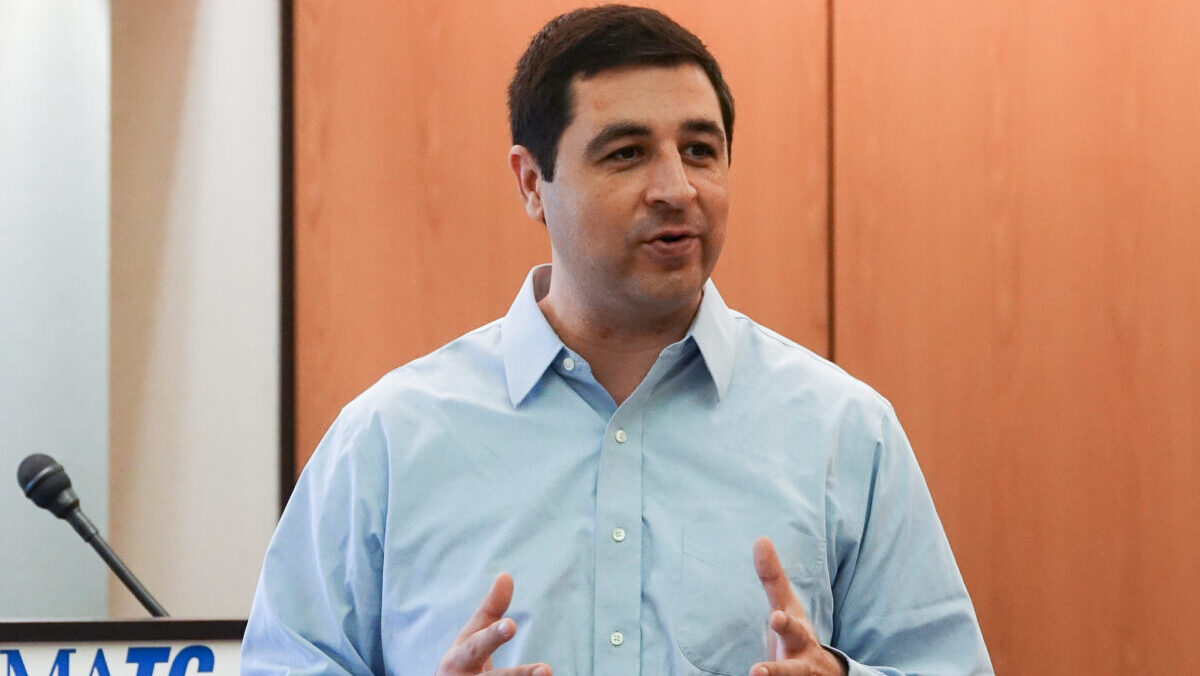
Not to be outdone by discredited Georgia prosecutor Fani Willis, Wisconsin Attorney General Josh Kaul, the Les Misérables Inspector Javert of Wisconsin, has been obsessively pursuing a lawyer, Jim Troupis, along with two other defendants, Kenneth Chesebro and Mike Roman, for engaging in completely lawful political activities.
Troupis is a respected lawyer and a former judge, mayor, and member of Wisconsin’s Judicial Conduct Advisory Committee. He provided the type of competent legal representation that a lawyer is supposed to provide his client — even one who’s hated by state officials.
For that, he has been accused of fraud, despite Kaul’s own legal staff concluding that there was no violation of the law by Troupis or the other defendants for doing what had been done before when the results of a presidential election were being contested in a state — that is, organizing a slate of contingent presidential electors to cast ballots that could be counted if a judge or the legislature decided the election contest in Trump’s favor.
Keep in mind that there was a recount in Wisconsin. Biden ultimately was declared the winner, but only after the state supreme court, by a bare four-justice majority with three dissenters, issued an opinion in his favor. That split vote shows Trump’s challenge raised serious issues about the conduct of the election.
Following Precedent
Due to federal election deadlines, a slate of contingent electors is essential for contesting the outcome of a presidential election. Federal law (3 U.S.C. § 7) sets the date for the electors to cast their ballots as the first Tuesday after the second Wednesday in December. A slate of contingent electors would need to cast their votes on that date in order to be counted if an election contest is successful and the results are overturned.
The state would have until the date the electoral college votes are counted (Jan. 6) to submit the contingent slate to Congress. If the contingent electors did not cast their ballots on that date, then the successful challenger would still not be awarded any electoral votes even though he was finally declared the winner, a quintessential pyrrhic victory.
Troupis was following the precedent of the 1960 Kennedy campaign, when Richard Nixon was initially certified as the winner in Hawaii. The Kennedy campaign, which was challenging the declared result, arranged for contingent electors to cast their ballots for Kennedy. Kennedy’s challenge was successful and the votes of his alternative slate of electors were sent to Congress.
Al Gore was advised to do the same in 2000 in Florida but declined to follow through. And following the 1876 election, four states — Florida, Louisiana, South Carolina, and Oregon — submitted two different slates of electors and told Congress that it would have to decide who had won the election.
Troupis’ Appeal
Despite this historical precedent, Troupis is being hounded by Kaul and a court system that has failed to dismiss a legally flawed prosecution.
The latest developments in the case are Troupis’ lawyers have appealed to the state supreme court after the trial judge, John Hyland, refused to dismiss the prosecution. They have also filed a motion to disqualify Hyland.
Troupis’ legal team claims that Hyland did not write the order denying his motion to dismiss the case. According to an analysis by a forensic linguist, large parts of the draft order were ghostwritten by a private attorney — retired Judge Frank Remington — who “was (to put it mildly) not a fan of” Troupis, according to his lawyer. Remington is the father of Hyland’s law clerk.
If true, this would be a clear violation of the prohibition against ex parte communications by a judge (or his law clerk) that is outlined in Rule 60.04 (g) of Wisconsin’s Code of Judicial Conduct, among other violations.
According to the petition filed with the supreme court, Hyland refused to hold an evidentiary hearing to investigate the alleged impropriety and would not even acknowledge the expert’s analysis, an inexcusable failure that makes it impossible to determine the existence of judicial misconduct. He also refused to allow a different judge to consider the issue, given Hyland’s obvious conflict of interest in examining his own or his law clerk’s behavior.
To make matters worse, the Wisconsin court of appeals failed to do anything about this, without offering any explanation, thereby leaving the impression — whether accurate or not — that Wisconsin courts will turn a blind eye to potential judicial misconduct as long as that misconduct is targeted against politically disfavored defendants.
Biased Supreme Court
Troupis has now appealed all of this to the state supreme court, where, unfortunately, he faces long odds. Troupis is seeking the recusal of Chief Justice Jill Karofsky and Justice Rebecca Dallet who, he claims, have exhibited extreme hostility to Trump in connection with his challenges to the 2020 election in Wisconsin. Troupis points out in his recusal motion that when he was representing Trump in his election contest, Karofsky said that Troupis wanted the court to “overturn this election so that your king can stay in power, and that is so un-American.”
Troupis’ recusal motion says that Karofsky claimed that filing an election contest was “unheard of in American history” which is simply untrue — and then claimed that Trump’s challenge “smacked of racism.” Troupis says Karofsky has repeatedly accused Troupis of bad-faith conduct and racism in the media, including in podcasts and press releases. Such behavior would be shocking coming from any lawyer, much less the chief justice of a state supreme court.
Justice Dallet seems no better. Troupis notes in his recusal motion that Dallet claimed that Trump’s election contest was racially motivated and that Troupis only wanted the votes thrown out of “diverse non-white urban counties,” an offensive and baseless claim. Years after the election contest was over, Dallet called Troupis a “partisan” whose intent was to weaponize “the disciplinary process against” her and Karofsky, despite the fact that the discipline complaint she was talking about was not filed by Troupis.
What is happening in Wisconsin with this politically charged, and legally flawed, prosecution is a travesty. Whether you like President Trump or not, his supporters are being subjected to an unfair prosecution before a seemingly biased judge. The defendants in this case, indeed the people of Wisconsin, deserve better.
John Malcolm is vice president for the Institute for Constitutional Government, director of the Meese Center, and the Ed and Sherry Gilbertson Senior Legal Fellow at The Heritage Foundation. Hans von Spakovsky is a senior legal fellow in Heritage’s Meese Center for Legal and Judicial Studies.