Iran’s primary oil export terminal, Kharg Island, has so far been spared from United States and Israeli strikes, even as global energy prices surge and tensions rise across the region.
Kharg Island handles nearly 90% of Iran’s crude oil exports, making it a key terminal and an economic asset for the country. As the war enters its second week, the U.S. and Israel have targeted critical energy infrastructure in Iran, including several fuel facilities and oil storage depots in Tehran and Alborz.
There has been no military action on Kharg Island yet, but any strikes to the terminal could escalate the war and trigger additional shocks to the oil market.
Here’s what to know about the island.
What is Kharg Island?
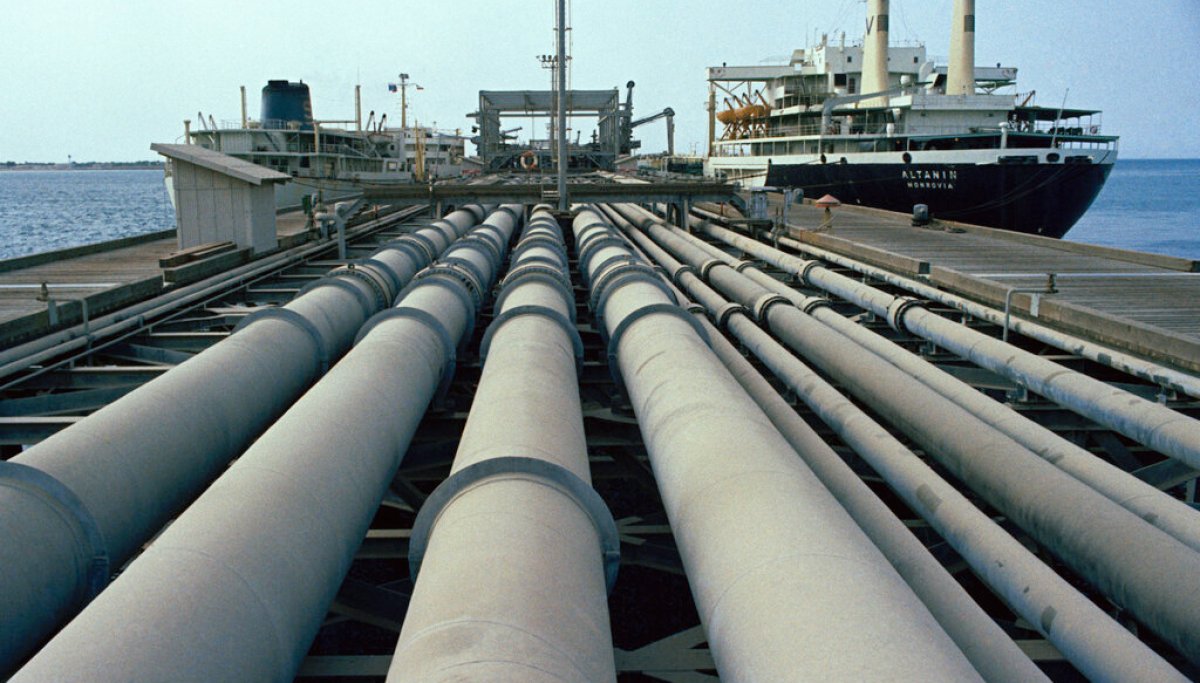
Kharg Island is a small limestone island about five miles long and two miles wide, located in the northern Persian Gulf about 16 miles off the Iranian coast. It hosts a terminal that handles millions of barrels of oil a day.
The island was first developed in the 1960s by the U.S. oil company Amoco.
Most of Iran’s oil exports pass through the island, where crude is loaded onto ships to travel through the Strait of Hormuz. The island has a loading capacity of nearly 7 million barrels per day.
In 2023, the island had crude oil storage capacity of 28.3 million barrels. Iran last year added 2 million barrels of crude oil storage at the island.
Before the war began, Iran increased exports from Kharg to record levels, loading over 3 million barrels per day between Feb. 15 to 20, JPMorgan said in a note cited by Reuters.
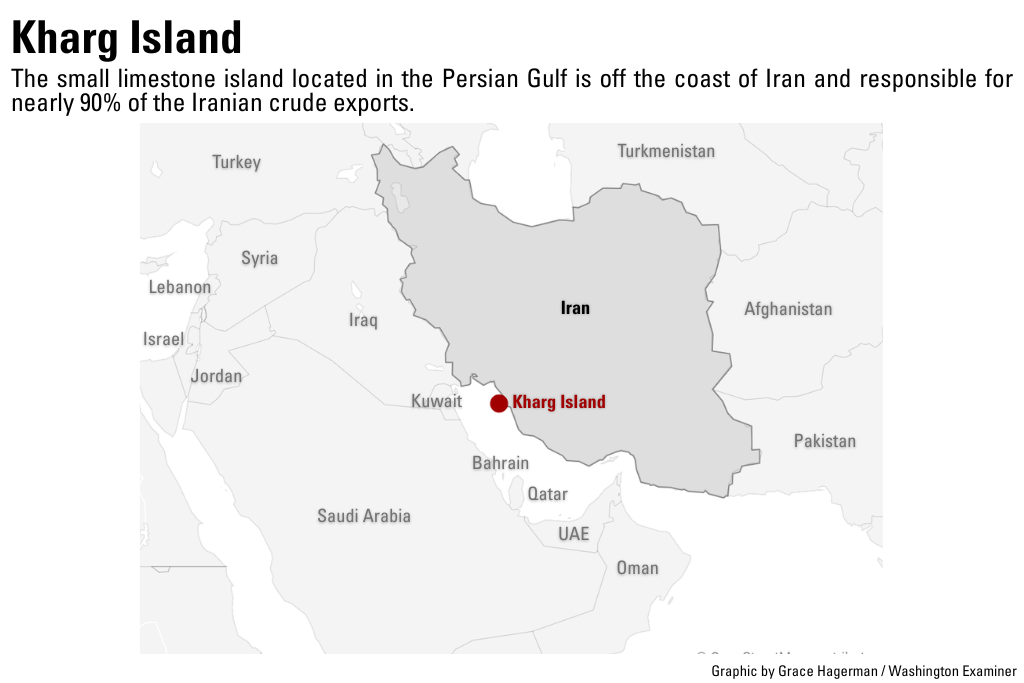
The island remains untouched
The island has remained untouched throughout the war, but the Trump administration’s plan for Kharg Island remains unknown. Axios reported over the weekend that discussions have been underway to seize the island.
Michelle Caruso-Cabrera, MCC Global Enterprises CEO, told CNBC on Monday that “without Kharg Island, there is pure fiscal collapse for Iran, because 90% of their oil exports leave from this island, and that’s what provides them foreign currencies and dollars.”
Caruso-Cabrera noted that it would be a “huge escalation” if the U.S. decides to seize the island, which would require on-the-ground action. She noted said if the U.S. wants to “hobble” Iran, taking the island would do just that.
President Donald Trump told reporters on Air Force One on Saturday that he could deploy troops.
“[It would] have to be [for] a very good reason,” Trump said. “And I would say if we ever did that, [Iran] would be so decimated that they wouldn’t be able to fight at the ground level.”
In previous conflicts, the U.S. has not touched Kharg Island. For instance, during the 1979 Iran hostage crisis, President Jimmy Carter imposed sanctions, but did not strike the island. In the 1980s tanker war, President Ronald Reagan targeted Iranian vessels and missile batteries, but avoided attacking Kharg.
A strike on the island could lead to major retaliation in the Strait of Hormuz, which has been effectively closed since the start of the war.
“Although Iraqi forces struck some terminals and tankers during the eight-year war, Kharg remained largely operational, and damage was typically repaired quickly, demonstrating that disabling it would require sustained, large-scale attacks,” JP Morgan said in the note.
What’s to come next for Kharg Island?
Iran appears to still be using the island to export oil.
As of Saturday, two very large crude carriers capable of transporting 2 million barrels of oil were seen at loading jetties on each side of the island, Bloomberg reported. Satellite photos also showed several other tankers anchored to the south and east of the island, each capable of holding 1 million barrels.
G7 COUNTRIES RULE AGAINST RELEASE OF OIL RESERVES TO ARREST SURGE IN PRICES
The war has caused global energy prices to surge. Ministers from the Group of Seven nations spoke on Monday to discuss the war’s effect on energy markets, but decided against jointly releasing oil stockpiles immediately.
The decision by the G7 came hours after oil prices hit record highs of more than $119 per barrel, the highest since 2022.