In a big win for the Constitution, a federal appeals court ruled on Thursday that Washington, D.C.’s gun magazine restriction is unconstitutional.
In a 2-1 ruling, the three-judge panel found that the federal district’s ban on firearm magazines capable of holding more than 10 rounds violates the Second Amendment. Judges Joshua Deahl (Trump appointee) and Catharine Easterly (Obama appointee) comprised the majority, while Chief Judge Anna Blackburne-Rigsby (Bush 43 appointee) dissented.
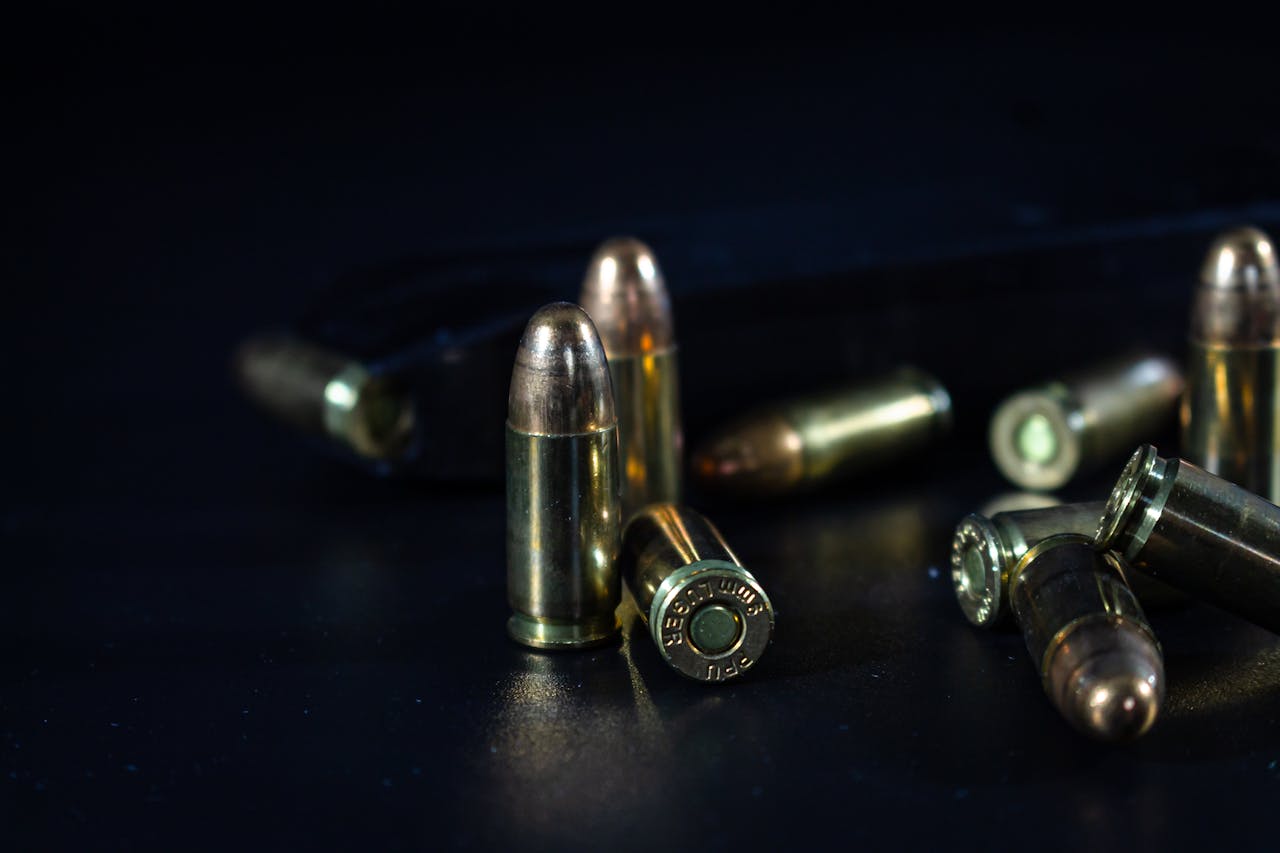
“Magazines capable of holding more than 10 rounds of ammunition are ubiquitous in our country, numbering in the hundreds of millions, accounting for about half of the magazines in the hands of our citizenry, and they come standard with the most popular firearms sold in America today,” Deahl wrote for the majority. “Because these magazines are arms in common and ubiquitous use by law abiding citizens across this country, we agree with Benson and the United States that the District’s outright ban on them violates the Second Amendment.”
The case was brought by plaintiff Tyree Benson, who, as described by the court, was charged with several gun-related offenses after law enforcement discovered that he was in possession of “an unregistered semiautomatic firearm equipped with a 30-round magazine.” Among the four charges levied against him were those for unlawful “possession of a ‘large capacity ammunition feeding device’” and “possession of an unregistered firearm.”
Benson filed two pretrial motions in response. One challenged the police officers’ search of him as a Fourth Amendment violation, while the other aimed to dismiss the charges based on claims that D.C.’s firearm restrictions — namely its “’large capacity’ magazine ban and … registration and licensure schemes” — violated his Second Amendment rights.
The district court denied both motions, and Benson was ultimately convicted. As a result, he “received suspended sentences and one year of probation, and was barred from ever possessing a firearm in the future,” according to the D.C. Circuit.
In finding that D.C.’s magazine restriction violates the Second Amendment and existing Supreme Court precedent, Deahl ruled that Benson’s conviction “for violating the District’s magazine capacity ban” is void. The court similarly threw out his convictions “for possession of an unregistered firearm, carrying a pistol without a license, and unlawful possession of ammunition” due to the fact that he “could not have registered, procured a license to carry, or lawfully possessed ammunition for his firearm given that it was equipped with a magazine capable of holding more than 10 rounds.”
The majority’s decision does not address Benson’s Second Amendment challenges to D.C.’s gun registration and licensing schemes. Nor does it make a determination on his Fourth Amendment challenge to his search and seizure.
Blackburne-Rigsby argued in her dissent that the majority’s ruling is “inconsistent with Supreme Court precedent1 as well as with all of the state2 and federal3 courts of appeal that have upheld challenges to states’ [large-capacity magazine] LCM bans.”
“The District’s LCM ban should survive Mr. Benson’s facial challenge to its constitutionality because there are numerous circumstances to which the LCM ban lawfully applies. Mr. Benson’s possession of a 30-round LCM is one such example,” Blackburne-Rigsby wrote. “The District’s LCM ban is constitutional and should be upheld. Therefore, I respectfully dissent.”
The constitutionality of laws restricting gun magazines holding more than 10 rounds of ammunition is an issue that’s been circulating the federal appeals courts for some time. The matter is front and center in Duncan v. Bonta, which centers around a challenge to California’s gun magazine restrictions.
The case is currently awaiting consideration by the U.S. Supreme Court. At least four justices must agree to take up the case before it can be heard and ruled on by the court.
Shawn Fleetwood is a staff writer for The Federalist and a graduate of the University of Mary Washington. He is a co-recipient of the 2025 Dao Prize for Excellence in Investigative Journalism. His work has been featured in numerous outlets, including RealClearPolitics and RealClearHealth. Follow him on Twitter @ShawnFleetwood