Order Jamie Glazov’s new book, ‘United in Hate: The Left’s Romance with Tyranny, Terror, and Hamas‘: HERE.
In 1997, Gwendolyn Westbrook was arrested after being accused of embezzling thousands of dollars from the San Francisco port parking lot collections that she had been hired to monitor.
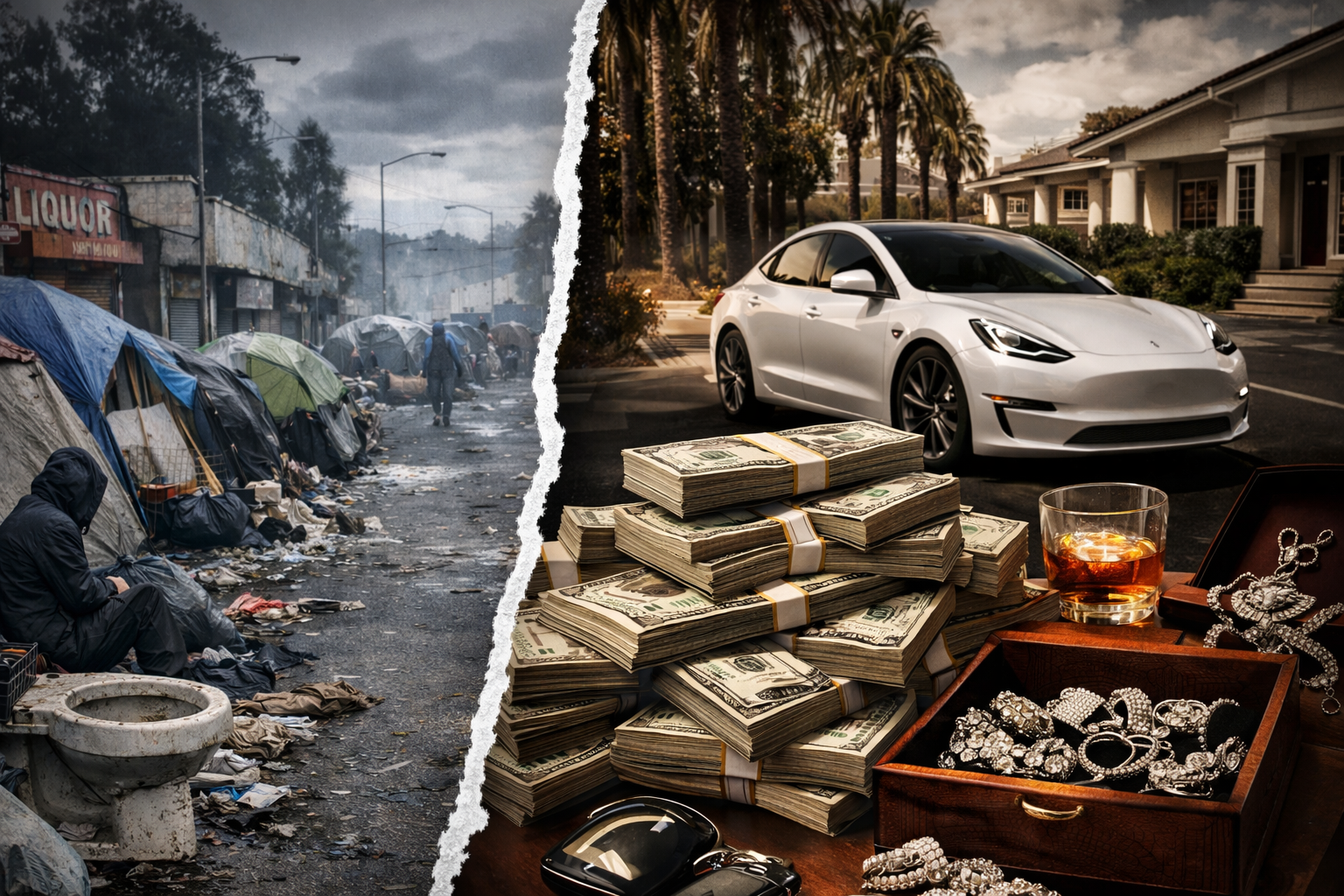
By 2022, she was running a homeless nonprofit that took in $36 million in grants while operating a tent city that took over a block and filled a neighborhood with violence and human waste..
Now she’s under arrest. Again.
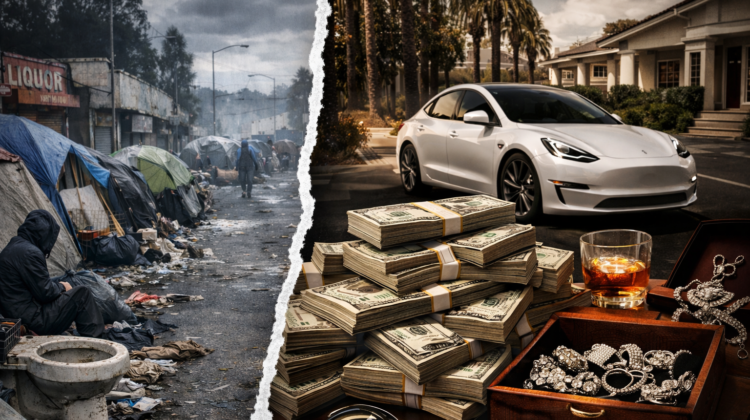
Westbrook, the CEO of the United Council of Human Services, is currently accused of misappropriating $1.2 million and a lawsuit claims that she told staffers about buying a Tesla for herself, handing out luxury cars to other family members, vacationing in Aruba and driving around for some unstated reason with a “a trunk full of high-priced jewelry”.
“I guess it’s because I’m a black woman,” Westbrook had said of critics. “I think it’s racism. They don’t want a black woman running this organization.”
Westbrook has been indicted by San Francisco DA Brooke Jenkins: also a black woman.
But the real question is why was Westbrook entrusted with millions of dollars and allowed to run a disastrous organization despite her past history at the San Francisco port? The answer lies with the reason why Westbrook got the job as an senior manager assistant at the Port of San Francisco in the first place.
The CEO of the homeless organization had been raised by Idaree Westbrook, an ally of the notorious Willie Brown, the former mayor and operator of the political machine that had turned the likes of Gov. Gavin Newsom and Kamala Harris, his former mistress, into statewide players.
Idaree had founded the San Francisco Black Leadership Forum which her adopted daughter took over and, as a San Francisco Chronicle story mentioned, its “endorsement is considered a key factor in local political races”. Gwendolyn Westbrook was forced to step down after the port scandal, but six years later she was running a local soup kitchen named Mother Brown’s Kitchen that morphed into the United Council of Human Services. By 2014, San Francisco authorized a homeless shelter with 100 beds next door over the protests of the neighbors.
Locals complained of screaming at all hours of the day and night, vomit, drunkenness, human waste and domestic violence. “They are just very mean people,” Westbrook accused, who “just don’t want to help other people get one up.”
Police shut down a charity gambling event that included blackjack tables funding the group.
An audit was requested in 2015 and released in 2017 which found that the ‘Council’ had received $1.5 million in city funds and had not kept a proper record of where the money was going. Over $88,000 in expenses couldn’t be properly accounted for, the board lacked members and existing board members didn’t seem to know what the organization was doing.
But the director of homeless services claimed that, “I feel this is kind of a success story.” And the money just went on pouring in.
Then came a ‘Safe Overnight Parking Pilot Program’ for vagrants to sleep in their cars.
A year later the pandemic hit and Westbrook came up with her greatest idea yet.
Westbrook set up socially distanced’ tents for the homeless in a park to create ‘safe sleeping villages.’
Nobody cares about homeless people,” she claimed. “They won’t come to their rescue. We had to do something for our community and that’s what we came up with.”
San Francisco adopted the ‘safe sleeping model’ at a modest price of $61,000 per tent per year.
By 2021, taxpayers were paying $16 million a year to keep the homeless in tents. Something that they were already doing on their own. As the Chronicle noted, the annual cost for one of these tents was “2½ times the median rent for a one-bedroom apartment in San Francisco.”
A supervisor called the cost “eye-popping” and argued that “we need to understand why that is”. Meanwhile the media and activists hailed Westbrook as a wonderfully compassionate genius.
“We’re going to fight to keep what we got. We’re going to keep our people in this neighborhood, and it doesn’t matter who’s going to like it,” Westbrook warned.
A lot of people didn’t like it.
By 2022, the ‘safe sleeping site’ with its tents, public toilets and showers had taken over a street, blocking food deliveries to stores and intimidating the locals. Business owners couldn’t get to their own shops and faced violence and ugliness. One man was threatened with a baseball bat, others complained about human waste, describing having to wash down the sides of their businesses after they were used as bathrooms.
Not to mention the garbage dumping and the drug dealing.
That same year, city auditors took a look at the organization’s $28 million in public funds and forwarded their results to the FBI. Housing was being used for employees of the organization and allegedly for Westbrook’s family members. The organization had collected over $100,000 in rent, even though it wasn’t supposed to be collecting rent, and $177,000 in credit card payments couldn’t be documented. Westbrook meanwhile had been donating money to local politicians.
Including Mayor London Breed.
Westbrook claimed that it was all a “damn lie” and blamed racism. When asked how her original port case had ended, the CEO claimed that she did not remember despite having pled guilty.
But it was San Francisco officials who chose not to remember, to ignore every red flag along the way, to provide millions in funding to a woman who had been accused of embezzlement, to ignore the failed audits and the neighborhood complaints until the toll passed $1 million.
The millions in the United Council of Human Services case are a drop in the bucket of billions in California. The Los Angeles Homeless Authority couldn’t account for $2.5 billion in spending. The story was a familiar one with an influential CEO who provided a multi-million dollar contract to her husband, hired her friends and protected Mayor Karen Bass.
The more money California spends on fixing ‘homelessness’, the worse the problem grows. But the money isn’t going to the homeless. Had all the homeless spending gone to the homeless, they could have been buying themselves luxury cars, trunks full of jewels and trips to Aruba.