Somehow, the idea of eating on a budget of roughly $15 a day has become a political Rorschach test. Depending on who’s talking, it’s either an act of cruelty imposed by elites or a government-approved survival exercise meant to prove a point. Both framings miss the obvious culinary truth. Eating at this level does not require deprivation, bureaucratic simulations, or virtue signaling. And it certainly doesn’t require surrendering dignity or nutrition.
The real driver of rising food costs isn’t simply inflation or farmers, it’s assembly and, subsequently, labor costs. The more hands touch your food, the more expensive it becomes; every layer of processing, packaging, branding, and marketing adds cost without adding nutrition. When Americans stopped buying ingredients and started buying “solutions,” food prices exploded. Whole foods (especially those bought in bulk) are cheaper because you’re paying for food, not middle men.
Breakfast Should Be Simple
A $15-a-day framework usually starts with a protein-forward breakfast, which is where modern eating habits first go off the rails. Processed cereals and sugar-heavy convenience foods promise energy but deliver crashes.
Breakfast foods should look more like fuel than a kid’s cartoon commercial. Eggs cooked in butter, served with toast. Yogurt with a little honey and oats. Oatmeal finished with cream and salt. Leftover meat or vegetables folded into scrambled eggs. Hard-boiled eggs with fruit.
Bought in bulk and prepared at home, these meals cost roughly $1 to $3 per serving and keep people full for hours. Travel through Europe, and you’ll hear the same cliché repeated by Americans: “I ate more and lost weight.” That’s partially because breakfast isn’t dessert masquerading as health food.
Americans Are Trained to Overspend on Lunch
Lunch is where American food culture has been quietly hijacked. We’ve been conditioned to believe lunch must be purchased, wrapped, delivered, branded, and eaten out of a bag.
Historically, that’s nonsense, as leftovers were the most common midday meal for generations, and they remain the most economical today.
It could be reheated burger patties cooked earlier in the week. Roast chicken with rice or potatoes. Ground beef served over rice or beans. A simple bean bowl topped with cheese or a fried egg. Egg salad made with mustard and seasoning.
Cook once, eat twice or three times. When food is prepared with intention, it gains value rather than expiring in the back of the refrigerator. Ironically, the same culture that lectures Americans about the environment discards more edible food than any generation before it.
The Snack Economy Is a Scam
The modern snack aisle is built on ultra-processed food with enormous margins, sold as “healthy” through clever language and packaging.
Real snacks haven’t changed in centuries: Apples with peanut butter. Cheese with sourdough bread. Boiled eggs with salt. Yogurt with honey. Toast with butter. A handful of nuts.
These options cost pennies, are far more filling, and don’t require a marketing department to justify their existence.
Dinner Rewards Skill, Not Money
Dinner is where technique matters more than time or money. Cheaper cuts of meat and simple starches become deeply satisfying meals when cooked properly.
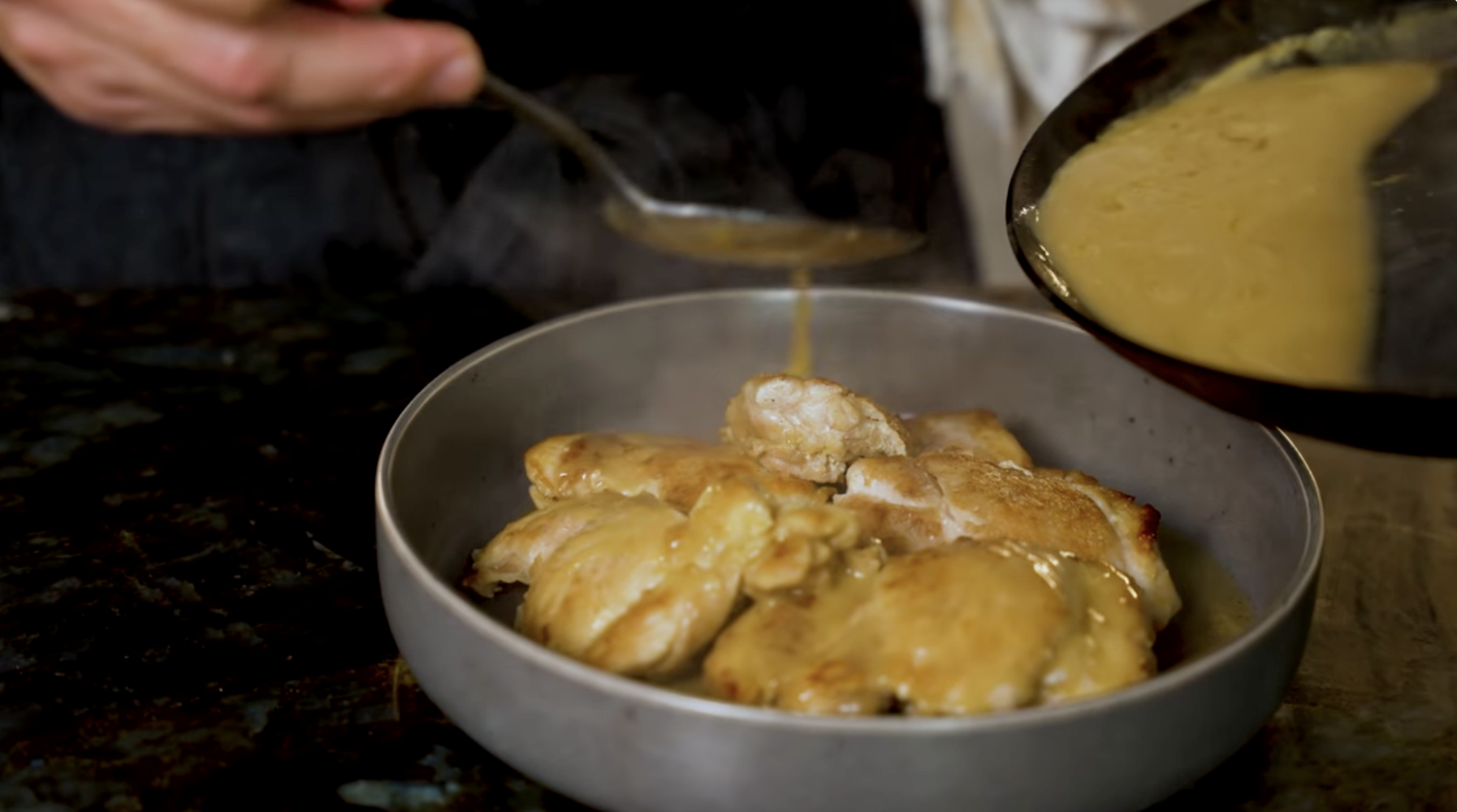
Roasted chicken thighs with potatoes make a simple but delicious meal. Or ground beef braised with cabbage or onions. Pasta with butter, garlic, and cheese. Rice and beans seasoned correctly and finished with fat. Chuck roast or shoulder cuts cooked low and slow. Sausage roasted with seasonal vegetables.
These meals come out to roughly $4 to $6 per serving and feed families for multiple nights. Browning, simmering, roasting, or resting — these are skills, not luxuries. This is how families ate before food was outsourced to factories and delivery apps.
This Isn’t Politics, It’s Competence
The $15-a-day debate shouldn’t be ideological. It’s about whether we still value self-reliance, basic household skills, and personal responsibility or whether we believe every problem requires a program, a subsidy, or a slogan.
Here is a sample recipe for an inexpensive weeknight meal:
Sheet-Pan Chicken Thighs with Potatoes
Cook once, eat twice! Bone-in thighs stay juicy and forgiving, while the skin provides flavor and fat, allowing the potatoes to cook in rendered chicken fat. Leftovers reheat well or can become the next day’s lunch. This recipe feeds four.
Ingredients (note: no seed oils or specialty ingredients here!)
- 2½–3 lb bone-in, skin-on chicken thighs (6–8 pieces)
- 2 lb russet or Yukon Gold potatoes
- 2 tbsp butter (melted)
- 1½ tsp kosher salt
- 1 tsp black pepper
- 1 tsp smoked paprika
- 1 tsp garlic powder
- Optional: fresh herbs (thyme, oregano, rosemary)
Method
- Heat oven to 425 degrees Fahrenheit.
- Scrub potatoes and cut into large chunks. Spread on a sheet pan.
- Toss potatoes with half the butter, half the salt, and half the pepper.
- Pat chicken thighs dry. Season generously with remaining salt, pepper, paprika, and garlic powder.
- Nestle chicken thighs skin-side up directly on top of the potatoes.
- Roast 45–55 minutes, until skin is deeply browned and potatoes are tender. (The chicken fat renders, basting the potatoes — that’s the trick.)
- Rest 5 minutes before serving.
Cost Breakdown (prices vary by store and location, but examples below)
Chicken thighs: At $1.55 per pound, these come out to between $3.88 and $4.65. At $1.89 per pound, the cost is between $4.73 and $5.67.
Potatoes: At roughly 75 cents per pound, two pounds of Russet potatoes cost $1.50.
Butter: At $3.67 or $3.99 per pound, two tablespoons cost 23 or 25 cents.
For the portion of seasonings used, throw in another 50 cents.
Total meal cost: Using those prices, the total cost is between $6.11 and $7.92.
Cost per serving (4 servings): For four servings, each plate costs between $1.53 and $1.98.
Andrew Gruel, a graduate of Johnson & Wales University, is a food entrepreneur and television personality. He is the Founder of Slapfish Restaurant Group (27 locations), the award-winning food truck-turned-international brick and mortar, based out of Huntington Beach, California, and currently CEO and founder of American Gravy Restaurant Group.