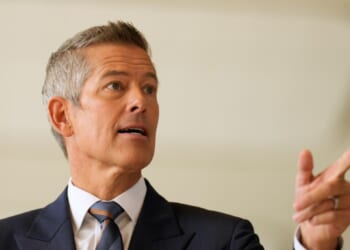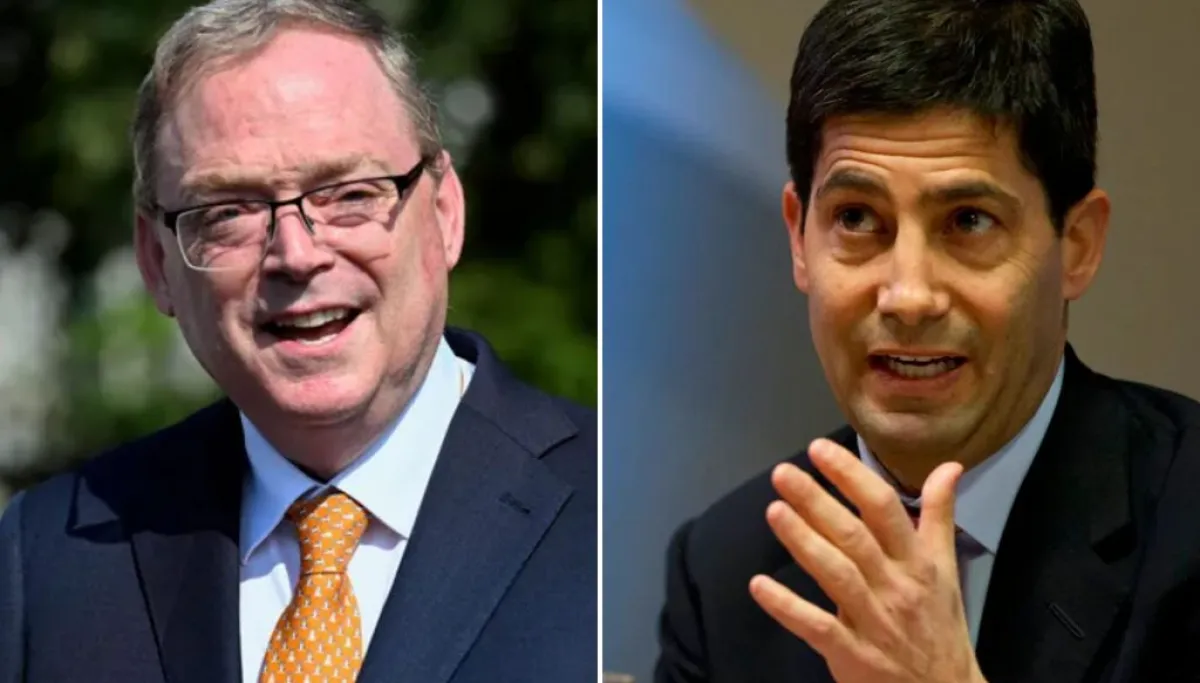
After months of speculation, Kevin Warsh was nominated to be the next Federal Reserve chairman over National Economic Council Director Kevin Hassett — here is what gave Warsh the edge.
On Friday morning, Trump revealed he had nominated Warsh, a former Fed governor, to replace outgoing Fed Chairman Jerome Powell. The pick comes at a time when Fed independence has been under the microscope, and his choice is a welcome one for some who were worried Hassett would act as a yes-man.
WHO IS KEVIN WARSH, TRUMP’S PICK TO BE THE NEXT FEDERAL RESERVE CHAIRMAN?
Warsh, 55, will need to be confirmed by the Senate, and some key Republican senators have expressed major concerns about the investigation into Powell and what it means for Fed independence, so Trump choosing an outsider and not someone in the administration likely bodes well for Warsh’s prospects.
“I think the general public doesn’t focus on this, but the ability to get confirmed is something that the White House has to be thinking about very carefully … so Warsh is probably an easier path to confirmation,” Dennis Lockhart, former president of the Federal Reserve Bank of Atlanta who worked with Warsh for several years at the Fed, told the Washington Examiner.
Earlier this month, Powell announced that the central bank had recently received grand jury subpoenas related to testimony he gave to the Senate last year about renovation cost overruns of the Fed headquarters building in Washington and branded the inquiry as a pretext to pressure him to lower interest rates, threatening the Fed’s independence.
Retiring Sen. Thom Tillis (R-NC), a member of the Senate Banking, Housing, and Urban Affairs Committee, has threatened to block any of Trump’s Fed nominees until the legal matter has concluded. He reiterated that statement still holds after Warsh’s nomination on Friday, but called Warsh a “qualified nominee with a deep understanding of monetary policy.”
Trump suggested on Friday that he would even be willing to wait until Tillis is out of office next year to get Warsh confirmed, if need be. Powell’s term is up in May.
“I mean, if he doesn’t approve, we’ll just have to wait till somebody comes in that will approve it, right? So that’s it,” the president said.
Hassett, 63, was seen as the front-runner for the role for most of last year. But then Trump started suggesting he wanted to keep him in his role at the White House, something he reiterated on Friday.
“I wanted to keep Kevin here,” Trump said. “And I thought that I called them Kevin 1, Kevin 2 — I said it’s going to be a Kevin, but you know, Kevin really has been fantastic at the White House.”
Hassett has been a stalwart defender of Trump’s economic policies. Judy Shelton, who was a nominee to the Fed board during Trump’s first term and was seen as a long-shot candidate to fill Powell’s seat this time around, emphasized Hassett’s value to the administration during a call with the Washington Examiner.
“The great quality about Kevin is he’s able to explain economic policy decisions, including monetary policy decisions, with a narrative that makes sense to people,” she said. “He is a really good communicator, and he has a way of fitting different policies into the overall framework of a supply-side agenda being pursued by the Trump administration.”
Some contend that Hassett has done such a good job defending the administration that he might have been seen by the markets and some in the Senate as a yes-man at the Fed, which would have been a liability. It also might have hampered his confirmation odds.
“I do think that, in a way, Kevin Hassett kind of succeeded his way out of the job by being such a good representative to the administration … in a way, I think if he wanted the job as Fed chair, he should have done a worse job as being a mouthpiece for the administration,” said Stephen Kates, a financial analyst at Bankrate.
A source close to the White House told the Washington Examiner that Warsh “doesn’t necessarily give off this [energy of] ‘I’m just going to bend down and do whatever the president wants.’”
“Obviously, the president picked him, so maybe not many people are going to see him as independent, but I truly think he is,” the source said. “That’ll show once President Trump is gone. He’ll hold up his independent nature, but he’s extremely smart, and he’s a great communicator on these issues, and trusted by the president.”
White House spokesman Kush Desai noted Trump’s problems with the central bank and cited Warsh’s experience.
“Federal Reserve decision-making affects trillions of dollars in global economic activity, and to restore confidence at the Fed, the President’s chief considerations for a new Chairman were competence and experience,” he said.
In terms of policy, Warsh is considered an interesting choice because he has been a bit of a hawk on monetary policy in the past, which comes at a time when Trump is agitating for a more dovish approach to interest rates.
Warsh has also faced some criticism for his handling of the 2008 financial crisis and its fallout. At that time, the Fed took extraordinary actions to intervene in the economy and prop up the markets. Unemployment was spiraling, and then-Fed Chairman Ben Bernanke spearheaded looser money policies that Warsh at the time panned as being possibly inflationary.
Warsh appeared overly fixated on inflation during a time when unemployment was rising and the economy was collapsing. Some argue that if he had his way, unemployment would have gotten even worse than it did.
“He is very attentive to inflation, so I think he will be somewhat sympathetic to the more hawkish, let’s say, views on the committee,” Lockhart, the former Fed president, said.
ACCUSATIONS OF INSIDER TRADING ON MADURO OPERATION BRING PREDICTION MARKETS IN FOCUS
But last year, Warsh dinged the Fed for its “hesitancy” to cut interest rates. And Trump, who is pushing for much lower rates, has said on social media that “anybody that disagrees with me will never be the Fed Chairman.”
“The president loves people that come around to his line of thinking, and we all know [Warsh] has a history of being kind of on the opposite end of where [Make America Great Again’s] alignment on the Fed has been — so he really has stood out as a prominent voice that can kind of speak the president’s language,” a source close to the White House said.