Greenland’s rare earths could play a role in a deal to give the United States greater access to the territory, but extracting those elements could present significant challenges.
President Donald Trump last week announced that a framework for a deal regarding acquiring Greenland had been agreed upon with NATO Secretary-General Mark Rutte.
The president has argued that the U.S. must purchase Greenland as it is vital for the Golden Dome missile defense system, but the territory is also home to rare earth elements that the U.S. has been seeking to secure. Rare earth elements are critical to a range of energy and defense technology applications, but China dominates the supply and has used that as leverage against the U.S. and others.
In an interview on CNBC, Trump said that, under the framework, the U.S. and European countries will work together on the Golden Dome defense system and mineral rights in Greenland.
“They’re going to be involved in the Golden Dome, and they’re going to be involved in mineral rights, and so are we,” Trump said, adding that the deal would last “forever.”
China has imposed several restrictions on the export of rare-earth materials to the U.S. In November 2025, the U.S. reached an agreement with China to lift some export controls for a year, but restrictions on other rare earths remain in place.
According to the U.S. Geological Survey, between 2020 and 2023, the U.S. imported nearly 56% of its rare earth compounds and metals from China.
Greenland has at least 1.5 million tons of rare earth reserves, with two of the largest deposits: Kvanefjeld and Tanbreez. These elements are essential to the defense and energy sectors, as they are used to build permanent magnets, sensors, missiles, and much more. Greenland also contains deposits of graphite, copper, nickel, zinc, gold, diamonds, iron ore, titanium-vanadium, tungsten, and uranium.
Yet there are major obstacles to Greenland supplying minerals to the mainland U.S., the biggest being that there is no rare earth mining.
Gracelin Baskaran, the director of the Critical Minerals Security Program at the Center for Strategic and International Studies, told the Washington Examiner that several challenges face mining rare earths in Greenland, including harsh conditions, limited infrastructure, high costs, and public opposition.
Greenland has significant deposits of rare earth and heavy rare earth elements, including those China has restricted, but Baskaran said there are “structural impediments that have to be addressed, and they’re going to be expensive.”
Baskaran said that developing Greenland’s rare-earth resources would require an extensive supporting ecosystem. She added that nearly 80% of the territory is covered by ice, making access to mineral deposits more costly.
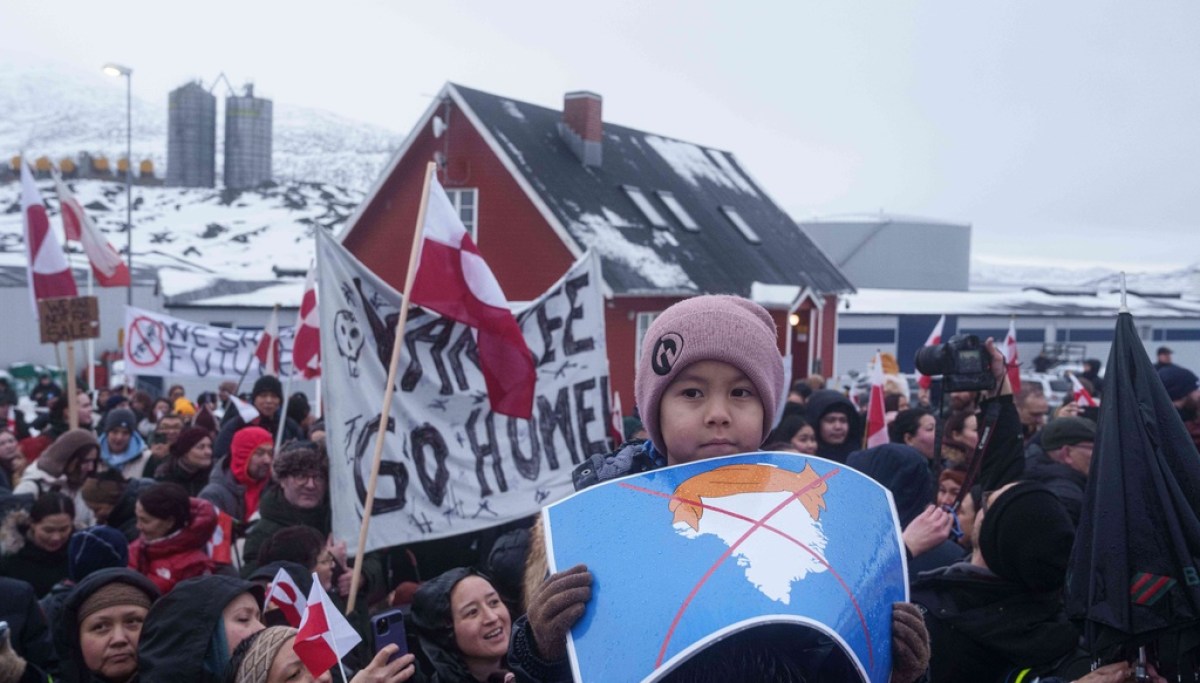
In addition, Greenland’s rare earths contain uranium, which is common, but shifting policies regarding uranium in the region have created uncertainty. Baskaran said there is also strong public opposition against mining efforts.
If the administration successfully acquires Greenland, it remains to be seen whether domestic companies will invest in the region. Baskaran noted that the New York-based Critical Metals Corp is working to develop the Tanbreez rare-earth project in Greenland.
The European Union has also designated Greenland’s Amitsoq graphite project a strategic project under its Critical Raw Materials Act. Greenland has granted London-listed GreenRoc Mining a 30-year exploitation license for the Amitsoq deposit.
But Baskaran added that rare earths from Greenland are “not arriving in the U.S. tomorrow or next year or in 2028.”
“These are early-stage projects,” Baskaran said. “Globally, it takes 18 years on average from the time we identify the deposits to the time it’s produced. That is four and a half presidential administrations.… In the U.S., it’s 29 years, which is even worse.”
Jeff Dickerson, principal at Rystad Energy, told the Washington Examiner via email that domestic investment in Greenland may vary, noting that the U.S. has capital, technology, and demand.
“In the short-term, the US will need to work with both domestic and foreign companies that have the expertise needed, while focusing on establishing the domestic manufacturing base to turn these metals into useful products,” Dickerson said.
“In that sense, there will be companies willing to invest in Greenland to secure access to mineral streams – think about Apple investing in MP Materials as a prime example,” he said. The government last summer took a 15% stake in MP Materials, a rare earth company, as part of the administration’s effort to secure the domestic critical mineral supply chain.
Dickerson said that if there is support from the U.S. government or an anchor investment in the region, companies reliant on minerals controlled or restricted by China may get creative about investing in Greenland mines.
READ IN FULL: VICE PRESIDENT JD VANCE’S INTERVIEW WITH THE WASHINGTON EXAMINER
Sarah Venuto, executive director at the American Critical Minerals Association, told the Washington Examiner via email that “It is undeniable that Greenland’s vast mineral resources have the potential to significantly advance the global diversification of critical minerals resources away from China’s monopoly.”
“Partnerships and alliances with mineral rich nations remains key to ensuring the U.S. and its allies are able to create great reliability and transparency in global markets,” she said.