For years, Americans were told to stop asking questions. In Georgia, as in much of the country, anyone who raised concerns about the 2020 election was mocked, dismissed, or accused of undermining democracy itself. Legitimate questions were treated as heresy. Skepticism was labeled extremism. And accountability was replaced with gaslighting.
At the center of that effort in Georgia was Secretary of State Brad Raffensperger. He repeatedly assured voters there were no problems — no violations, no misconduct, nothing to see — publicly stating there was “no sign of widespread fraud” during Georgia’s election process, refuting claims of irregularities in a letter to Congress, and again asserting that officials had not found systemic fraud.
Raffensperger went further, insisting that questioning the election process itself was dangerous. He accused politicians of “giving false hope” and “ginning up anger over unsubstantiated allegations of systemic voter fraud,” as The Hill described his comments. He went so far as to call such questioning “emotional abuse.” He repeatedly insisted there was “no basis” for concerns — a narrative that has since collapsed.
The Narrative That Couldn’t Withstand Scrutiny
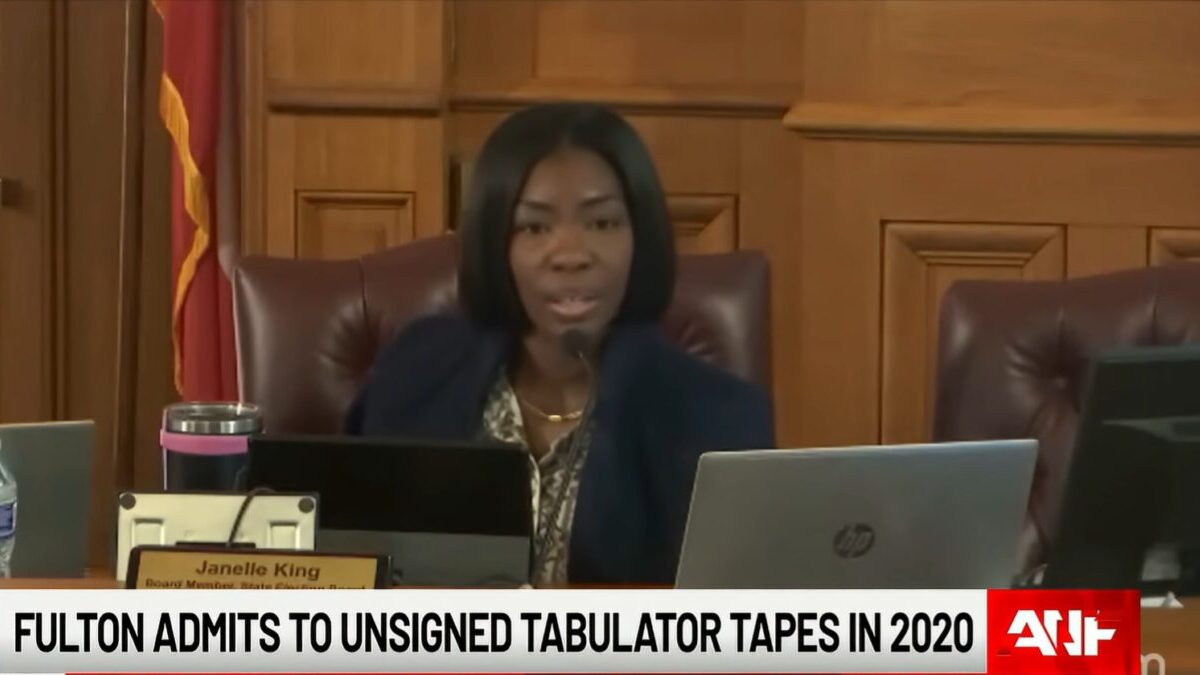
But just last month, Fulton County — Georgia’s most populous county — admitted that approximately 315,000 early ballots in the 2020 election were counted without the required poll worker signatures, a clear and direct violation of state regulations. County officials have further acknowledged they do not dispute that those ballots were improperly certified.
So, the question is no longer whether the system failed. It did. The real question is why the secretary of state refuses to answer for it, dismissing a massive breakdown in election safeguards as nothing more than a harmless “clerical error.”
Now that we know the rules were broken, one would expect transparency and accountability. Instead, Raffensperger has chosen to fight both in federal court.
The Federal Response
In December, the U.S. Department of Justice sued Georgia, seeking access to voter registration records amid concerns about whether the state is complying with federal election laws meant to prevent voter fraud and ensure only lawful votes are counted. According to the Justice Department, those records are necessary to evaluate compliance with the National Voter Registration Act, the Help America Vote Act, and the Civil Rights Act of 1960.
Raffensperger has refused to provide the records, arguing that doing so would require releasing sensitive personal information — a claim the Justice Department disputes, noting that federal law permits review of voter rolls with appropriate safeguards in place.
“The law is clear: states need to give us this information, so we can do our duty to protect American citizens from vote dilution,” said Assistant Attorney General Harmeet K. Dhillon, who is overseeing the case. “Today’s filings show that regardless of which party is in charge of a particular state, the Department of Justice will firmly stand on the side of election integrity and transparency.”
Instead of assisting the Justice Department, working with President Donald Trump’s administration to clean Georgia’s voter rolls, and restoring public trust, Raffensperger has chosen deflection and denial. His refusal to cooperate invites a troubling question: what is he afraid investigators will find?
Raffensperger, who is now running for governor — a race I am also in — has yet to provide Georgians with a credible explanation for a systemic breakdown in the election process. Fulton County officials characterized the failures as clerical mistakes, while the secretary of state — the chief official charged with safeguarding Georgia’s elections — dismissed the errors as insignificant. Members of the State Election Board, however, have disagreed.
“At best, this is sloppy and lazy,” said Republican State Election Board member Janelle King. “At worst, it could be egregious, and it could have affected an election.”
Legislative Action Needed
The matter remains tied up in oversight and litigation, with no meaningful consequences imposed to date. That vacuum of accountability is precisely why legislative action became necessary.
As lieutenant governor, I refused to look away when election integrity was compromised, even when it was politically easier to do so. While the secretary of state declined to act, the Georgia Senate stepped up after 2020 to secure the vote and defend the rule of law.
Under my leadership, the Senate passed legislation eliminating the use of QR codes on printed ballots, ensuring votes are recorded and counted in a transparent format that voters can verify. The Senate also passed reforms clarifying and strengthening the authority of the State Election Board to investigate election officials and enforce compliance with election law, authority that had previously been disputed or ignored.
Now that violations of the 2020 election process have been formally admitted, I will not stand by while bureaucrats stonewall and the truth is buried. Under my leadership, the Georgia Senate is moving swiftly to force accountability — because restoring confidence in our elections requires action, not excuses.
Senate Resolution and Ethics Committee Oversight
The Senate has advanced a resolution urging the secretary of state to fully comply with the Department of Justice by turning over all voter data and election records necessary to confirm the legality of our elections. The resolution could come to a committee vote this week and then proceed to the Senate floor for final passage.
In addition, I have called on the secretary of state to appear before the Georgia Senate Ethics Committee this week to explain how these violations occurred, why safeguards failed, and what concrete steps are being taken to ensure they never happen again.
This is not about relitigating 2020. It is about accountability.
The secretary of state is entrusted with protecting the public’s faith in elections. When that duty is ignored, confidence collapses — and without confidence, democracy cannot function. That is why election laws must be enforced, transparently and consistently, across our nation.
Federal officials have been explicit about the consequences of refusing transparency. “At this Department of Justice, we will not permit states to jeopardize the integrity and effectiveness of elections by refusing to abide by our federal election laws. If states will not fulfill their duty to protect the integrity of the ballot, we will,” said Dhillon.
President Trump was right to demand answers. The American people were right to ask questions. And Georgia deserves accountability — which Raffensperger must finally face.
Burt Jones is lieutenant governor of Georgia and running for governor.