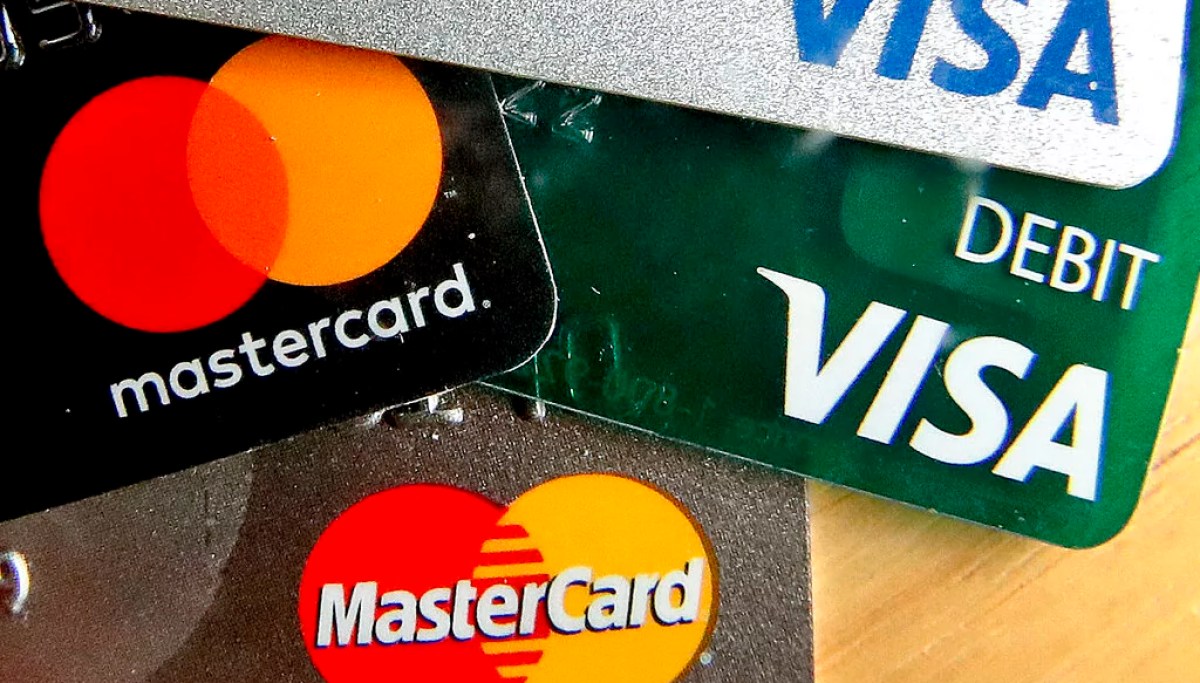
Bank-bashing is one of America’s oldest and most cherished traditions, and President Donald Trump is grabbing hold of it with both hands. He recently called left-wing Sen. Elizabeth Warren (D-MA) to discuss his embrace of her proposal — with fellow socialists Sen. Bernie Sanders (I-VT) and Rep. Alexandria Ocasio-Cortez (D-NY) — to cap credit card interest at an annual rate of 10%. A day later, Trump endorsed Sen. Dick Durbin’s (D-IL) longtime hobbyhorse of imposing price controls on swipe fees, too. Big merchants think that will improve their margins, but Trump’s shift on credit cards is more likely to undermine their customers’ purchasing power. Warren, Sanders, and Ocasio-Cortez have been clear that they want to end private consumer lending and replace it with government programs. Shouldn’t Trump know better?
Suppose you could get a $1,000 loan for a month that would cost you $10. That’s an amazing bargain at 1% interest. But annualize that to APR, and suddenly it’s above the Trump/Warren/Sanders 10% line. Their bill effectively bans any monthly interest north of 0.8%.
Industry experts surveyed by the Electronic Payments Coalition estimate that anybody with a credit score below 740 would be unlikely to get approved for a credit card and would face possible cancellation of existing cards or a dramatic reduction in their credit lines. That’s more than 80% of everybody currently with a credit card, literally hundreds of millions of people losing access to credit.
It’s simple math: the issuing bank has costs of about 4% interest to carry the paper, 5% in credit losses, and another 5% in collection and administration costs. And a lot of customers pay in full within the grace period, so they generate zero interest for the banks.
For the 80%+ of Americans left without access to credit cards in this scenario, well, if a circumstance arises outside of your control and you need a short-term loan … there may be no good options left. You could float a bad check or maybe get a payday loan if you can find one they haven’t banned. It’s a Make Loan Sharks Great Again plan.
Interest isn’t the only revenue source for credit cards. They also generate swipe fees, and most cards pay them back out in rewards programs. But Trump also embraced price controls on credit card swipe fees, even though that has been a disaster for debit cards since Durbin slipped it into Dodd-Frank. Durbin killed debit card rewards programs, and Trump’s embrace of similar price controls on credit cards means miles, cash back, and other rewards are now in jeopardy.
That’s a possible shockwave to family budgets, because 84% of all credit cards are rewards cards, and 70% of cardholders who make less than $20,000 a year have rewards cards. Many small businesses also rely on rewards cards — especially cash-back cards.
Durbin pitched his regulations as a boon to both retailers and to consumers. What actually happened was 77% of retailers kept prices the same, and 21% actually increased prices because of the Durbin regulations, per the Richmond Federal Reserve. Free checking dropped from 60% of all accounts to only 20%, and the number of unbanked Americans increased by about a million.
Just as debit regulations hurt consumers, imposing Durbin-style price and routing controls on credit cards will result in rewards programs disappearing — particularly for lower-income customers who are less valuable to banks.
Is that worth it to relieve influential big box retailers of what they claim are excessive transaction fees? If the costs are really so high, why have “cash only” stores almost completely disappeared? Why have so few merchants imposed surcharges on credit card transactions or offered cash discounts?
Electronic payment costs vary, but average around 2%. But the average cost of cash across all retail sectors is 9% in a recent study. Why? Because it is not free to manage cash drawers, interact with their banks with deposits, and reconcile cash flows — plus there is the “shrinkage” from cash that goes missing from loss, theft, and fraud.
Where are we headed? Either one of the Trump proposals would, by itself, have a devastating impact on the availability of credit cards. If both were adopted, credit would largely disappear, consumer spending would crash, and it could even trigger an economic recession.
Warren, Sanders, and Ocasio-Cortez would, of course, then stand ready with their “solution” — having government step in as the primary consumer lender and operator of a nationalized payment system.
TRUMP LEARNS THE HARD WAY THAT INTEREST RATES CONTROL THE PRESIDENCY
We already know how government lending works from the student loan context. They’ll forgive loans every time it is politically convenient, at taxpayer expense. Centralize credit under Uncle Sam, kill off banks and credit unions, and wave goodbye to market choice.
What exactly is the problem with credit cards we are trying to fix, Mr. President? Price controls never work.
—Phil Kerpen is president of American Commitment (www.AmericanCommitment.org)