
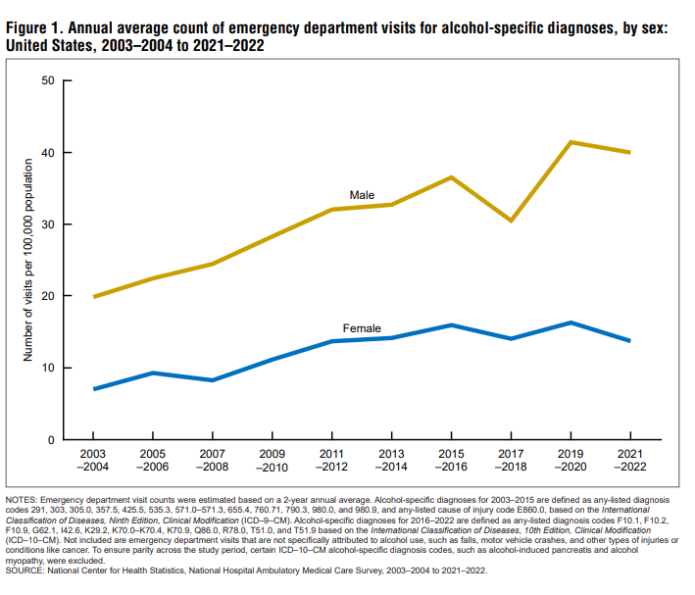
Data from the National Hospital Ambulatory Medical Care Survey revealed that nearly 5.4 million people in the U.S. during the 2021 to 2022 study period were treated for an alcohol-specific cause, such as acute alcohol intoxication or alcohol addiction.
The CDC report found that nearly 4 million men visited emergency departments from 2021 to 2022, which sits slightly above double the almost 2 million in 2003. For women, alcohol-related emergency room visits rose from 701,000 in 2003 to nearly 1.4 million in 2021 to 2022.
The report only included alcohol-specific causes by tracking specific medical codes for issues that are completely due to excessive alcohol consumption with no other factors, according to a CDC spokesperson.
Alcohol-specific causes include various emergency conditions from chronic alcohol misuse, such as nerve damage, weakened heart muscles, inflammation of the stomach lining, and liver conditions.
The specificity of the CDC’s data in this study means that the total number of people who visit an emergency department where alcohol is involved in a less direct way is likely much higher.
A study using 2021 to 2023 data from the Substance Abuse and Mental Health Services Administration found that alcohol was involved in nearly 8.6 million emergency room visits during the study period. That was twice the number of visits compared to opioids or cannabis.
Although nearly four in 10 of those emergency department patients were treated for alcohol intoxication or binge drinking, another 16% were treated for injury or poisoning.
Despite the alarming increase in alcohol-related ER visits, alcohol consumption rates have been on a downward trajectory since the COVID-19 pandemic.
According to a Gallup poll from August, the number of people reporting that they regularly drink alcohol peaked for this century in 2022 at 67%. Since then, it fell to a new low of only 54% in 2025.
More Americans may be choosing sobriety or limiting their drinking in light of new evidence that any amount of alcohol can have negative health consequences, contrary to prior thinking that alcohol was safe or even beneficial in limited amounts.
Former Surgeon General Vivek Murthy issued a report in January 2025 calling for warning labels on alcohol that even moderate or minimal consumption can increase risk for seven different types of cancer, including breast, colorectal, liver, oral cavity, pharynx, larynx, and esophageal cancers.
Murthy’s report fell in line with the World Health Organization’s classification of alcohol as a Group 1 carcinogen, the same category as asbestos and formaldehyde.
But a different report from the National Academies of Science, Engineering, and Medicine, published shortly before Murthy’s, found that, although breast cancer rates are higher in women who consume more alcohol, moderate drinking was not significantly associated with other forms of cancer.
Debates over the conflicting studies on alcohol’s safety reached a boiling point with the creation of the new 2025 to 2030 Dietary Guidelines for Americans, a policy document that governs federal food programs and offers guidance to healthcare professionals on the latest nutrition recommendations.
The new dietary guidelines removed the prior standard of a maximum of one drink per day for women and two drinks for men, replacing it with general guidance to “consume less alcohol for better overall health.”
WE FLIPPED THE FOOD PYRAMID. HERE’S WHY
The guidelines say that those recovering from alcohol use disorder, those on certain medications, and pregnant women should avoid alcohol completely.
Centers for Medicare and Medicaid Services Administrator Dr. Mehmet Oz said during the announcement of the new Dietary Guidelines last week that the theme of the recommendations on alcohol is “don’t have it for breakfast.”
“This should be something done a small amount, with, hopefully, some kind of an event that may have alcohol added,” Oz said.