[Order Michael Finch’s new book, A Time to Stand: HERE. Prof. Jason Hill calls it “an aesthetic and political tour de force.”]
The Catholic Church has had the great misfortune of having elected two modern popes who identify with Latin America.
Francis, who was Italian, identified as Argentinean and embraced Latin American liberation theology, a Marxist doctrine posing as concern for the poor and the “oppressed” while circumventing the Church’s primary mission concerning the salvation of souls.
Because cantankerous Francis liked to make a show of his humility, he opted to forgo living at the official papal residence, the Apostolic Palace, instead taking a so-called modest apartment in the Domus Sanctae Marthae, a building where cardinals stay during papal conclaves. This move enhanced the myth of the man’s humility although this fact was recently revealed to be a lie.
Catholic podcaster John-Henry Westen’s interview with Rome professor, theologian, and mariologist Dr. William Anthony Thomas, sheds light on Francis’s decision to not live in the Apostolic Palace as having nothing to do with humility but everything to do with his hatred of former popes and long-standing papal traditions.
Ironically, Francis’s “humble” apartment, according to Thomas, contained an entire floor of the building – larger space than the Apostolic Palace – and his move there prevented anyone else from living in the building. Thomas also recounts that by the end of his papacy, some $26 million dollars had been spent on this special living arrangement.
The theologian also reported that the only publication Francis read on a daily basis was a Communist publication – this alone is pretty shocking – and that his vision and obsession of a new Synodal Church came from Justin Welby, the Anglican Archbishop of Canterbury from 2013 to 2025. The Synodal Church idea, says Thomas, was concocted when Welby met Francis for a special meeting.
That meeting caused a bit of a scandal among real Catholics when Francis knelt before the Anglican archbishop and asked for his blessing, in effect canceling out what the Catholic Church has always believed: that Anglican religious orders are invalid.
In other words, Francis received a fake blessing from a fake archbishop as the two of them came up with an even bigger fake idea: a Synodal Church based on conversations, listening, and feelings rather than the old biblical notions of sin and personal accountability.
When Francis was Cardinal-Archbishop of Buenos Aires, he waged a holy war against many forms of traditional Catholicism, while simultaneously posing as a peoples’ bishop who rode the subway to work every day. In Latin American liberation theology, the concept of the worker-priest meant less emphasis on being a priest and more emphasis on working to improve the conditions of the impoverished; one thinks of Peace Corp volunteers although many worker-priests ditched priestly cassocks for worker costumes and a cocked beret reminiscent of Che Guevara.
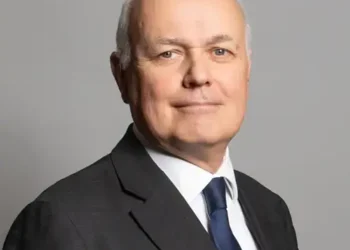
Fast forward to Leo XIV, the first American pope, educated at a minimalist Catholic university, Villanova, noted for its obsession with sports teams and weekend frat parties. Leo, once known as Robert Prevost, had a long tenure as a missionary in Peru and, from what I can see, returned to the United States a changed man.
When Catholic clerics spend any time in Latin America they almost always come back radicalized to some degree. This is no reflection on the people of Latin America. What it reflects is the ideological component of the Church’s mission there, when fighting poverty and for social justice replaces the greater message of the gospel.
This perversion eats away at the ‘Catholic’ soul and gives birth to what one might call the quasi-Catholic priest with a soft spot for communism.
Leo is definitely a quasi-Catholic of the new Synodal Way. This is the new Catholic Church slowly being built from the Anglican template promulgated by Justin Welby. The Synodal Catholic Church is not the Catholic Church of history and apostolic times, but a new worm-filled creation, divorced from tradition and the Church Fathers. It is a new religion based on feelings and sentimentality where the concept of personal sin is minimized or ignored.
Robert Prevost was brought to power by a cabal of progressive cardinals bent on carrying forth the heresies of Pope Francis. Immediately after his election, Prevost-as-Leo declared he was going to continue the mission and reforms of Francis, or the new Synodal Way: Papa Bergoglio would be his lord and master, not Jesus Christ. Leo would be a copycat pope with no vision of his own.
Would Bergoglio approve? What would Bergoglio do?
Bergoglio idolatry has come to define Pope Leo XIV’s papacy and most Vatican bureaucrats.
Note, also, that the cardinals who elected Leo came under scrutiny recently when Msgr. Marco Agostini, who for more than 16 years served as the Vatican’s pontifical master of ceremonies, described them in an off-moment before a hot mike: “They are faggots, all together.”
The contested hot mike moment was captured by a progressive, rainbow-bracelet wearing Catholic blogger who then published the comment on the Italian blog, Silere Non Possum. The publication resulted in the removal of Msgr. Agostini, who served under three popes.
It was Pope Francis who set a precedent regarding the use of that slur. He said the word while commenting that there were too many liberal priests in the Church and then apologized. While he was “forgiven,” Agostini was fired. The so-called Holy See has not commented on Agostini’s removal; it’s also doubtful that the weak Villanova grad on the Throne of Peter will say anything about it, either.
The disposal of Agostini is a valuable lesson when it comes to knowing who’s in charge at the Vatican.
It’s been estimated that up to 70% of Catholic bishops and cardinals are gay, and while gay may not be a “bad” thing when it comes to the general population, when it’s a building block of the Catholic hierarchy it becomes politicized and merges with a progressive agenda that has only one aim: the creation of the new Synodal Catholic Church, the fake Catholic Church that many Catholic mystics of old predicted would eclipse the historic Church.
While the dismissal of Msgr. Agostini didn’t generate a lot of publicity – it was a main feature on the Catholic podcast, Return to Tradition – Pope Leo’s comments on President Trump’s capture of Venezuelan dictator Maduro and his wife went viral.
They went viral because the media loves him when he challenges President Trump. In many ways, Leo the mega-mouth won’t shut up. He gives too many off-the-cuff interviews. His lips start moving automatically whenever a microphone is thrust in his face.
About that capture, Leo said:
“The good of the beloved Venezuelan people must prevail over every other consideration and lead us to overcome violence and to undertake paths of justice and peace, safeguarding the country’s sovereignty, ensuring the rule of law enshrined in the Constitution, respecting the human and civil rights of each person and of all, and working to build together a serene future of collaboration, stability, and concord, with special attention to the poorest…”
‘Overcome violence’ can be read as a reference to Trump for taking Maduro out by force; ‘safeguarding the country’s sovereignty,’ can be read as giving respect to a dictator not democratically elected; ‘ensuring the rule of law enshrined in the Constitution,’ makes no mention of the Monroe Doctrine, “once ranked with the Declaration of Independence and the Constitution in the pantheon of American reverence,” according to historian, Gaddis Smith.
Notice Leo’s choice of empty words like “collaboration, stability, and concord,” which would never apply to a dictatorship. Then there’s the big Francis-Leo-worker-priest obsession: “…With special attention to the poorest who suffer….”
Yet not one word on how President Trump saved Venezuela and gave it a second chance to become the great democracy it once was.