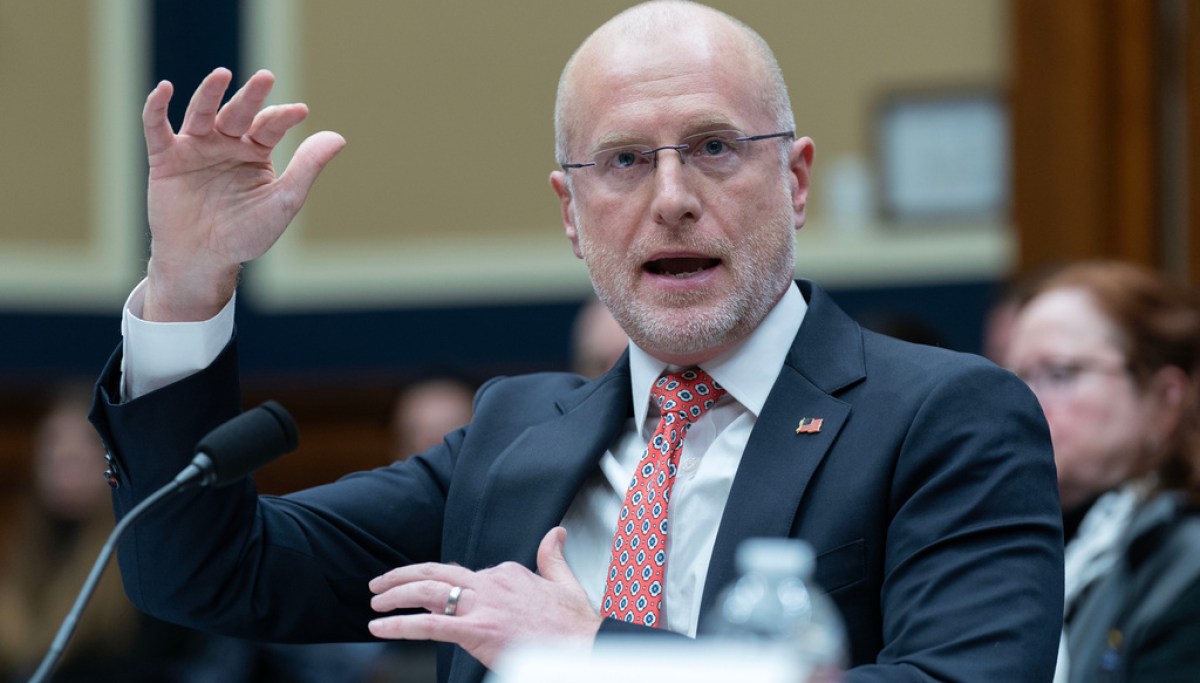
Federal Communications Commission Chairman Brendan Carr sparred with Democrats at a House oversight hearing on Wednesday over claims that the agency has pressured news organizations and blurred the line between media regulation and political influence.
The hearing before the House Energy and Commerce Committee quickly turned into a broader fight over media consolidation, newsroom independence, and how far the FCC can go when enforcing its public interest authority. Lawmakers repeatedly returned to flashpoints involving late-night comedy, network news coverage, and high-profile merger approvals.
Ranking member Doris Matsui (D-CA) cited Carr’s public statements suggesting ABC affiliates could face license scrutiny after Jimmy Kimmel Live! aired segments critical of President Donald Trump, arguing that the FCC crossed from oversight into intimidation.
“We don’t have speech police in America,” Matsui said. “That’s censorship by intimidation.”
Carr pushed back, saying broadcasters operate under a distinct legal framework and that courts have long upheld the FCC’s authority to enforce public interest obligations tied to broadcast licenses.
“The FCC has an obligation to enforce the public interest,” Carr said, emphasizing that broadcast television is regulated differently than cable networks or digital platforms.
FCC Commissioner Anna Gomez, a Democratic appointee, warned that the standard is being applied too broadly and risks sliding into content regulation.
“When the government’s media regulator claims the power to judge content or police bias, we move away from oversight and toward censorship,” Gomez said.
Democrats also focused on Carr’s handling of the FCC’s approval of the Paramount-Skydance merger, arguing it illustrated how regulatory leverage can spill into newsroom decisions at CBS News. Rep. Kathy Castor (D-FL) said the commission delayed approval until after Paramount settled a lawsuit brought by Trump and agreed to editorial concessions.
“After months of regulatory delay, the FCC approved the acquisition just days after Paramount agreed to pay $16 million to settle the president’s meritless lawsuit,” Castor said, calling the sequence “a bribe by any other name.”
Castor said the approval came with promises of free advertising and changes to editorial oversight, pointing to the subsequent pulling of a 60 Minutes segment on alleged abuses at an El Salvador prison as evidence of newsroom pressure.
“The consequences of these concessions were on full display,” she said. “This was rubber-stamped by Chairman Carr.”
Carr denied that political considerations influenced merger reviews, saying transactions are evaluated under long-standing public interest criteria.
The hearing also reopened debate over broadcast ownership limits, with Democrats warning that relaxing caps would further erode local journalism and concentrate media power. Matsui and other Democrats pointed to the proposed Nexstar Media Group acquisition of Tegna, which they said would give one company reach into roughly 80% of U.S. households and consolidate control of multiple stations in some local markets.
“That should raise red flags for anyone who believes in protecting local news and competition,” Matsui said.
Gomez said the 39% national television ownership cap is written into statute and cannot be waived by the FCC.
“I don’t think we have the authority to waive it,” she said. “Consolidation risks watering down local news and reducing service to communities.”
Carr said the commission is reviewing ownership rules as part of a broader effort to help local broadcasters survive in a marketplace dominated by national programmers and digital platforms.
“The balance between national programmers and local stations has been lost,” Carr said. “We’re trying to re-empower local broadcasters to compete.”
Republicans pushed back on the criticism, defending Carr’s record and arguing that the FCC has focused on lowering costs, expanding access, and modernizing outdated rules rather than policing speech.
Subcommittee Chairman Richard Hudson (R-NC) said the commission’s deregulatory agenda has helped expand spectrum access and improve wireless reliability, particularly in rural areas.
“Under Chairman Carr, the FCC has taken significant steps to modernize outdated regulatory regimes and remove barriers to broadband deployment,” Hudson said, pointing to new spectrum auctions and reforms aimed at strengthening wireless networks.
House Energy and Commerce Chairman Brett Guthrie (R-KY) echoed that view, arguing that expanding available spectrum is already benefiting consumers.
“When you introduce new spectrum into the market, prices go down,” Guthrie said, citing FCC data showing wireless prices have declined over the past year.
Carr also leaned on that data in his testimony, saying wireless plan prices are down more than 4% since early 2025 and more than 7% from Biden-era highs, which he attributed in part to increased spectrum availability and deregulation.
“The FCC is now pushing the largest deregulatory effort in the agency’s history,” Carr said, pointing to the removal of more than 1,000 rules and changes he said are helping drive down costs while expanding access.
HOW ONE OF THE BIGGEST LOCAL TV MERGERS COULD BLOW A HOLE IN TRUMP’S AFFORDABILITY PUSH
Democrats countered that those gains do not justify what they see as the FCC’s growing role in media disputes and editorial matters.
“What Americans deserve is an FCC that upholds constitutional rights and acts in the public interest,” said Rep. Frank Pallone (D-NJ), the committee’s top Democrat. “Right now, that’s not what we’re seeing.”