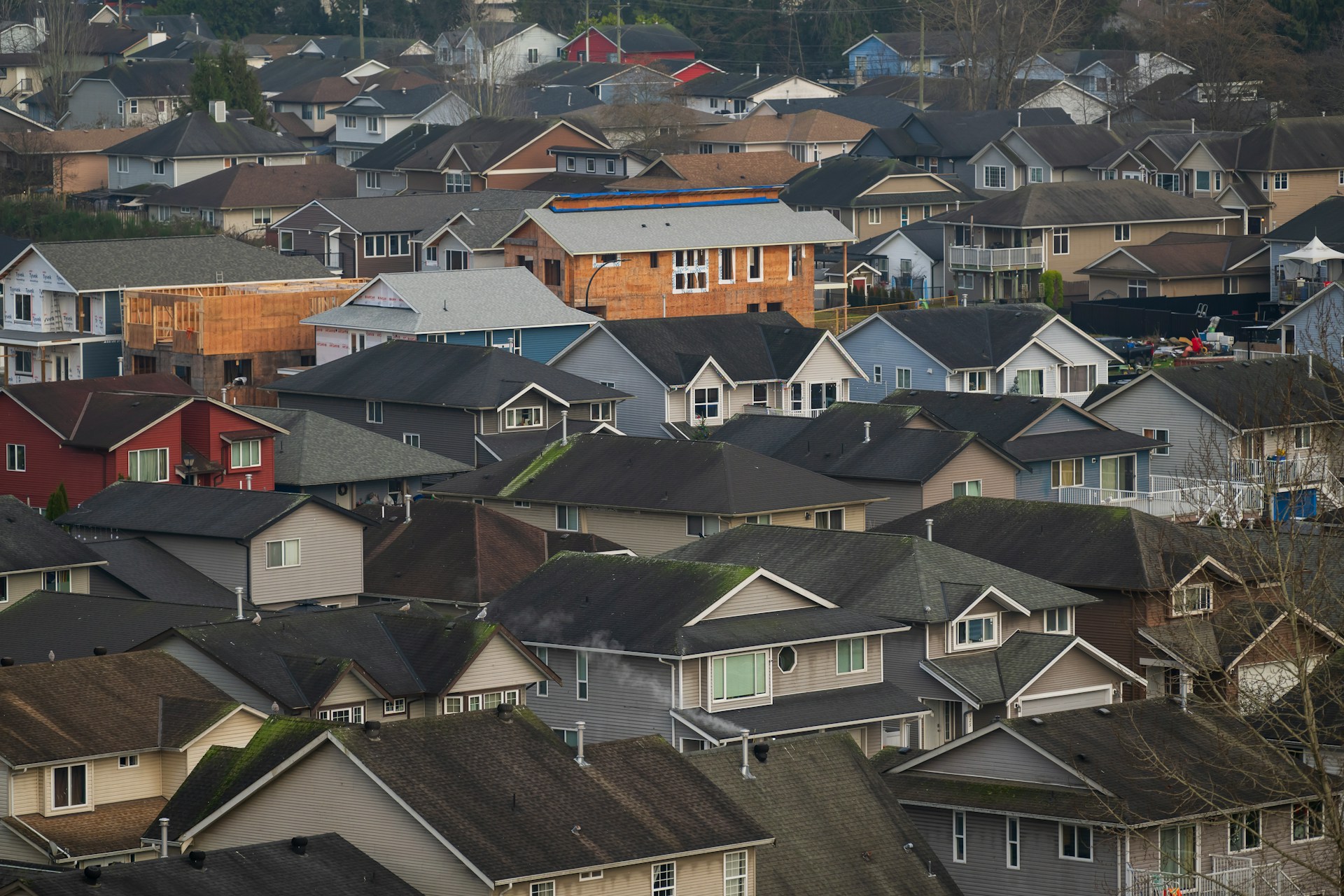
While walking through a very Midwest USA mid-tier neighborhood in an outer suburb last summer, a young couple passing by with two young children told me they were admiring all the “beautiful houses.” The father was a union worker and did jobs on the side to earn more. The mother stayed with the small children. They lived in an apartment.
There are many young American families like this — doing everything right, but still, unless given money from parents for a down payment, priced out of home ownership. Home prices relative to incomes have soared since the market bottomed in 2012, especially since the 2020 Covid panic. From 2022-2023, even as home prices relative to incomes continued to climb higher, mortgage rates doubled and remain at this higher level today. Obviously, mortgage rates have been much higher in the past. But the toxic combination is the high price of homes relative to incomes, paired with these higher mortgage rates.
That’s why it’s encouraging that President Trump is moving to make homes more affordable. Last week, Trump announced he is “taking steps to ban large institutional investors from buying more single-family homes.” Trump specifically mentioned young Americans struggling with housing affordability and said the administration would launch more proposals in the next several weeks to make housing more affordable. The White House’s proposals need to be hard-hitting and not tinker around the edges of a major problem.
A Moral Crisis
The nation’s housing affordability crisis is no less than a moral issue. Today, the average first-time buyer is almost 40 years old, compared to the historical range of 29 to 33. The unaffordability of owning a house directly affects the birth rate. Single-family homes and a yard, no matter how small, are for children. Young couples, even though married, statistically postpone having their first child or bearing additional children until they can afford a home. So the unaffordability of homes directly relates to the small number of children born in 2025.
If America doesn’t fix the home affordability crisis, the native-born population will continue to have fewer children. Regardless of the GDP or the stock market, is a country really successful and wealthy if its young people can’t afford to get married, buy a small home, and have children?
Pundits such as Ben Shapiro (who live in multimillion-dollar homes in posh neighborhoods) have brushed aside the issue. If Americans can’t afford a home where they live, just move. Aside from smacking of elitism, this view lacks common sense. Young people have family and networks where they grow up, and these family bonds are essential to helping with children, pursuing a better job, or dealing with other life events and struggles. Viewing humans as economic computers both ignores this real-world common sense and leads to bad policy outcomes.
The Trump Administration Proposal
Many who are relatively unconcerned about this issue, largely because of their economic status, also look at the Trump administration proposal to ban institutional investors from buying more homes and scoff. Yes, a third of single-family homes in Q2 2025 were bought by investors, but most of these investors aren’t large institutions. On top of this, large investors are only about 3 percent of the stock of single-family rentals. Finally, so what if Americans own their homes or rent?
Let’s take these objections in order. First, although institutional buyers are a small part of the overall market, they are concentrated in certain areas, especially the American Southeast, in cities like Atlanta. The reason is obvious: The more real estate you control in an area, the more you can push up rents. And what would stop, without policy intervention, these large institutions from expanding into other areas?
It’s also unclear whether these institutional investors affect prices. Trump Housing Director Bill Pulte noted that investors also have a leg-up against young families when competing to purchase a home because they can pay in cash.
Finally, what about institutions being such a small percentage of single-family rentals? Generally, rentals make a neighborhood worse. If you own something, you take better care of it. But there’s a difference between a local landlord, with ties to the community, and a large institution like Blackstone, Invitation Homes, and American Homes 4 Rent. Further, a large institution can concentrate in a specific area and use that concentration to increase rents, which is exactly what’s happening. But maybe it’s also a problem that a third of single-family homes are being bought by investors, even if most of these investors are not massive investment funds. Policymakers should be open to capping the number of homes any investor, no matter how large, can hold.
More Should Be Done
The naysayers have one thing right. The move to ban institutional investors from buying single-family homes is a step in the right direction, and probably helps avoid a future problem, but it won’t fix the major housing affordability crisis we face here and now. More needs to be done.
James Pethokoukis from the American Enterprise Institute had a more thoughtful critique of Trump’s move, calling the American housing affordability problem a “self-inflicted” housing shortage. Pethokoukis notes that “exclusionary zoning, burdensome discretionary review processes, and costly regulations — like certain environmental mandates — have systematically throttled new housing production.” The White House needs to examine ways, via executive order or federal legislation, to force states to reduce red tape.
Next, Sen. Josh Hawley, R-Mo., and seemingly the Trump administration support allowing retirement accounts to be used for down payments. This could help some first-time buyers better afford the down payment. Making college more affordable, including ending the presupposition of a four-year degree, and forcing colleges receiving federal support to cut costs, would also help young people marry and enter home ownership sooner.
One problem policymakers will encounter is that the best way to make homes affordable to young Americans is to cut home prices, but this will anger a large part of the voting bloc, primarily baby boomers. To wit, looking at data from the 1990s to today, you can see that home prices relative to incomes took off in the 2000s, fell starting in 2006 through 2012 — causing the Great Financial Crisis of 2007-2008 — but then picked back up in 2012 and are now far higher than they were before the huge recession. So home prices relative to incomes have been on a general upward trend since the year 2000, despite the blip of the Great Financial Crisis. In other words, policymakers, especially the Federal Reserve, created a housing bubble in the 2000s and doubled down on it after the crisis.
Here, the only palatable way out is to build a lot more houses and place a moratorium on any new migration into the U.S. The White House should try to encourage states to cut red tape, but this might require a larger, more radical effort. The federal government should set out plots of unused federal land and purchase land in states without large chunks of federal land, and hire developers to build single-family homes here. Many conservatives from 20 years ago will be made uncomfortable by this. But ask ourselves, did these same people support doing this exact thing for people on the other side of the world? They sure did. It’s high time we think big about what we can do for the American people.
This individual is granted anonymity since publishing an article on The Federalist would credibly threaten close personal relationships, their safety, or their jobs. We verify the identities of those who publish anonymously with The Federalist.