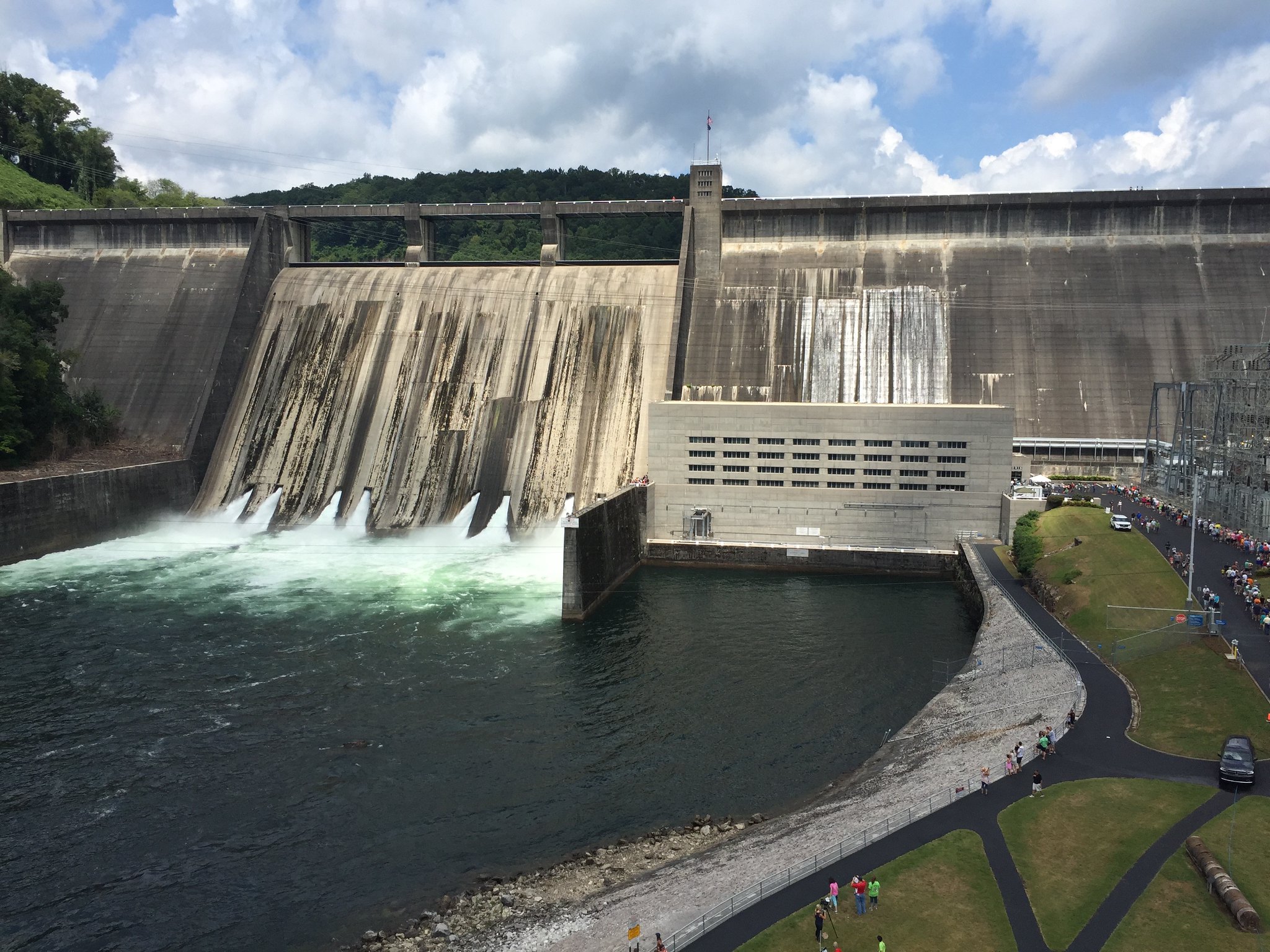
The Tennessee Valley Authority is a federal behemoth lumbering towards disaster.
Founded during the New Deal, the TVA has evolved into the nation’s largest provider of public power. However, its scope and mission creep have expanded well beyond what even big-government FDR envisioned.
Serving a total of seven southern states, TVA is supposed to provide affordable, abundant, and reliable energy to more than 10 million Americans. However, TVA has instead focused on woke environmental, social, and governance (ESG) metrics beloved by the left and pushed renewable green energy on its customers while retiring natural gas and coal power plants ahead of schedule.
The result? Double-digit energy price increases for consumers over the last few years, rolling blackouts during both the hot summer months and seasonally cool winter months, and an overall failure of leadership that has taken TVA way off course. Despite these failures, TVA is giving its employees more than $260 million in bonuses this winter. Talk about failing up.
In fact, U.S. Sen. Bill Hagerty called TVA a “limiting factor” on economic development projects in Tennessee – and that’s likely the case in the six other southern states and their TVA service areas. That’s a net negative on states that over the last decade have become economic powerhouses and some of the top destinations for companies to start or move a business, and for individuals to live, work, and raise a family. TVA’s failure is hurting Tennessee’s economic prospects and many of its surrounding neighbors, including Kentucky, Mississippi, Alabama Virginia, North Carolina, and Georgia.
However, the good news is Tennessee’s two U.S. senators, Marsha Blackburn and Bill Hagerty, are in agreement that under new leadership, TVA can lead our energy future. The board, which has been without a quorum for most of 2025, finally has new leadership nominated by President Trump and just approved by the U.S. Senate in December. The new board, under President Trump’s leadership, has the unique opportunity to reset TVA’s vision and refocus on its core mission: providing abundant, affordable, and reliable energy.
TVA should not be in the business of pushing green ESG energy agendas or pet projects like government-owned broadband networks subsidized by the taxpayer-funded BEAD program. Government-owned networks are the kind of socialism New York City’s newly elected Mayor Zohran Mamdani is pushing with government-owned grocery stores.
Government-run internet is largely ineffective because it does not respond to market forces that serve the needs of customers. Government-owned networks never concern themselves with good-quality service because they expect endless taxpayer support to keep them afloat. Public subsidy in hand, government-owned networks charge below-market rates that undersell private sector internet service providers and scoop up their customers, while making a political case for government-run everything. In failing to turn a profit, they struggle to pay back capital loans or perform long-term maintenance to keep up with industry standards. After all their competitors are driven from the market and they hold a local monopoly, they usually go belly-up.
This is a story that has been repeated all over the country. Kentucky’s statewide GON, KentuckyWired, was sold to taxpayers as a $350 million expenditure that would be completed by the spring of 2016. The network did not go live until the spring of 2021. Worse yet, its budget suffers from repeated deficits, and a report from the state auditor concluded that taxpayers will end up wasting around $1.5 billion on this redundant network over its 30-year life.
Examples in Tennessee include the Greeneville Energy Authority (GEA) and Humboldt Utilities, both of which seek to treat the internet as a public utility. GEA was told by the state Comptroller’s Office in 2022 that they “could not determine” whether the government-owned network’s business plan was feasible. As of August, GEA reported only a 14.3 percent take rate. Neither the state government nor the local population has any faith in this project.
Additionally, TVA charges the highest fees in the nation for private sector pole attachments to private companies looking to expand access. On the one hand, TVA is pushing government internet, while charging competitors unrealistic attachment fees.
This insanity must be stopped.
Nationally, the Electric Power Board of Chattanooga (EPB) has long been upheld as a model of a successful government-owned network. EPB claims to be the first fiber network to offer gigabit service to all of its customers and has managed to stay afloat since 2009. What this narrative leaves out is the more than $200 million in state funding and local bonds it has received over the years and the $111.5 million cash infusion from federal stimulus spending. Chattanooga also received Covid money from President Biden’s state and local slush fund that can be used to backstop EPB.
GEA, too, came back to the well for more grant funding in July. According to an in-depth report by the Phoenix Center, it takes 40 to 60 percent market penetration to break even. EPB received about $2,000 in taxpayer-funded government subsidies per subscriber. That’s a lot of government assistance to start an internet business.
The lesson? Ever since this government-owned power company was established during the Great Depression, it has driven private-sector competitors out of business and increasingly centralized local public utilities into its regional monopoly. The sprawling power of this agency has inserted itself into the region’s politics and infrastructure like a tumor that’s too politically ingrained to be excised.
To that end, the previous Biden Administration and its Broadband Czar — Vice President Kamala Harris — pushed government broadband projects while also trying to limit access to certain providers experienced in building and operating high-speed internet, including Starlink and other wireless providers, all of which the Trump administration has rightly prioritized.
Unsurprisingly, the Biden administration attempted to use the BEAD program not to help connect the unconnected, but rather to distort the broadband marketplace by enticing local governments and quasi-government organizations like TVA to get into the business. As a result, not even one home has been connected with internet service as a result of this program, despite President Biden signing it into law in November of 2021. Failure to invest in private broadband providers who have some track record of building these networks and connecting customers bogged down the rollout. The Trump administration is trying to turn it around by introducing more competitive bidding and relaxing price controls.
This is why President Trump is moving to overhaul the TVA. Their new board, now confirmed, would be wise to follow President Trump’s new vision for the TVA: affordable, reliable, and abundant energy — and quitting the pet government projects that impede success.
James Erwin is the Director of Innovation Policy at Americans for Tax Reform and Executive Director of Digital Liberty.