Order Michael Finch’s new book, A Time to Stand: HERE. Prof. Jason Hill calls it “an aesthetic and political tour de force.”
Saeed Ghasseminejad is an adviser on Iran’s economy at the Foundation for the Defense of Democracies. He’s been looking at the country-wide protests in Iran, now in their second week, and has concluded that even if the regime somehow survives this round of protests, as it did those in 2017, 2019, and 2022, it will nevertheless soon crumble into dust. More of his thoughts on his native land can be found here: “Not for Gaza, but for Iran: Protesters reject regime’s global proxy wars – opinion,” by Saeed Ghasseminejad, Jerusalem Post, January 5, 2026:
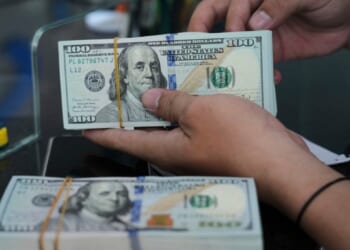
For a week, the Islamic Republic has tried to tell itself, and the world, that the protests in Iran are merely about the price of the dollar. They are wrong.
As the shutters rolled down in Tehran’s Grand Bazaar in protest, a different sound rose up from the universities and the streets of Isfahan, Mashhad, Qom, Kermanshah, and Hamadan. It was not a cry for subsidies. It was a chant for the death of the Islamic Republic and the return of Pahlavi.
Cautious Western observers are mislabeling the protests rocking Iran today as “economic riots.” While the trigger was indeed the rial’s catastrophic freefall, decimating the life savings of millions overnight, the fuel is something far more combustible: a decade of accumulated revolutionary demand.
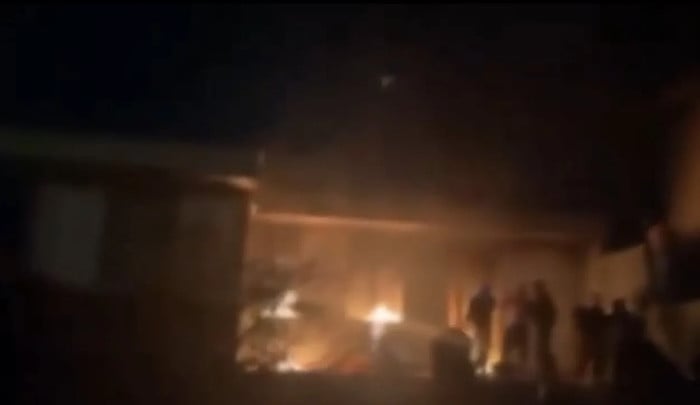
The distinction between “economic grievances” and “political demands” in Iran has been dead for a decade now. When protesters in Delijan set fire to the statue of Qasem Soleimani on the very anniversary of his death, chanting “This is the final battle, Pahlavi will return,” they are not negotiating for lower bread prices.
They are burning the regime’s most sacred icons and rejecting its right to exist.
This uprising marks a critical evolution from the protests of 2017, 2019, and 2022. Today, the merchant and the student are marching in lockstep, joined by Iranians from diverse backgrounds across 100 cities and towns so far.
The universities, historically the bastions of anti-monarchist Marxism, are now echoing with chants of “Down with the three corrupts! Mullah, leftist, Mujahid.”…
The university students protesting now are not anti-monarchists, as they were in 1978. They are now shouting for the crown prince, Reza Pahlavi, to return and rule as head of state. Nor are they Marxists: it’s not Russia or China that has won their allegiance, but the capitalist West, headed by the Great Satan itself.
Pezeshkian’s attempt to stem the tide by sacking Central Bank Governor Farzin and recycling the previously impeached Abdolnasser Hemmati is a desperate reshuffling of deck chairs on a sinking ship….
A change at the head of the Central Bank will not prevent the rial from sinking still further, nor change the percentage of Iranians who have fallen below the poverty line, nor the number of university graduates who cannot find jobs. And even if the economy were magically to improve, the popular fury on the streets is no longer about economic conditions, but is aimed at ending the regime itself. The Iranians are sick of the theocracy; they want secularism; they want freedom.
The Iranians know that billions of dollars have been spent arming, and financing, Iran’s proxies — Hamas in Gaza, Hezbollah in Lebanon, the Houthis in Yemen. They aren’t interested in the Islamic Republic’s dream of creating a Shi’ite crescent around Israel; they aren’t interested in destroying the Jewish state. They want Iran’s money to be spent not on terror groups far away, but at home, and only to improve the well-being of the long-suffering Iranian people.
The stakes have now transcended Iran’s borders. By murdering demonstrators and hunting down dissidents, Khamenei is directly testing the red lines established by President Trump, who explicitly warned the regime about killing protesters. The White House has stated it is “locked and loaded.”
That statement alone has caused the regime to use batons rather than bullets on protesters; the Iranian leaders know now, after the American attack on Iran’s nuclear facilities last June, and even more spectacularly, after the seizure of Nicolás Maduro in Caracas, that Trump means what he says.
The protests continue in Iran, with ever-swelling numbers, chanting “No to Gaza.” “No to Lebanon.” “Death to the dictator!” “Reza, Reza Pahlavi!”