Order Michael Finch’s new book, A Time to Stand: HERE. Prof. Jason Hill calls it “an aesthetic and political tour de force.”
Ali Khamenei has broken his silence on the ongoing nationwide protests in Iran, and it’s the same recycled propaganda he’s used for years. This time, he called demonstrators “enemy mercenaries” and used the opportunity to justify violent suppression.
Speaking on Saturday, Khamenei said the protests began when:
“A group of agitated people, enemy mercenaries, stood behind the bazaaris and started chanting anti-Islam, anti-Iran, and anti-Islamic Republic slogans.”
He claimed he welcomes “legitimate protest” but made it clear that what he really supports is a violent crackdown:
“Protest is valid, but protest is different from riots. We talk to protesters. Officials must talk to protesters. But there’s no point talking to rioters. Rioters must be put in their place.”
This is the first official response from Khamenei since the latest wave of protests began.
And it’s nothing new. He used nearly identical language during the Women, Life, Freedom uprising in 2022 and during the bloody crackdown of November 2019. Each time, the accusations are the same: the protesters aren’t Iranian, they’re working for the enemy. And each time, the result is the same: state-sanctioned murder of Iranians demanding freedom.
According to human rights outlet HRANA, at least eight protesters have already been killed by regime gunfire during the recent demonstrations.
In the 2022 uprising alone, independent reports confirm 551 protesters were killed, including 68 children.
Blaming the Currency Crisis on “the Enemy”
Khamenei didn’t stop at slandering the protesters. He also blamed the country’s collapsing economy on foreign interference:
“This unrest was mostly from the bazaaris. The rise of the dollar and the instability when it goes up and down and sellers don’t know what to do is not natural. This is the enemy’s doing.”
He accused unnamed enemies of manipulating the markets and claimed that infiltrators were using legitimate economic frustration to “create unrest”:
“Those who come with destructive intentions, hiding behind the faithful, revolutionary, and honest bazaaris to spread chaos, this is unacceptable.”
His comments directly contradict the chants echoing across Iran, which aren’t about inflation or the dollar. There are demands for regime collapse and calls for the return of Crown Prince Reza Pahlavi.
He Calls Them “Agents.” They Call for His Fall.
Despite the regime’s attempts to frame the uprising as purely economic, protest slogans across the country have been unambiguous: death to Khamenei, down with the Islamic Republic, and bring back the monarchy.
Still, the Supreme Leader and top regime officials continue to dismiss these calls for change as foreign-instigated plots.
This is the same tactic the regime has used for decades, refusing responsibility, dismissing demands for freedom, and labeling Iranians as traitors.
Khamenei Promises More Confrontation
As expected, Khamenei ended his speech with more threats and more denial:
“The enemy does not rest. They look for every opportunity to strike. They thought this was one. But our officials are in the field and will remain there.”
He vowed that the Islamic Republic “will not back down” and “will bring the enemy to its knees.”
This Time, the Regime Is Cracking, Not the Protesters
Khamenei’s recycled threats prove one thing:
He has learned nothing from the past. But Iranians have. This time, the movement is more organized, more deliberate, and fully aligned behind the leader they’ve chosen to carry the revolution forward.
And no one’s buying the lies anymore.
These protests aren’t about inflation. They’re about ending the regime and reclaiming Iran from the man destroying it to stay in power.
As Crown Prince Reza Pahlavi declared:
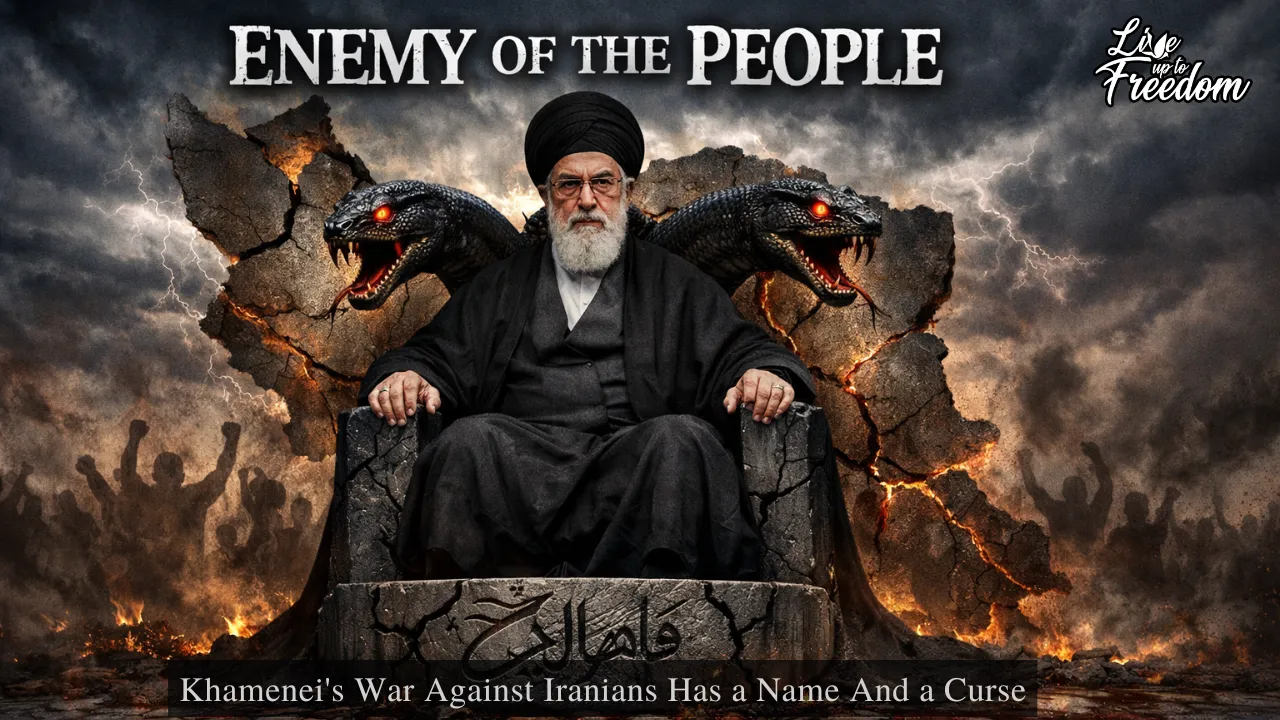
“Khamenei! We, the people of Iran, will drag you down from your trembling throne like Zahhak—and we will free our Iran from you and your regime.”
Khamenei is shaking, and it’s not from foreign enemies. It’s from the footsteps of the Iranian people.