In Focus delivers deeper coverage of the political, cultural, and ideological issues shaping America. Published daily by senior writers and experts, these in-depth pieces go beyond the headlines to give readers the full picture. You can find our full list of In Focus pieces here.
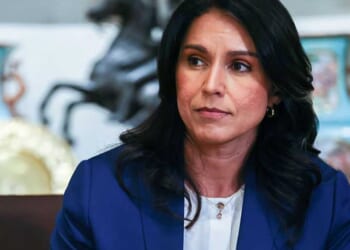
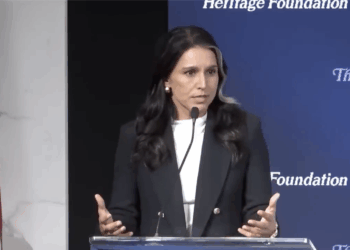
Others suggest that different threats are greater. Take Director of National Intelligence Tulsi Gabbard. Speaking at a Turning Point USA event last week, Gabbard argued that “the greatest near- and long-term threat to both our freedom and our security … is the threat of Islamist ideology.” Gabbard noted how terrorist groups such as the Islamic State and al Qaeda employ violence to extinguish individual freedom. She also spuriously suggested that sharia law is encroaching domestically against secular law — the supremacy of the U.S. Constitution prevents that.
To be clear, the vast majority of American Muslims believe passionately in the Constitution. Most American Muslims love this country for a simple reason: It has given them greater opportunity and treated them more kindly than other nations treat Muslims. They respect the fundamental American contract: work hard, live well, support your community, obey the law. Islamist extremist political movements in the U.S. are smaller and weaker than their counterparts in Europe, for example. At the same time, it’s absolutely true that extremist Islamist ideology threatens American security. Because America stands anathema to the theological authoritarianism that defines Salafi-jihadists or followers of Iran’s Khomeinist ideology, it will always serve as a focal point for their hostility, other motivating factors notwithstanding.
AUSTRALIA AND UK SACRIFICE FREE SPEECH OVER BONDI BEACH ATROCITY
In the end, however, the ultimate measure of a threat isn’t simply its ambition, but rather its means of effecting that ambition. On that metric, China quite obviously poses the preeminent threat to America’s freedom and security.
This isn’t to say that jihadist groups don’t pose a significant threat. They do. But in 2025, that threat exists primarily in inspiring limited acts of terrorism by people who already live on U.S. soil. Consider, for example, the recent attack on two National Guard soldiers in Washington, allegedly by an Afghan refugee. Or Omar Mateen’s 2016 attack on a gay nightclub in Orlando, Florida.
Today, terrorist attacks organized abroad, such as the Sept. 11, 2001, atrocities or the November 2015 Islamic State attack on Paris, are far harder for jihadist groups to carry out. That’s primarily down to a post-9/11 intelligence network that is extremely competent in detecting and defeating terrorist plots. And it means that most jihadist threats can be constrained by “whack-a-mole” targeting operations and by U.S. support for foreign governments that are confronting terrorist threats on their soil. But the basic challenge with Gabbard’s claim is that Islamic extremists lack even the feasible political capital to impose sharia law on America.
Muslims constitute only 1.35% of the total U.S. population and, as noted, are overwhelmingly supportive of the Constitution just like their fellow Americans. The notion, then, that various state Supreme Courts or city councils may soon be handing out summary justice under black flags adorned with the Shahada is absurd. It’s just fundamentally unserious.
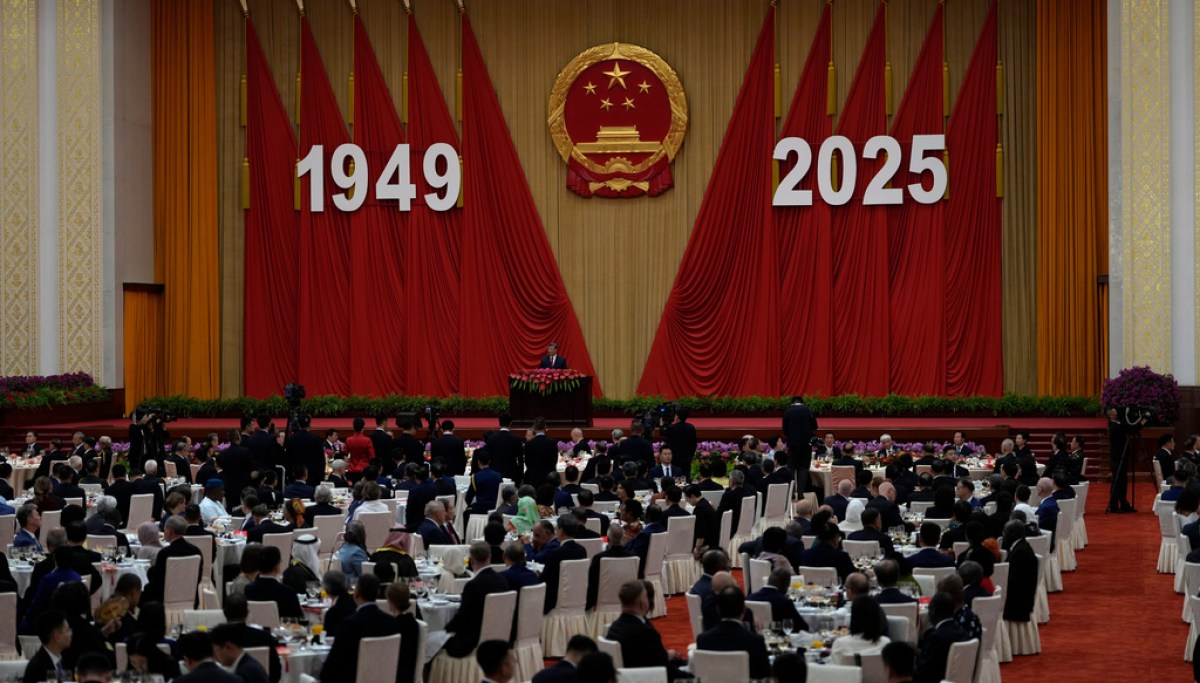
The possibility of Chinese communist dominion over the American way of life, however, is quite serious. Under President Xi Jinping, China has the resources, ambition, and potential to subsume American democracy and prosperity. Xi wants to displace an American-led international order built around democratic sovereignty, relatively free trade, and individual freedom with a feudal-mercantilist order in which access to prosperity and peace are dependent upon obedience to Beijing.
Pursuing this agenda, the most powerful arrow in China’s anti-American quiver is its economic power.
Yes, Beijing’s long-term economic growth prospects are restrained by its demographic crisis — an outsize aging population supported by too few working-age people — its public debt crisis, and its weak consumer economy. Yet, in the short to medium term, China has the ability to leverage massive investments in return for the political submission of those it invests in. It could then use these investments to secure control over the means of generating future economic growth.
One need only look at China’s chilling effect on productions and statements from Hollywood, the NBA, and Wall Street to see how successful its strategy has been. It has led to a situation in which the largest American companies are happy to offer commentary on matters such as the Black Lives Matter protest movement, but utterly loath to even question China’s crackdown on freedom in Hong Kong and its genocide against the Uyghur people.
China’s employment of ByteDance’s highly popular TikTok social media app offers another example as to how it hopes to shape American society. When impressionable young people are being fed information through a Chinese communist prism, China’s influence grows in tandem. China’s economic influence on America is also emphasized in the Trump administration’s recent decision to allow chip giant Nvidia to sell some of its most advanced chips to China. China will use those chips to boost its military means of killing Americans in any future war. Still, Nvidia successfully persuaded President Donald Trump that China is simply too lucrative a market not to bend to.
The broader risk should be obvious.
Namely, if China continues encroaching on the U.S. economy, it will be increasingly able to undermine American freedom of thought and expression to its unilateral advantage. It’s important to note that China’s power potential extends beyond simple economics.
Chinese intelligence officers and agents actively seek to cultivate relationships with rising politicians who might one day reach the summits of power. These efforts include sometimes successful attempts to seduce mayors, state legislators, and even members of Congress. Relationships that then offer China the prospect of being able to co-opt influential Americans or one day blackmail them into conformity with Beijing’s interests. China’s cyber capabilities pose an even more significant threat, one outmatching every other U.S. adversary combined. China has the means of bringing down American utility systems, water supplies, and transportation networks. And it is building offensive capabilities in space, not simply designed to blind American satellites, but also to destroy them.
There’s also the military dimension of China’s threat. China has a rapidly growing nuclear weapons stockpile with 1,000 warheads likely fielded by 2030. And while it’s unlikely to go nuclear, a major U.S.-China war is far from a distant prospect.
Trump rightly notes that Taiwan is the “apple in [Xi’s eye].” Believing that the return of Taiwan under Chinese communist hegemony is a key test of his and the Communist Party’s destiny, Xi has told his military to be ready to conquer Taiwan by 2027. A successful Chinese conquest of Taiwan would pose existential threats to U.S. treaty defense allies in Japan and the Philippines. It would also greatly reduce America’s regional strength and international political credibility, encouraging states from Asia to Europe to Latin America to see China as the ascendant power over America. And if the countries of the world decide they have no choice but to drink from Xi’s poisoned loyalty-for-prosperity chalice, serving Xi’s loyalty will mean treating American exports and foreign policy interests with disdain. Americans will become poorer, and with their impoverishment, less able to pursue happiness. And in the vacuum of American power, China will keep undermining human freedom globally.
THE OBJECTIVE OF TRUMP’S DRIP-DRIP VENEZUELA STRATEGY
The key point here is that some threats are plainly greater than others. Gabbard is absolutely right to identify Islamist extremism as an enduring cause for concern. That ideology is fundamentally anathema to everything the U.S. stands for.
But so also is the ideology of the Chinese Communist Party. And unlike the Islamic State group and company, the Chinese Communist Party has both the intent and the means to impoverish Americans, their freedom, and American power.