Affordability is the key buzzword ahead of the 2026 midterm elections, and no cost-of-living concern has risen to the top of the political agenda like rising electricity prices. The Trump administration and Congress are trying to reform the electrical grid to increase the supply of power to meet soaring demand. Yet the different parties cannot agree on what’s causing the problem, the sources of energy to pursue, or how to overhaul the permitting process to allow more construction. This Washington Examiner series will look at the policy and politics of the grid. The first entry covered the roles played by renewable energy projects and retirements of fossil fuels. The second looked at the need for greater transmission. This third story addresses the demand caused by data centers and artificial intelligence.
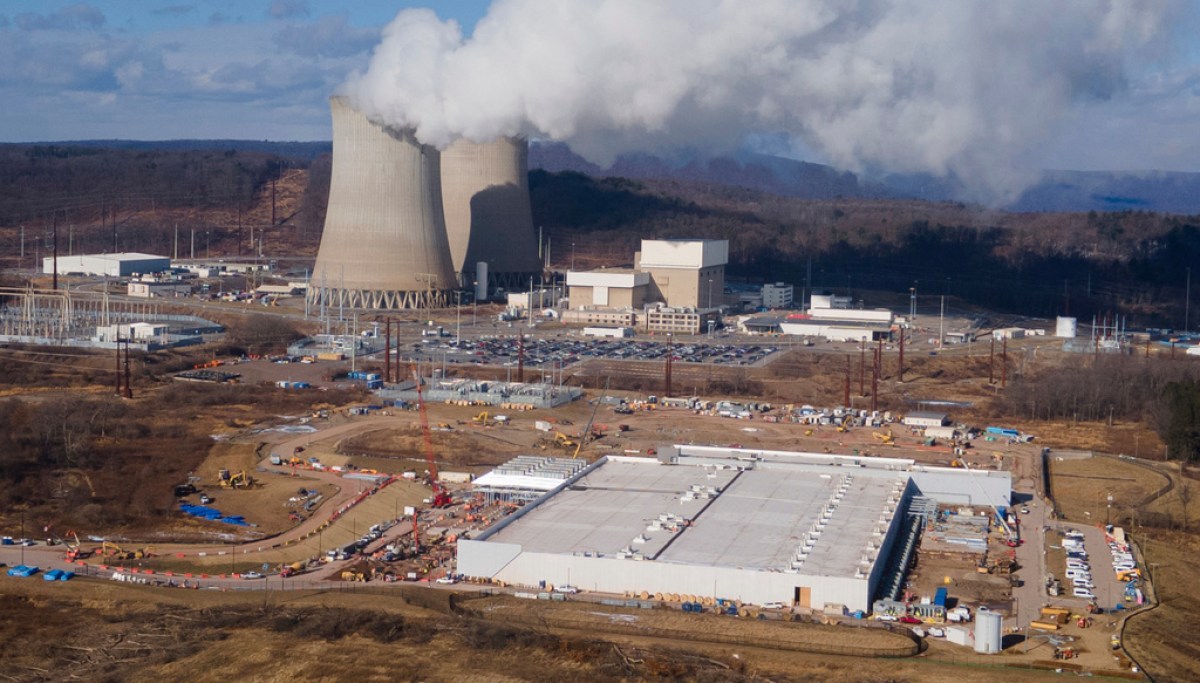
The rapid growth of energy-intensive technologies is driving up energy demand in the United States, and with no signs of slowing, it threatens to push electricity prices higher for households.
The surge in energy demand is being fueled by the rapid expansion of data centers, artificial intelligence, electrification, and the reshoring of manufacturing, all of which have been linked to climbing electricity prices.
ELECTRICITY PRICE SHOCK: HOW RENEWABLE ADDITIONS AND FOSSIL FUEL RETIREMENTS FACTOR IN
An Energy Department report last year found that data centers consumed about 4.4% of total U.S. electricity in 2023. That share is projected to rise to 6.7% to 12% by 2028. The growth of data centers is expected only to accelerate, as the Trump administration has made it a priority to build out data centers.
As demand has increased, electricity prices have continued to outpace inflation. According to the latest Bureau of Labor Statistics consumer price index, electricity prices rose 6.9% for the year ending in November, faster than overall inflation, which stood at 2.7%.
Joseph Majkut, director of the Center for Strategic and International Studies’s Energy Security and Climate Change Program, told the Washington Examiner that electricity rates could increase from the wave of incoming load from data centers. Prices are tied to a number of factors, he cautioned, including the supplies that go into building the grid, such as transformers and transmissions. But the massive rise in demand could prove determinative.
“We need to make part of the policy challenge, and part of the challenge in front of regulators, utilities, and national policy makers, is ensuring that we’ve got a system that can be built to meet that new demand without adversely affecting all rate payers,” Majkut said.
Still, some in the Trump administration who support the expansion of data centers argue that rising demand can help to lower prices by helping to finance the construction of more supply and then smoothing out demand over the course of the day or week.
Energy Secretary Chris Wright told the Washington Examiner earlier this month that data centers are the “best mechanism we have to reduce electricity prices.” He said adding more load to the grid could lower the average price per unit of electricity.
“The red states that have governed in a sort of business-friendly way, where data centers were mostly built — those are the places that don’t have big electricity rises,” Wright said. “The states that have made it hard to build new capacity there, and therefore their demand hasn’t grown or has even shrunk. Those are the places with the fastest electricity rise.”
“Demand growth is your friend,” he added.
States such as Texas and California have seen a weaker impact of data centers on rising electricity prices. CNBC reported that Texas, which has a high concentration of data centers, saw prices increase by about 4% year-over-year in August, which is lower than the national average. Then, in California, which has the third-most data centers, prices increased about 1% in August 2024 compared with the prior year, far below the average nationwide hike.
However, CNBC noted that in at least three states with a high number of data centers, electric bills climbed much faster than the national average in August. For example, prices surged by 13% in Virginia, 16% in Illinois, and 12% in Ohio.
An Edison Electric Institute spokesperson told the Washington Examiner via email that there are massive private investments tied to new large-load projects. The spokesperson said there are nearly 60 data centers and other large-load projects underway within electric company service territories, representing more than $650 billion in private investment and more than 27 gigawatts of new electricity demand.
“When major new customers come online, they help spread fixed costs across a wider customer base—driving down electricity prices for everyone,” the EEI spokesperson said.
However, those in the data center industry said connecting to the grid remains a major challenge. Cy McNeill, director of federal affairs for the Data Center Coalition, said energy is the group’s top priority, but infrastructure can delay projects connecting to the grid.
McNeill said a data center could be built in about 18 to 24 months, but it may take some facilities four to seven years to be energized, thanks to difficulties getting permits.
“There are certain policies that the federal government is looking at, whether it’s related to permitting reform, or others that we think can have a real impact on making sure that energy infrastructure is built out in a timely manner,” McNeill said.
Coalition members are looking at a range of energy solutions, including renewable energy, but the primary focus is on what can get “connected to the grid quickly,” McNeill said.
Recently, there has been public pushback against data center construction, specifically in rural areas. Sen. Bernie Sanders (I-VT) called for a moratorium on data center construction, citing the projects’ impact on emissions and utility bills.
A recent study from Lawrence Berkeley National Laboratory found that state-level load growth between 2019 and 2024 tended to reduce average retail electricity prices. However, the study noted that it is unclear whether the trend would hold up due to nationwide load growth.
Energy experts say meeting rising demand from data centers and other large-load applications will require a broad mix of power sources.
David Hill, executive vice president of the Bipartisan Policy Center’s Energy Program, told the Washington Examiner that the power system needs a variety of energy sources to meet current demand.
“The power system is called a system for a reason,” Hill said. “It’s a system. You need different things that have different attributes and have different qualities about them.”
Hill said wind and solar could play a critical role, but dispatchable sources, such as natural gas, are needed when renewable generation is unavailable. The Trump administration has favored fossil fuel generation and has made moves to block the growth of renewable energy sources, specifically wind.
CHRIS WRIGHT TELLS VOTERS TO ‘FIRE ME’ IF ELECTRICITY PRICES AREN’T CUT IN TRUMP TERM
Affordability has emerged as a key concern among voters as households face higher electric and heating costs. Hill said it is “crystal clear” that electricity affordability was a problem in the gubernatorial elections in Virginia and New Jersey last month.
Hill said permitting reform could be a way to address those concerns to ensure that energy generation can be built and connected to the grid in a timely manner. Lawmakers this past year have been negotiating a permitting bill that would reform the National Environmental Policy Act, which requires federal agencies to evaluate the environmental impacts of projects. Those projects could include transmission lines, data centers, oil and gas, and even renewable energy projects.