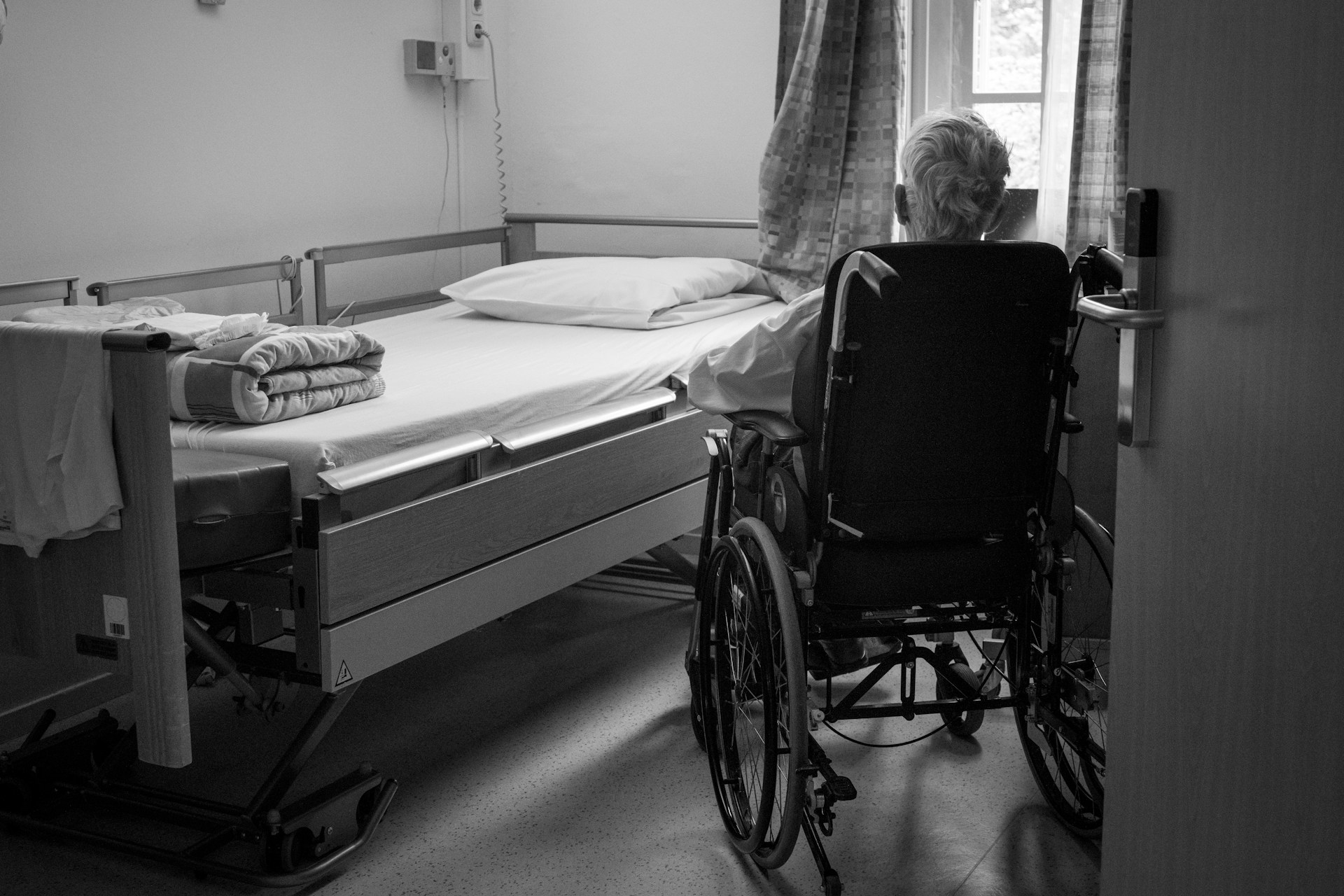
Canada’s government-run euthanasia program increased its death toll again last year, taking more than 16,000 lives, and placing medically assisted suicide as the fourth leading cause of death in the country.
According to an annual report published by the Canadian government, 16,499 people were killed through the Medical Assistance in Dying (MAID) program in 2024, increasing 6.9 percent from the previous year. Close to 75 percent of the 22,535 people who applied for the program were approved.
The report authors stated that the number of deaths is possibly stabilizing, while admitting that “long-term trends” have not yet been identified. Based on 2023 numbers, an estimated 1 in 20 deaths are government-directed.
Expanding the Death Program
The horrors of government-funded murder should not be understated. Canada’s program has grown every year since it began, as restrictions continue to loosen, despite reports of corrupt and coercive practices. Developed countries view Canada as a “cautionary tale” where government killing has become an expansive and accepted norm.
First legalized in 2016, the country’s assisted-suicide law has had multiple revisions, expanding beyond patients with terminal diagnoses.
Candidates in MAID are organized within two categories, or “tracks.” Applicants are placed in Track 1 if they have a terminal diagnosis or “reasonably foreseeable death,” while Track 2 is reserved for those who have no terminal diagnosis but are living with a “grievous and irremediable medical condition.” The majority of those killed through Track 2 were women, with an average age of 75.9 years, while men held a slight majority in Track 1, averaging an age of 78.
The government offers “broad categories … to practitioners for MAID reporting purposes,” to include cancer, neurological conditions, and “other.” The “other” category encompasses some highly treatable diseases, such as diabetes and chronic mental disorders. Hearing and visual issues are included as possible selections.
Even more striking, more than four percent of MAID applicants who were killed had neither a terminal diagnosis nor “reasonably foreseeable death.” Many suffered from isolation and felt a burden to their caregivers. The government has capitalized on these vulnerabilities and is seeking to expand its reach.
Access for mental health patients with no other underlying disease is currently being considered for approval in 2027, and in the province of Quebec, an advance request to enroll in MAID is now legal under certain conditions. This request could be granted at the onset of a disease, even if a person is unable to choose life-ending drugs due to mental or physical incapacities later on, leaving more vulnerable persons entrapped in the deadly system.
Spreading to the United States
Euthanasia advocates have gained increasing ground in the United States over the last few years. A majority of states have now considered legalizing euthanasia, even as disability rights and elderly care proponents sound the alarm.
Not long after the Canada report was published, Illinois became the 12th American state to legalize the deadly practice.
Seven more states are considering legalization this year, and two have amendments pending. Proponents have aggressively advocated for increased access through the removal of residency restrictions. Pro-euthanasia group Death with Dignity petitions states to end residency requirements and break “one of the greatest barriers to a comfortable death: living in the wrong state.”
The American Medical Association is officially opposed to euthanasia, but there is pressure every year to change this position to “neutral,” said Dr. Jane Orient, Association of American Physicians and Surgeons executive director.
The AMA website states that euthanasia is “fundamentally incompatible with the physician’s role as healer, would be difficult or impossible to control, and would pose serious societal risks,” but follows this statement by expressing support for pro-euthanasia physicians as sharing a “fundamental commitment to values of care, compassion, respect, and dignity.” Although members have consistently voted against physician-assisted suicide, physicians who support dealing death drugs to patients only “diverge in drawing different moral conclusions” than their pro-life peers, the AMA states. A “neutral” stance may not be explicit, but assisted suicide is clearly supported.
At the state level, the Arizona Medical Association just adopted a neutral stance on euthanasia. “Neutral about murder,” Orient clarified. “The doctors who advocate for it call it compassion, but ethical doctors are healers, not killers.”
Canada’s report is especially concerning regarding the definition of “terminal illness,” said Andy Schlafly, pro-life constitutional attorney. In the U.S., courts have determined that dementia or diminished cognitive function can be considered a terminal illness. With courts increasingly hostile to the protection of human life, advanced medical directives that place confidence in the system do not necessarily work, he said.
“It is a terrible conflict of interest to authorize a physician to choose between killing a patient and trying to save his life,” Schlafly said. “Improper considerations like economics or pressure by a family member can override the lifesaving goals that physicians traditionally had. Canada’s latest report on its physician-assisted suicide program should serve as a chilling warning of where the U.S. is headed if we do not stop this here.”
Ashley Bateman is a policy writer for The Heartland Institute. Her work has been featured in The Washington Times, The Daily Caller, The New York Post, The American Thinker, the Ascension Press blog, and numerous other publications. She previously worked as an adjunct scholar for The Lexington Institute and as editor, writer, and photographer for The Warner Weekly, a publication for the American military community in Bamberg, Germany. She and her brilliant engineer/scientist husband homeschool their six children.