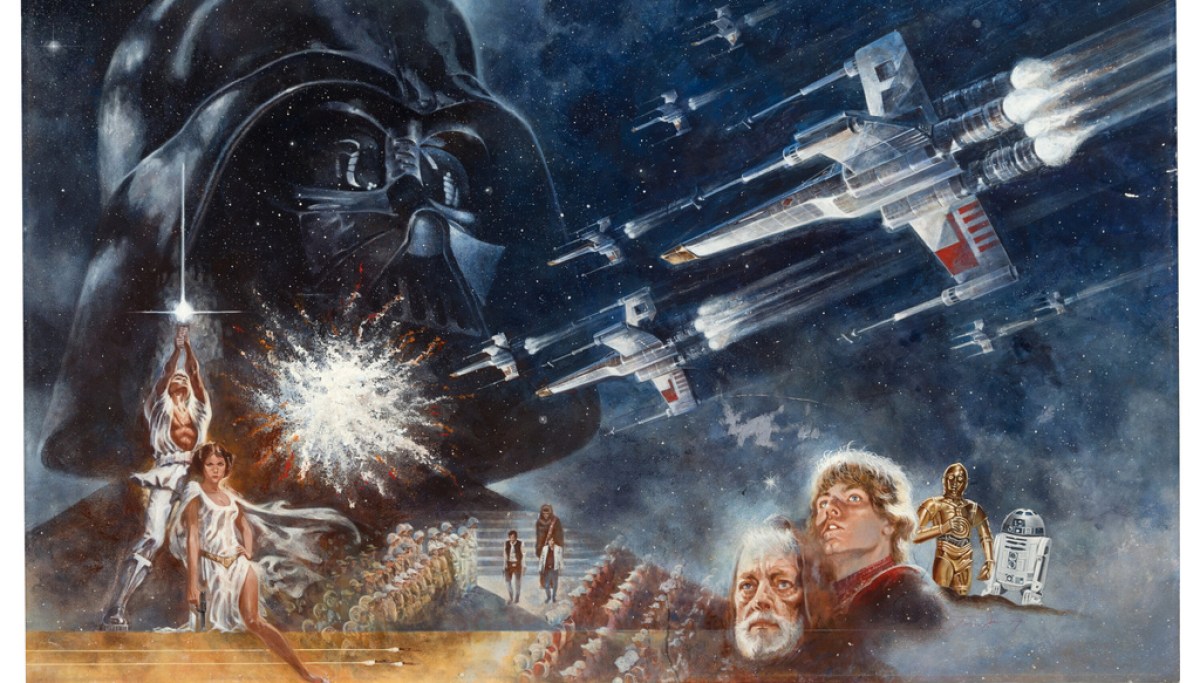
It was just announced that Star Wars: Episode IV – A New Hope, the original 1977 juggernaut that changed Hollywood forever, will be screened in theaters in 2027 for its 50th anniversary. I was 12 when A New Hope was released. I plan to attend and enjoy the anniversary screening.
Then it’s time to let Star Wars go. The George Lucas creation has become the monster that ate everything. It changed cinema forever, then became the kind of unimaginative leviathan it came to displace. Star Wars, once so groundbreaking, has become the giant Jabba the Hutt slug that feeds off of everything and produces nothing original.
RESTORING AMERICA: CAN JESUS SAVE HOLLYWOOD?
When it was released in 1977, Episode IV represented the arrival of something exciting and different. That thing was the science fiction and comic book scene, which had been a subculture in America going back to the 1960s. Hollywood had gone from the studio system for most of its history to the New Hollywood of the 1970s, a decade that offered gritty and realistic films such as Taxi Driver (1976), Vanishing Point (1971), and Dog Day Afternoon (1975). What Hollywood was not producing much of was science fiction and fantasy. For many of us who were children in the early 1970s, the science fiction, fantasy, and comic book communities were small groups of friends who met at conventions held in run-down hotels on the outskirts of town.
However, the ideas were fresh and exhilarating. Visionaries such as Philip K. Dick, Harlan Ellison, Stan Lee, and Jack Kirby offered brilliant and provocative depictions of the future, with interesting characters, bold journeys into space, and even psychological and spiritual insight.
With A New Hope, the fringe broke through to the mainstream. In his insightful book The Future Was Now: Madmen, Mavericks, and the Epic Sci-Fi Summer of 1982, Chris Nashawaty describes the heady years following the breakthrough of Star Wars. Hollywood was suddenly interested in science fiction, and most of the people telling the stories were innovative and imaginative. Nashawaty points to movies such as Blade Runner (1982), Tron (1982), and Mad Max 2: The Road Warrior (1981) as thrilling new entries into the new phenomenon. Many didn’t even make much money — Blade Runner bombed when it opened in the summer of 1982.
“There was a little bit of magic in that early clutch of post–Star Wars sci-fi films in 1982,” Nashawaty writes. “Despite the apparent hunger for fantastical epics by the moviegoing public, these films were still huge creative and financial gambles for the studios. For every Steven Spielberg and Ridley Scott—young directors riding high after the successes of Close Encounters of the Third Kind and Alien, respectively—there were plenty of risks taken on unknown and unproven up-and-comers … There was a freshness and a palpable energy as these filmmakers moved from the ragged edges of genre filmmaking to the thousand-watt spotlight of mainstream Hollywood.”
That spotlight quickly sapped the creativity out of the science fiction, fantasy, and comic book genres. The Star Wars prequel films of the 1990s were blasted and poorly written, and yet they were followed by several more movies and TV shows. The quirky and charming first Spider-Man movies were followed by sequels and more superhero films with bigger and bigger budgets.
RESTORING AMERICA: VARIETY’S ‘TOP 100 COMEDIES’ EXPOSES HOLLYWOOD’S COLLAPSE
“Indeed,” Nashawaty writes, “within a few years [of Star Wars], movies would be green-lit or banished into turnaround based solely on their potential to become giant blockbusters. By the decade’s end, the bets would grow bigger and bigger until they grew so big that the investments poured into them no longer seemed to make sense. Movie budgets skyrocketed, becoming so astronomical that the films themselves, almost by necessity, became safer and more conservative, missing the whole point of what made the sci-fi revolution of 1982 so heady and thrilling in the first place.”
By the dawn of the ’90s and right up until today, “what should have been a new golden age of sci-fi and fantasy cinema became a pop-culture beast that would devour itself to death and infantilize its audience in the process. Four-plus decades ago, we were entertained, enthralled, and enlightened. Today, we’re merely cudgeled into numb submission over and over again and treated like children.”