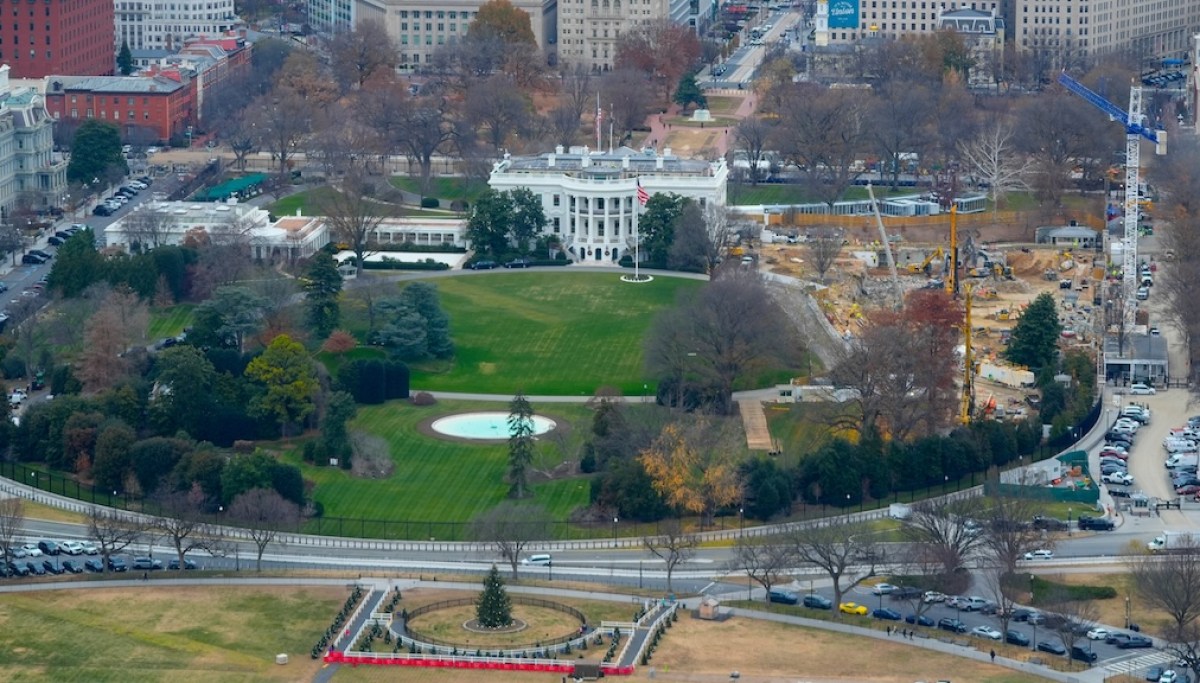
A federal judge said Tuesday that he is unlikely to grant a nonprofit organization’s request to halt construction of the planned ballroom at the White House, after it filed an emergency request in court for him to do so late last week.
U.S. District Judge Richard Leon was deeply skeptical of the National Trust for Historic Preservation’s request, stating that he is disinclined to halt construction because the group failed to demonstrate harm during the period the court-ordered pause would likely last, according to The Hill.
Leon noted the Trump administration’s claim that below-ground construction would not begin until January and above-ground construction would not begin until April as a reason why there is no urgency to pause construction immediately. The federal judge warned the administration that if it undertakes any construction that could affect what can be built above ground, it should be prepared to remove it.
The National Trust for Historic Preservation filed the lawsuit against the White House, the National Park Service, and other Trump administration officials on Friday, alleging the demolition of the East Wing and construction of the new ballroom violates “numerous federal statutes, as well as the Constitution.” The group requested an emergency order pausing construction of the ballroom, which Leon heard arguments over in federal court on Tuesday.
The Trump administration urged the judge to allow construction to continue in the interim, arguing the nonprofit group has no standing to sue over the construction and that halting construction would jeopardize national security. In a court filing Monday, U.S. Secret Service Deputy Director Matthew Quinn said that while the contractor working on the project has completed most of the temporary security measures, “improvements to the site are still needed before the Secret Service’s safety and security requirements can be met.”
“Any pause in construction, even temporarily, would leave the contractor’s obligation unfulfilled in this regard and consequently hamper the Secret Service’s ability to meet its statutory obligations and protective mission,” Quinn said in the declaration posted to the court’s docket.
The DOJ, in its filings, also pointed to past additions and renovations to the White House at the direction of other presidents, arguing that President Donald Trump ordered the creation of a ballroom to meet a modern need, like other renovations.
“President Trump set about to adapt the White House to the evolving needs of the presidency. That project, the East Wing Modernization and State Ballroom Project, follows in a long line of major presidential renovations of the White House,” the filing said, listing various examples, including President Franklin D. Roosevelt’s creation of the East Wing.
“All changed the look and function of the President’s residence, sometimes substantially so. Many were controversial in their day. None was circumscribed by Congress or constrained in the manner Plaintiff seeks,” the DOJ filing continued.
FORMER OBAMA AND CLINTON LAWYER REPRESENTING LAWSUIT OVER TRUMP’S BALLROOM
Trump’s demolition of the East Wing and plans to build a new ballroom for the White House have garnered vocal uproar from Democrats and left-wing preservationist groups in the Washington, D.C., area.
The administration revealed in a court filing Monday that the ballroom is currently scheduled to be completed by Summer 2028. Trump’s current, and final, term in the White House is set to end on Jan. 20, 2029.