Order Michael Finch’s new book, A Time to Stand: HERE. Prof. Jason Hill calls it “an aesthetic and political tour de force.”
[Subscribe to Naomi’s Substack: HERE.]
I have been silent for some time. I apologize. I have been unable to write for several weeks. As you know, I almost never have “writer’s block”, so when I cannot open up my heart and speak to you, it means that something is really wrong.
This morning I woke up to a fairy tale world.
We are in a little town on the North Shore of Boston, and the small apartment in which we stay when we are here, faces a streetscape that has water on three sides of it. The streets are very beautiful, in an austere, New England sort of way; they offer the walker a landscape of cool sunlight on steel-grey waves that slowly move on the Sound; a setting of two- and three-story wooden houses, most of them built just after a devastating fire in 1914 cleared the area: turned-wooden spokes on the balconies, and occasional turrets; curved steps leading up to the porches, and tall sashed windows standing in trios in living rooms. The houses are painted the sombre colors of New England: pale yellow and pale grey, grey-blue, pale buff.
This Puritan landscape, and this subdued color palette, were both so exotic to me, when I first arrived on this coast as a seventeen-year old from vibrant Northern California. I am used to it now, of course; but the waters of the Atlantic still always seem to me as if I am gazing at the wrong ocean, and facing in the wrong direction. If there were a god of the Atlantic it would be a judgmental, angry, masculine god; if there were a deity of the Pacific, it would be a feminine, ever-changing, seductive, treacherous goddess.
But what a world it was when I woke up this morning. The streetscape was blanketed in the whitest of snows. As if in a snow-globe, flakes shook down on the houses and the streets, and on Loki and me when we walked out into the wonderment of it all. Loki sniffed at the pure white powder and stepped delicately through it, agog, leaving little paw-prints, like flowers. I was no less amazed and grateful than he. Snow-flurries fell onto the steel-blue bay, onto the winter-dead hydrangea bushes, onto the grey sidewalks and the wet black road, turning everything into a study in white.
Back home, I was excited about the evening ahead. I was planning to go to Chabad’s public menorah-lighting ceremony in a nearby town. I was looking forward to the latkes and dreidels that would be on offer at the gathering, and to bringing home for my stepson some ‘gelt’ – little chocolate coins wrapped in gilded paper. I was also planning to bake an apple pie for my stepson. We had bought the Granny Smith apples and the apple pie spices, the brown sugar and the white sugar, the night before, and I had found a recipe simple enough for me to follow successfully. I was planning a cozy day in, just before the Festival of Lights would begin.
I felt a renewed sense of excitement about Hanukkah because Brian and I had gone to Torah study — held by our local Chabad — the past Thursday night.
Chabad is an extraordinary organization that has changed my life, and Brian’s too; they welcome everyone, around the world, with their mission of bringing good deeds into the world, and of teaching straying or secular Jews, along with their loved ones, the Torah, prayers and commandments; and incredibly to me, as it is quite a feat to master, they teach anyone who seeks it, the shelter of the Law. They manage to offer basic Judaism to all who actively seek it, along with good humor, kindness, scholarship, and delicious meals and snacks. Somehow they offer all of this for free.
They manage this mission by sending “shlichim” — emissaries — around the world, to wherever they are needed: Rabbis, young and middle-aged and older; and Rebbetzins, their wives; and their families. These “emissaries,” and their equally remarkable wives go to the ends of the earth, open their homes, open their arms, and welcome all who wish, to drink from the fountain of Torah.
My understanding of Hanukkah this year, as a result of my contact with Chabad, was more profound than it has been in the past. My Catholic husband and I had gone to a modest room in an industrial park for the local Chabad’s Torah study. The genial, witty, learned Rabbi had shared with us all, historical context I had not known about the Hanukkah story, and commentary from Maimonides, and from other scholars, about the origins of the Hanukkah festival.
The education I had received about the origins of the holiday from my conservative (that is, not orthodox) Hebrew School in San Francisco, when I was a child, had been pretty superficial. I knew that we were celebrating a real historical event. Hanukkah commemorates a miracle that took place after an uprising that lasted from 167-170 BCE, led by a group called the Maccabees. The Maccabees were Jewish revolutionaries who had resisted the Seleucid Hellenistic empire, and had finally overthrown this great Syrian-Greek power long enough to re-claim the Second Temple in Jerusalem, thus re-establishing an independent Jewish kingdom in the Promised Land.
The Maccabees — a father, Mattathias, and his five sons — had entered the holy Temple in 164 BCE, and had found it desecrated by the soldiers of Antiochus IV Epiphanus. They had found in the violated space — which was the ritual focus of all Jewish life, where YHWH was understood to have centered His presence — the holy menorah; it was without enough oil to last for more than one night.
The construction of this seven-branched menorah, this pure golden candelabrum, is described in detail in Exodus 25:31-40 and Exodus 37:17-24; According to this scripture, the details of its creation, along with that of the other furnishings of the Holy Place within the Tent of Meeting, were presented to the Children of Israel via Moses, by YHWH Himself. That sacred space outside the even more sacred, veiled “Holy of Holies,” included other accoutrements: a table for “showbread”, and an incense altar. The furnishings of the “Tent of Meeting”, some of which would eventually be in the Temple in Jerusalem, are these:
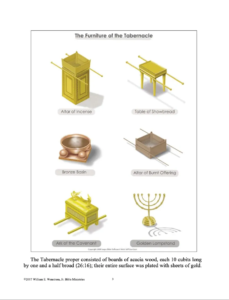
This whole structure — God’s dwelling, in essence — had been mobile, when the Children of Israel had wandered in the desert, before YHWH allowed, at least according to our sacred texts, their descendants to enter into and to possess the Holy Land.
Once the Children of Israel inhabited their own kingdom, these furnishings became part of the centerpiece of the First Temple, which had been constructed by King Solomon on Mount Moriah in Jerusalem, in about 960 BC. The First Temple stood for about 400 years, til it was destroyed by the Babylonians in about 587-586. Then the Children of Israel were taken as captives to Babylon, their Temple razed, and the Holy Land laid waste.
The Second Temple was built in 516 BC, when the great Persian King Cyrus conquered Babylon, and he allowed the captive Jews to return to the Holy Land. There they rebuilt the Temple; it stood into the Great King Herod’s reign, 72-4 BC, and beyond. Herod the Great is the king in the story of Christmas, who reportedly heard from the Magi of a baby born in Bethlehem who would become “King of the Jews”; he thus was responsible, at least in Matthew’s Gospel, for the murder of babies, and of boys under the age of two, born in that area: the Massacre of the Innocents. His son, Herod Antipas was the client king of Galilee who oversaw, along with Roman governor of Judaea Pontius Pilate, the execution by crucifixion of Jesus of Nazareth, at 33.
Both of the Herods were client kings; thus they were completely overseen by, and at the mercy of, all of the power of the Roman Empire, which was governed during Jesus’ lifetime by emperor Augustus Caesar, and then by Tiberius Caesar. The Roman Pontius Pilate served beneath Emperor Tiberius as the governor of Judaea. The Jewish leadership in Jerusalem was utterly subjected to Pilate in turn. The Jewish client kings, and the Jewish priestly leadership underneath them, thus, were entirely unable to govern in any capacity on any level except strictly according to Rome’s will. This is something of which Tucker Carlson seems sadly ignorant when he invokes the presumably Jewish guys “eating hummus” in Jerusalem, to whom he and other anti-Semites assign the full responsibility for the murder of Jesus.
Pontius Pilate and Jesus of Nazareth:
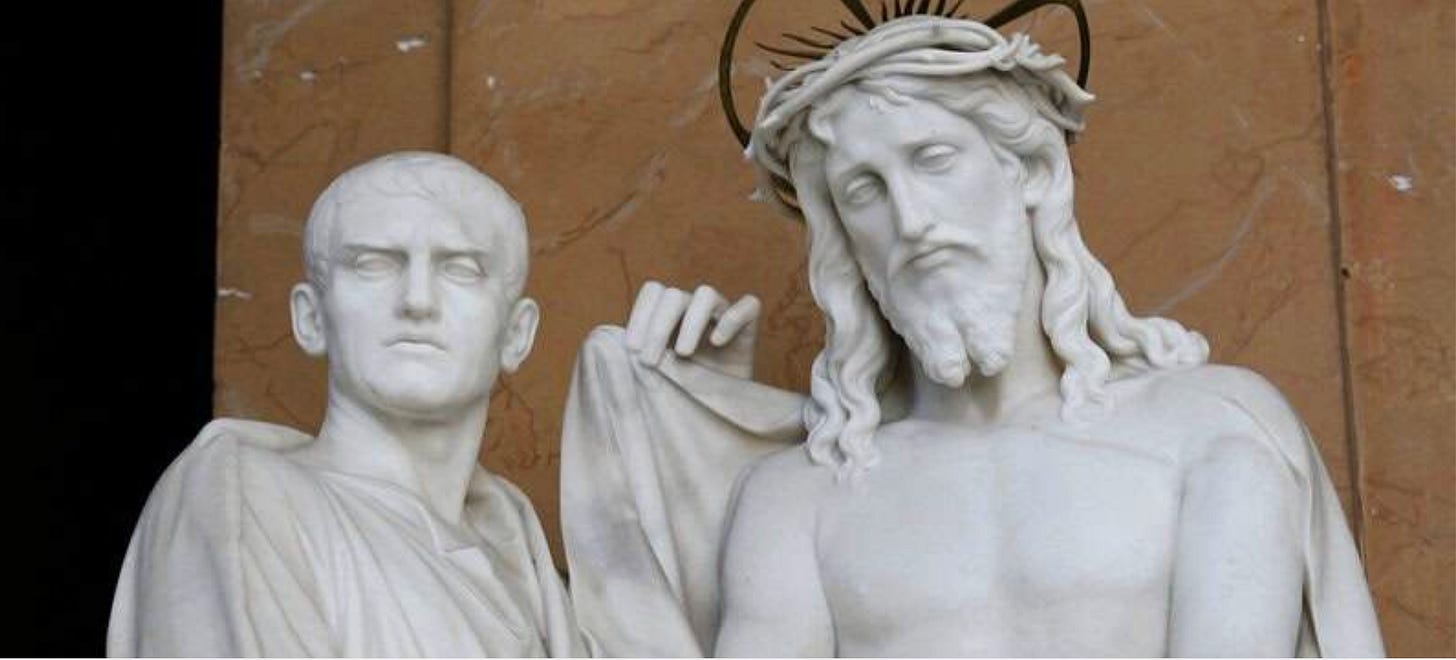
According to Luke 21:5, Jesus had predicted that the Second Temple would be razed to the ground: “Then, as some spoke of the temple, how it was adorned with beautiful stones and donations, He said, “These things which you see—the days will come in which not one stone shall be left upon another that shall not be thrown down.””
And indeed it was — in 70 AD, after another Jewish War, this one against Rome. Nationalist Jews had risen up against the occupying power that had so bitterly oppressed them. To punish them, legions under General Titus set siege to Jerusalem, destroying it; to demoralize the enemy, Titus’ forces also leveled the Second Temple. Tens of thousands of Jewish inhabitants of Jerusalem were murdered or enslaved. Titus brought the spoils of this war — including a menorah, memorialized a year later in the commemorative Arch of Titus — to Rome. Josephus, the Roman-Jewish historian, records his understanding that “those golden vessels and instruments that were taken out of the Jewish temple” were kept in the newly built Roman Temple of Peace. Perhaps the menorah was among these.
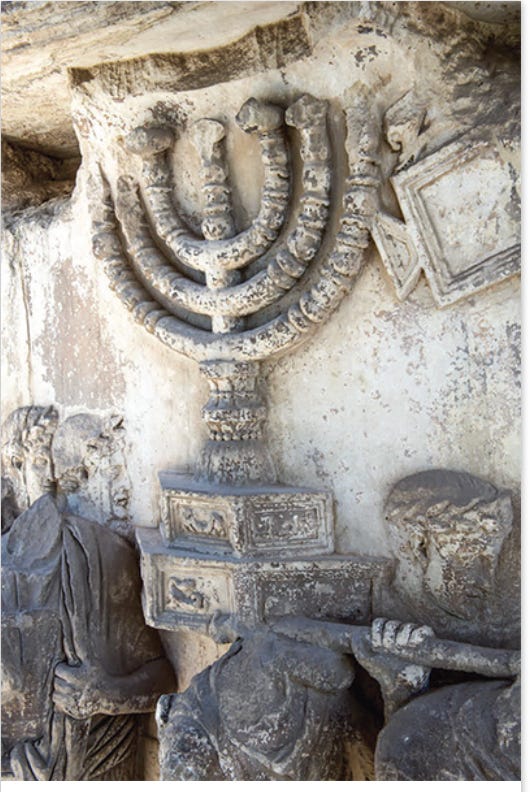
Many scholars believe the Arch of Titus was once painted, and that the menorah depicted in it, was gilded. Here is a colorized version of the scene on the Arch of Titus, created by an entity that uses colorization to visualize historical images:
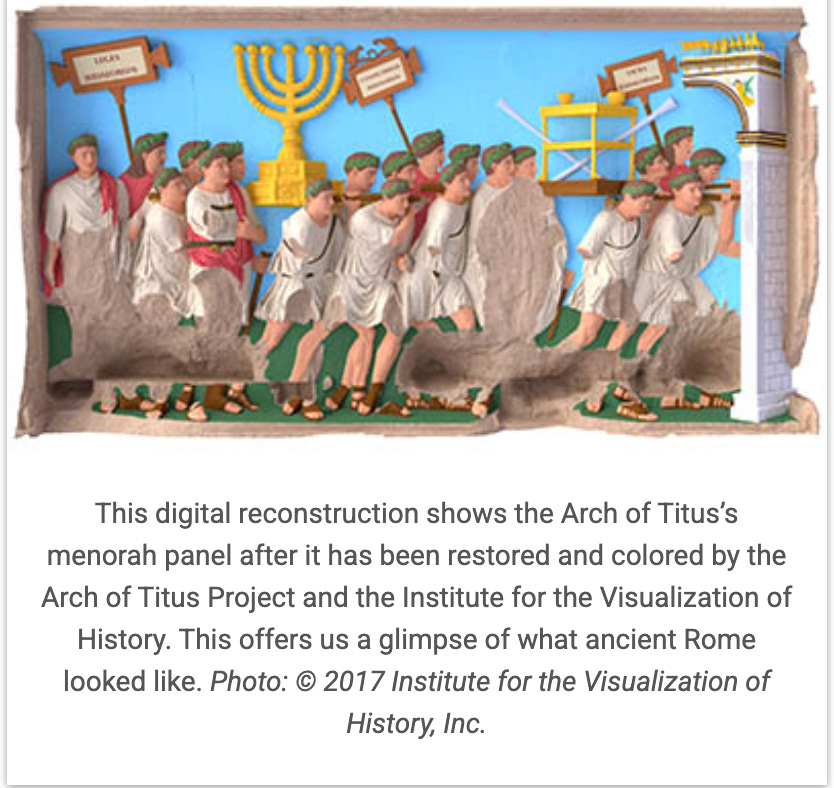
So — the golden menorah, a simulacrum of which we light tonight, is a real thing.
And its sacred use in Judaism, and in proto-Judaism, goes back about 3400 years.
The Jews who survived the destruction of 70 AD were exiled, and scattered around the Mediterranean and North Africa. They found their way to Turkey, Cyprus, Mesopotamia (Iraq); to Persia, Tunisia, Algeria, Morocco — and later into Europe, always fleeing attacks. So post-exilic Judaism, a record of two thousand years of persecution, in which we as a people were murdered or raped, our goods confiscated, our homes razed, our synagogues burned, and in which we were often forced to convert — to Christianity or to Islam, depending on who was in power, at sword-point — homeless and stateless, in country after country, began.
In the absence of a Temple as the centerpiece of Jewish life and sacrifice, rabbinical Judaism arose in these devastated, homesick, diaspora communities around the world. It reorganized the life of this people from having centered around a building that had housed an altar and golden furnishings, as well as the scrolls on which was written the Law – to centering solely on a book — the Torah, the Law — and on its commentaries.
Why have I gone though this Judaism 101 summary, this preamble?
Because it seems that we are in a time in which almost no one knows who we are any more.
This is suddenly a time in which a spirit of nonsensical venality about Jews and about Judaism has erupted — not only across the Middle East, where pernicious lies about us have been an organizing principle of many Arab societies for the century and more since early 20th Century Zionism began to return us to our ancestral homeland; but also at the highest levels of influence, leadership and commentary in the “enlightened” West.
Anti-Semitism, it seems, is the new Disco; it is the new Ugg Boots.
Whereas til recently, expressing anti-Semitic views meant that you were boorish, ill-educated and troglodytic, now, all of a sudden, expressing anti-Semitic views seems to be a trend, a fashion.
All shame has fallen away.
Smart people vie to say stupid, hateful or simply delusional things about this ancient, tortured, well-documented people.
Whether it is Tucker Carlson, whose dogwhistle about “hummus-eaters” seems to have opened the floodgates, or conservative podcaster Candace Owens, publicly finding it impossible to believe the historical account of Nazi Dr Mengele’s experiments, calling them “propaganda”, or conservative commentator Nick Fuentes torching the midterms by stating that “Hitler was very f-ing cool” and saying in another interview, “I was like, mom, dad, Hitler was awesome. [chuckles] Hitler was right” — it appears that a shameless, very stupid, anti-Jewish hatred is a new edgy thing that some high-level people in the US, suddenly seem to enjoy flaunting.
The idiocy has been overwhelming. “From the river to the sea” is idiocy, ignorant of the history of the region. The phrase “settler colonialism” is idiocy; whether you like the modern State of Israel and its policies or not, Jews are no more “colonizers” in the area of historical Judaea than are Palestinians. From Tucker Carlson — who can’t seem to be bothered to get straight who was actually governing Judaea in Jesus’ lifetime — on down, it seems as if no one influential, these days, when it comes to my poor beleaguered people, will bother to read a history book, or actually read the Torah, instead of snippets of random medieval Rabbinic commentary taken grossly out of context, or take even the most cursory look at an actual map.
I have a well-known independent-media friend whom I have had to let go because I learned that she believes that today’s Jews are fake Jews, “Khazarians”, responsible for the evils of the world. I have had a conversation with another well-known commentator on the Right, who believes with no evidence that the Chabad members at 770 Eastern Parkway in Brooklyn, shown in a video clip online, had been conducting ritual sacrifices in tunnels underground. When I asked if she had ever met a Jew before, or gone to a Synagogue, and I offered to take her with me to one, she refused.
The dabbling in anti-Jewish hatred among influencers seems to grow more addictive as the money from Qatar, flows. “Since Donald Trump was first elected president in 2016, Qatar has spent nearly $250 million on 88 FARA–registered lobbying and public relations firms. From January 2021 to June 2025, Qatar’s agents reported 627 in-person meetings with political contacts in the United States — more FARA–registered meetings than any other country in the world.”
But whatever the reinforcement for this eruption of hostility, it has been impossible not to see emergent hatred of our people, and the distortion of our history, that we Jews, in America at least, thought lived in the primeval past.
That’s why I’ve found it hard to speak. That is why I found it hard to write to you. I have been struck with the silence of old traumas — reactivated in a new context, in which I had felt safe.
So that brings us to Hanukkah.
By eleven am this morning, cozy in the world of snow, the pup napping along the edge of the blue couch, his nose against the window, and I with my kitchen countertops heaped with sliced green apples, I checked the news.
And then I had to sit in my maroon armchair and cry, and hand the phone, speechlessly, to my husband.
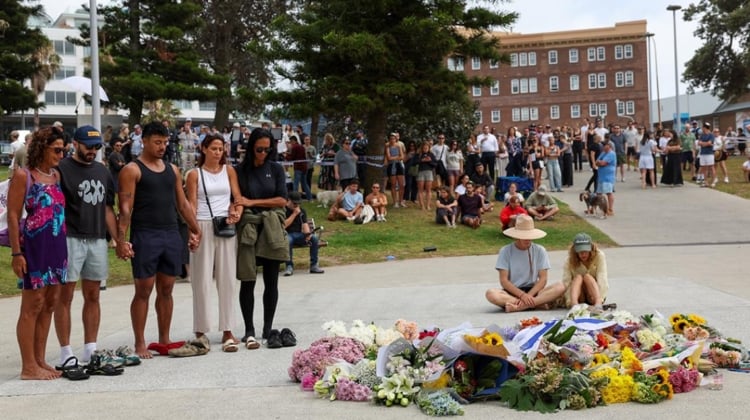
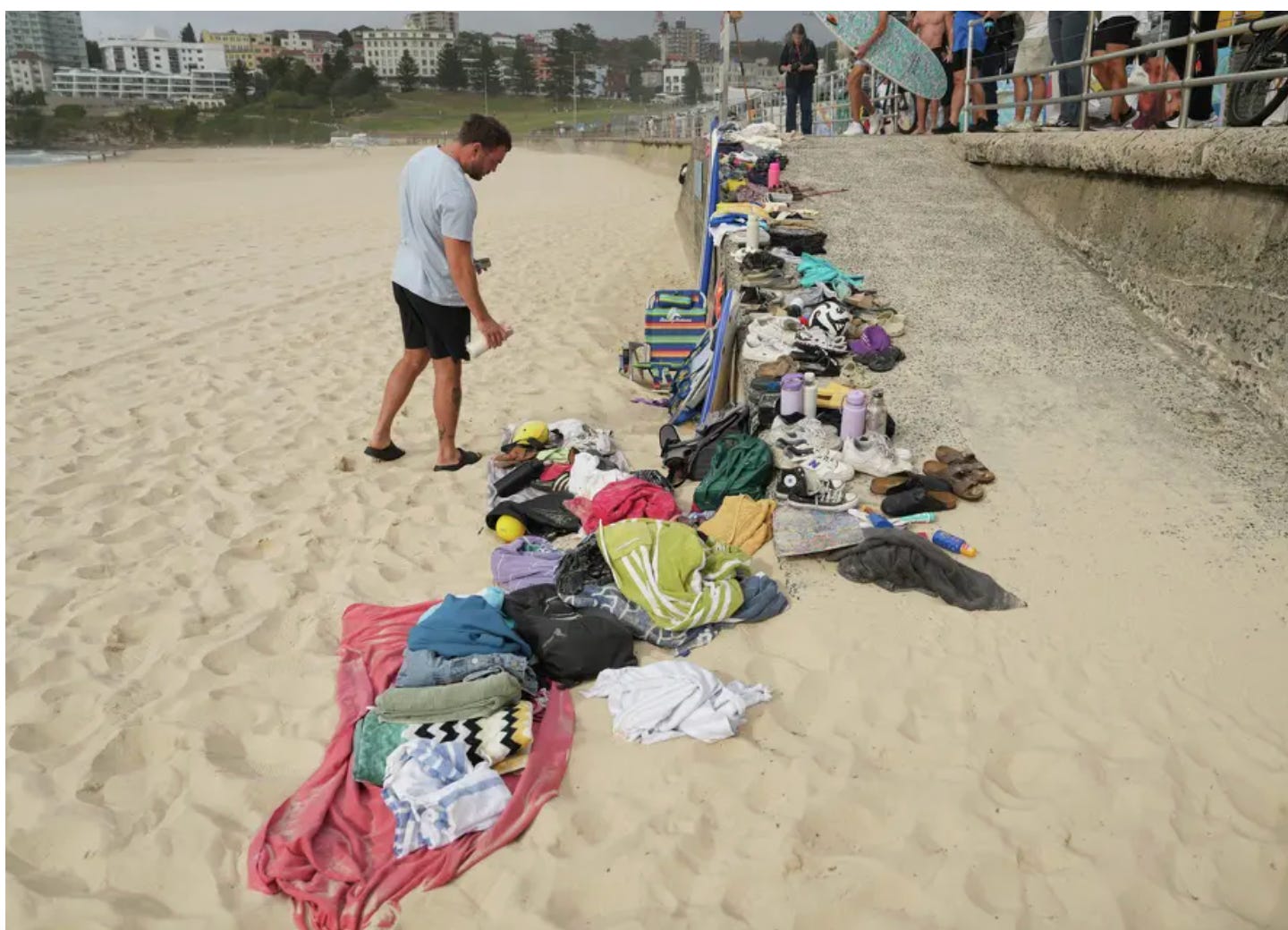
Fifteen dead in Bondi Beach, Australia. Jews, and perhaps non-Jews too, celebrating Hanukkah on the beach — a beach I know, a beautiful, blessed place, a half moon of shoreline with sublime waves and green-topped sandy dunes — mowed down by two gunmen.
A father and a son, as it turned out.
In a video that showed ten full minutes of these two shooting, re-arming, and shooting, the cadence was almost leisurely. The police took what seemed like years to arrive. One armed police officer cowered behind a police car, not shooting — as the assailants kept on shooting.
Fathers under fire held down their children so they would not move and attract a bullet.
A young man called his mother, and told her, in Hebrew, that he loved her.
Fifteen are now dead, and forty hospitalized.
It turned out that the Chabad assistant rabbi, Eli Schlanger, 41, a father of five, was murdered at the Bondi Beach massacre. This was a man who had made a funny, whimsical video urging Jews to shine a light, to not be scared, to celebrate Hannukah:
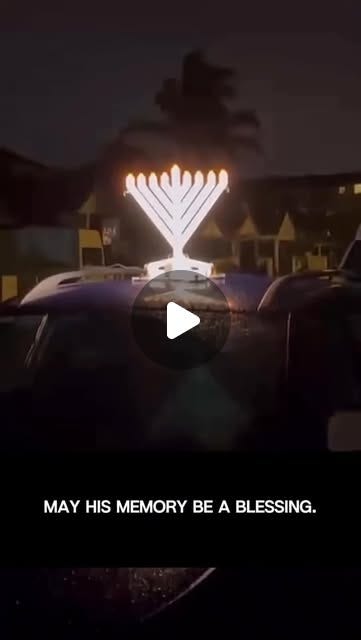
It turns out that a ten year old girl was murdered.
A Holocaust survivor — murdered.
The bitter irony is that, of all the Jewish groups to target, Chabad is the most respectful of all other religions, the most gentle, the most inclusive. If those Jihadi assassins had decided to leave their weapons at home and had joined Rabbi Schlanger and his fellow Chabad celebrants on the beach, they would have been welcomed with love. “We love everyone,” say the Chabad rabbis, and in my experience, they mean it. The Chabad rabbis teach my Catholic husband Torah, patiently, with zero judgement. They teach everyone who walks in their doors. They give them cookies; and prayer books; and kippas.
They offer them a seat at the table. They pray with them.
The Pakistani Jihadi father and son, had they made another choice and joined the group on the beach, would have been given latkes and dreidels, and been welcomed to join the celebration of light.
All this is not random.
There is a direct line from Tucker Carlson to Bondi Beach.
I posted, in my rage and grief, that, metaphorically speaking, the anti-Semitic influencers had blood all over their hands today.
I mean it.
Candace Owens. Nick Fuentes. Lauren Witzke. JJ Carrell. Tucker Carlson.
It seems that they thought it was fun to dabble in hatred of my people. An edgy thrill on social media, a gratifying escalation of clicks, turn into a scene of bodies bleeding out on a distant beach.
When powerful American voices show that they are willing to throw my people to the wolves, it signals “open season” on us to the rest of the world.
That’s how we start Hanukkah tonight, thanks to you influencers all. In grief, with tears.
It is not over; Hanukkah has just begun. Already in Amsterdam, a crowd of anti-Semites attacked a Hanukkah concert. A Jewish home with Hanukkah decorations in the window, was shot at in Redlands, California.
The Chabad rabbi here in this little North Shore town, explained to me and to Brian, that when the Maccabees arrived at the Temple, there was plenty of oil; but it was impure. Only one jar was left with the priestly seal still on it, which made it pure. The miracle was that the one jar, just enough to last one night, lasted eight nights.
But he also explained that the larger meaning of the “oil” was what is symbolized. The Syrio-Greeks occupying the Holy Land had forbidden Jews to circumcise baby boys; to sacrifice; and to celebrate New Moon festivals, three key elements of Judaic ritual. The Greeks wanted to keep the Jews alive — they thought them useful; they did not want to wipe them out physically — and the Greeks also wanted to keep the Torah, which they valued, but only as a work of philosophy.
The Syrian-Greek occupiers did not want the Jews to remember that they had a spark of the Divine in them, as all people do, in Jewish thought; or to remember that the Torah was the Word of God.
They wanted to leave the Jews the impure oil so as to get them used to using impure materials, the Rabbi explained; to erase the sacred. Generally, the Syrian-Greeks wanted to keep the structures of society and institutions in the Holy Land intact, but to erase the sacred.
That description was so profound, it seemed to me.
We are in a time now, again, in which powerful people want to keep the forms of this or that religion or philosophy or building or practice or ritual or holiday — but to erase the sacred.
It did not work then.
It won’t work now.
We are not going anywhere.
We will remember, and we will defend the sacred.
If that makes you hate us, so be it.
The sacred oil, the festival light, is for everyone.
That is, has always been, essentially, our message.
If you destroy us, if you slander us, if you murder us,
You still cannot kill this off.
You only debase the sacred in yourself.