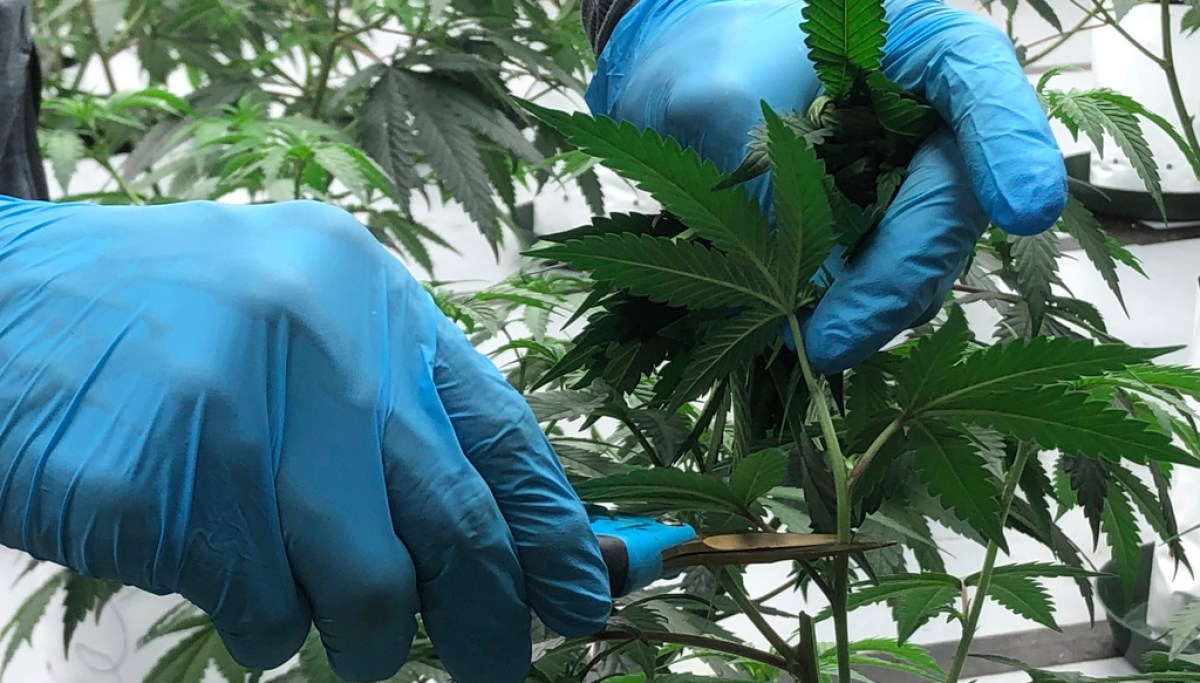
President Donald Trump could reportedly be preparing to reclassify marijuana, lowering it from a Schedule I to a Schedule III drug, a move that could have several legal effects on the cannabis industry and its consumers.
Trump’s reported reclassification would relax federal regulations on cannabis, grouping it with substances such as anabolic steroids and ketamine rather than heroin and LSD. Trump is reportedly expected to sign an executive order rescheduling the drug as early as Monday.
Rescheduling cannabis to a Schedule III drug would follow a Biden-era Drug Enforcement Administration proposal for the same reclassification, which stalled Trump’s inauguration. Schedule III substances have an accepted medical use, while Schedule I substances do not. Drug schedules typically change based on the abuse rate of a substance, according to the DEA, with Schedule I substances having the highest potential for abuse and Schedule V substances having the lowest abuse rates.
Cannabis is still illegal under federal law, despite 24 states and the District of Columbia fully legalizing the substance. It is the most commonly used illicit drug in the country, according to the DEA’s 2025 National Drug Threat Assessment.
If the country were to reclassify marijuana as a Schedule III drug, it would not federally legalize the substance, but instead have several key effects on tax benefits for cannabis companies, criminal penalties, and marijuana research. The Congressional Research Service issued a legal sidebar in May 2024 on the “Legal Consequences of Rescheduling Marijuana” when it was up for discussion under the Biden administration.
“With respect to the manufacture, distribution, and possession of recreational marijuana, if marijuana were moved to Schedule III, such activities would remain illegal under federal law and potentially subject to federal prosecution regardless of their status under state law,” Joanna Lampe, legislative attorney for the CRS, wrote in the sidebar piece.
Tax benefits
Moving cannabis to a Schedule III drug would allow cannabis businesses to deduct their business expenses, as they would be exempt from Section 280E of the Internal Revenue Code. Section 280E prohibits companies involved with Schedule I or II substances from deducting their expenses in federal tax filings.
This reclassification would result “in a much lower effective tax rate for businesses across the industry,” according to business law firm McGlinchey Stafford.
Criminal penalties
Criminal penalties for some cannabis offenses would be reduced, according to the CRS legal analysis, though the sidebar did not specify which offenses. According to Ohio State University’s Moritz College of Law, the penalties for “manufacturing, distributing, and possessing” schedule III substances can be less severe than those of schedule I substances.
“If marijuana were moved to Schedule III, applicable penalties for some offenses would be reduced. However, [Controlled Substance Act] penalties that apply to activities involving marijuana specifically, such as the quantity-based mandatory minimum sentences discussed above, would not change as a result of rescheduling,” Lampe wrote for the CRS sidebar.
Marijuana research
If marijuana is reclassified from a Schedule I drug, it would ease regulations surrounding academic research on the substance. Schedule I substances require a DEA research registration for scientific use.
In an interview with Pennsylvania State University’s news outlet, university professor Kent Vrana, the director of the school’s Center for Cannabis and Natural Product Pharmaceutics, explained the research limitations of a Schedule I drug.
“I can only get cannabis and cannabinoids from a handful of federally approved sources. Otherwise, it puts our federal funding at risk. It makes it harder for us to conduct clinical trials that would help us better understand the potential benefits — and harms — of cannabis,” Vrana said.
Effects on medical marijuana
Schedule III drugs may be legally dispensed with a medical prescription if the FDA approves them, but cannabis runs into a hurdle with this, as it is not an FDA-approved drug, the CRS said.
“Moreover, if one or more marijuana products obtained FDA approval, manufacturers and distributors would need to register with the DEA and comply with regulatory requirements that apply to Schedule III substances in order to handle those products,” Lampe wrote. “Users of medical marijuana would need to obtain valid prescriptions for the substance from medical providers, subject to federal legal requirements that differ from existing state regulatory requirements for medical marijuana.”
RECLASSIFYING MARIJUANA WILL NOT MAKE AMERICA GREAT AGAIN
“No final decisions have been made about marijuana rescheduling,” a White House official told the Washington Examiner.
The president’s Monday schedule did not include an executive order signing at the time of publication.